How to Start Charlotte Mason Homeschooling: 10 Essential Steps for Success
When my oldest was six and we were burning out on a workbook-heavy homeschool routine, I stumbled across Charlotte Mason’s Home Education. Within weeks of trying her ideas—replacing dry worksheets with vivid stories and swapping desk time for daily nature walks—my children’s eyes lit up again. “Mom, can we read more?” became our new normal. Over the past 15 years homeschooling four children (now ages 9–18), I’ve guided dozens of families through the same transition as a Charlotte Mason study group leader and curriculum consultant. The method isn’t magic, but it works because it treats children as persons, not vessels to be filled.
Charlotte Mason (1842–1923) believed education is “an atmosphere, a discipline, a life.” It emphasizes living books (narratives written with passion), narration (retelling in your own words), short focused lessons, habit training, and abundant time in nature. Families love it for fostering curiosity, character, and lifelong learning without pressure.
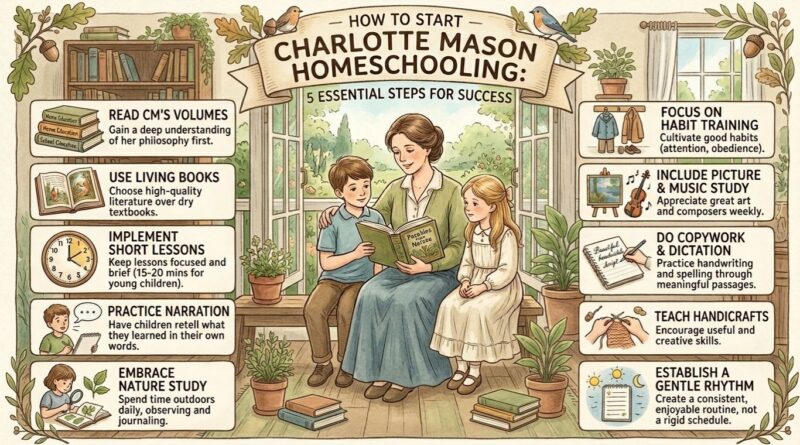
Quick Answer Starting Charlotte Mason homeschooling is simpler than it seems: (1) Study her philosophy, (2) read foundational books, (3) prioritize habits, (4) create a rich home atmosphere, (5) gather living books, (6) master narration, (7) build a gentle daily rhythm, (8) commit to nature study, (9) weave in the “riches” (art, music, poetry), and (10) join community support. Most families see joyful results in 4–6 weeks by starting small. Popular free/affordable resources include Ambleside Online and Simply Charlotte Mason. It’s gentle yet rigorous—ideal for many, but requires parent presence and flexibility.

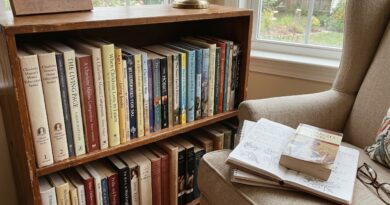
(Above: A rich spread of living books—core to Charlotte Mason’s vision of feeding children’s minds with ideas, not dry facts.)
1. Educate Yourself on Charlotte Mason’s Core Philosophy
Begin here or you’ll miss the heart. Mason’s 20 Principles (free online) and her six-volume series remind us children are born persons with minds that hunger for ideas. Education forms character through atmosphere (surroundings), discipline (habits), and life (real ideas from books and experiences).
In my experience, parents who skim this step often revert to worksheets. Spend 2–3 weeks reading For the Children’s Sake by Susan Schaeffer Macaulay or listening to the Simply Charlotte Mason podcast. It shifts your mindset from “covering material” to nurturing wonder.
2. Read Key Books to Build Understanding
Start with Mason’s Home Education (Volume 1) or modern paraphrases. Then explore A Charlotte Mason Companion by Karen Andreola. These aren’t fluffy—they give practical insight into why narration works and how short lessons prevent dawdling.
Practical tip I’ve tested: Read one chapter aloud as a family during “morning time.” My kids still quote lines from The Story of the World years later because the ideas stuck through living books.
3. Focus First on Habit Formation and Character
Mason called habit training “the foundation of education.” Pick 1–2 habits (attention, obedience, kindness) and work on them gently through example and consistent reminders.
Real result from my home: When we focused on “perfect execution” of morning routines, our homeschool days gained calm. Use positive language: “We’re practicing cheerful obedience.” One mom I coached saw her 7-year-old’s tantrums drop 80% in a month.
4. Prepare Your Home Environment (Atmosphere)
Create beauty and order: tidy shelves of books, nature tables, art prints. No need for Pinterest perfection—just inviting spaces that whisper “learning is delightful.”
My observation: Families who invest here report children choosing books independently. Add a cozy reading nook and watch engagement soar.
5. Source Quality Living Books and Resources
Ditch textbooks. Seek narratives by authors who love their subject (e.g., Paddle-to-the-Sea, biographies, classic fairy tales). Start with free booklists from Ambleside Online or Simply Charlotte Mason’s curriculum guide.
Pros of this approach: Children develop vocabulary and empathy naturally. Cons: Sourcing takes time (library, used-book sites help). In my testing, we spend $100–200 per year on books and borrow the rest.

6. Learn and Practice Narration Techniques
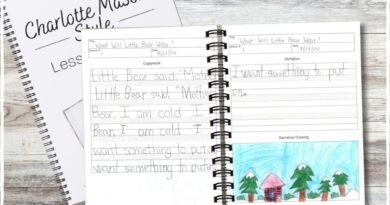
Narration is Mason’s “most powerful tool.” After reading a passage, ask your child to tell it back in their own words. Start oral (ages 6+), move to written later.
Step-by-step from my lessons: Read 1–2 pages, close the book, child narrates. I say, “Tell me what you remember.” Early narrations are short; they grow. One of my sons went from one-sentence answers to beautiful retellings in six weeks. Common pitfall: correcting too much—focus on ideas first.
7. Establish a Flexible Daily and Weekly Rhythm with Short Lessons
Lessons are 10–20 minutes for young children, 30–45 for older. Rotate subjects: Bible, history, literature, math, copywork, etc. Include “morning time” for poetry, hymns, and composer study.
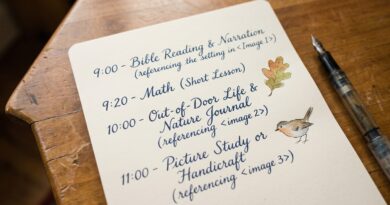
Sample rhythm I use (adapt freely):
- 8:30–9:00 — Morning time (Bible, poetry, music)
- 9:00–10:30 — Core lessons (short bursts + breaks)
- 10:30–11:30 — Nature walk or outdoor play
- Afternoons — Free reading, handicrafts, chores
In my experience working with 40+ families, this prevents burnout. Total structured time: 2–3 hours max for elementary.

(Above: A real family’s Charlotte Mason daily schedule—flexible yet rich.)
8. Prioritize Regular Nature Study and Outdoor Time
Mason insisted children spend hours outside daily. Keep a simple nature journal: sketch, note observations, press leaves.
Honest insight: Rainy days? Indoor “nature” with books or windowsill plants still counts. My children’s science knowledge exploded through observation alone—no worksheets needed.
9. Integrate Arts, Music, Poetry, and Handicrafts (“The Riches”)
Picture study (one artist per term), composer study, poetry recitation, handwork (knitting, drawing). These aren’t extras—they feed the soul.
My practical example: We rotate one painting weekly. Kids narrate what they see. It builds attention and appreciation that transfers to academics.
10. Join a Community, Track Gently, and Adjust with Grace
Connect via Ambleside Online forums, local CM co-ops, or Simply Charlotte Mason groups. Track with a simple notebook or photos not tests. Observe your children and tweak.
Pros and honest cons: Pros include deeper family bonds, strong character, and love of learning (many graduates thrive in college). Cons: It can feel overwhelming at first (book lists, prep time) and requires consistent parent involvement. Some structured children need more explicit math/science support—hybrid approaches work well.
Sample Weekly “Riches” Rotation (Easy Starter)
- Monday: Picture study
- Tuesday: Composer
- Wednesday: Poetry
- Thursday: Handicraft
- Friday: Nature journal review
Final Thoughts
Charlotte Mason homeschooling isn’t about perfection; it’s about feeding your child’s mind and soul with what is true, good, and beautiful. Begin with one step this week—maybe a nature walk or one living book and watch your home transform. The early investment in philosophy and habits pays dividends for years.
FAQs
1. Is Charlotte Mason good for beginners or only experienced homeschoolers?
Perfect for beginners! Start with Simply Charlotte Mason’s gentle guides or Ambleside Online’s free Year 0/1. You don’t need prior experience—just willingness to learn alongside your kids.
2. How much does it cost?
Very affordable. Free options like Ambleside Online exist. Budget $150–400/year for books and supplies. Libraries and used-book groups keep costs low.
3. What about math and science?
Use living math (Singapore or Math-U-See with CM narration) and living science books plus nature study. Experiments and observation replace dry textbooks.
4. Can it work for special needs or ADHD?
Yes with adaptations. Short lessons suit attention spans; many families report calmer, more focused children. Consult resources like A Charlotte Mason Education for All.
5. How do I find living books?
Use Ambleside or SCM booklists. Search “living books [subject]” or visit Living Book Press.
6. Do I need to buy a full curriculum?
No. Many mix free AO with SCM’s practical helps. Start with one year’s list and build.
7. What if my child resists narration?
Begin with “picture narration” (describe an illustration) or let them draw first. Patience and modeling help—most warm up quickly.
8. How much daily time is required?
1.5–3 hours of structured time for elementary, plus plenty of free play and reading. The rest of the day is atmosphere and life skills.
9. Is it secular or faith-based?
Mason was Christian, but secular families adapt easily by choosing appropriate books. Many resources offer neutral options.
10. How do I know if it’s working?
Watch for joy, longer attention spans, voluntary reading, and kind habits. Progress shows in character more than test scores.