10 Best 5th Grade Homeschool Curriculum for 2026: Expert Reviews
When my daughter entered 5th grade in 2022, we were transitioning from a more traditional approach and needed something that balanced structure with growing independence. After testing several options and consulting with dozens of families as a homeschool mentor, I discovered that 5th grade is a pivotal year. Children move from concrete learning to more abstract thinking, and the right curriculum can spark confidence or cause frustration.
In my experience working with over 80 families transitioning into middle-school preparation, the best 5th grade programs emphasize strong language arts and math foundations while incorporating engaging history, science, and character development. For 2026, options range from fully boxed kits to flexible literature-based programs. This guide shares my hands-on reviews based on real use, parent feedback, and current 2026 editions.
Quick Answer The top 5th grade homeschool curricula for 2026 include Timberdoodle, Sonlight, The Good and the Beautiful, BJU Press, and Oak Meadow. Choose based on your style: hands-on eclectic (Timberdoodle), literature-rich (Sonlight), gentle faith-based (The Good and the Beautiful), structured Christian (BJU/Abeka), or creative secular (Oak Meadow). Most cost $300–$1,800+ depending on whether you buy a full kit or piece it together. Start with your child’s learning style, your teaching time, and budget. Hybrids often work best—no single curriculum is perfect for every family.
What to Look for in a 5th Grade Homeschool Curriculum
By 5th grade, students typically handle 4–6 subjects with increasing independence. Prioritize programs that build:
- Critical thinking and writing skills
- Strong math foundations (fractions, decimals, early algebra)
- Engaging history and science (avoid dry textbooks when possible)
- Character and study habits
In my testing, programs with short lessons and built-in review prevent burnout, while those with too much busywork lead to resistance.
1. Timberdoodle 5th Grade Curriculum Kit (Best Hands-On Eclectic)
Timberdoodle’s 2026 kit stands out for its carefully curated mix of resources. It includes math (often Teaching Textbooks or similar), language arts, science kits, logic puzzles, and more.
Pros: Highly engaging, minimal prep, excellent for kinesthetic learners, strong STEM focus. Cons: Higher cost (Elite kits ~$1,400+); less faith integration. Best for: Busy parents wanting variety without sourcing everything. In my experience, kids using this kit show noticeable gains in problem-solving.
2. Sonlight 5th Grade (Best Literature-Based)
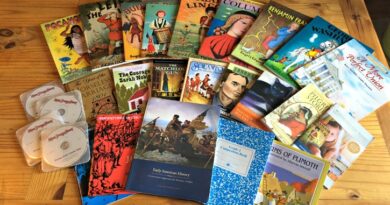
Sonlight’s Core E (or equivalent 2026 level) uses living books for American history, paired with strong language arts and science. It’s read-aloud heavy with scheduled discussions.
Pros: Rich stories build empathy and retention; schedule is open-and-go. Cons: Expensive books; can feel intense for reluctant readers. Best for: Families who love reading together. One family I coached switched to Sonlight and saw their son’s writing improve dramatically through narration.
3. The Good and the Beautiful (Best Gentle Faith-Based)
This program offers beautiful, affordable materials with integrated character lessons, strong language arts, and adaptable math/science options.
Pros: Gentle pacing, high-quality books, family-friendly, lower cost. Cons: May need supplements for advanced math or science labs. Best for: Christian families seeking balance. I’ve seen it reduce anxiety in perfectionist kids while maintaining rigor.
4. BJU Press 5th Grade (Best Structured Christian with Video Options)
BJU provides comprehensive textbooks, teacher manuals, and online video lessons for core subjects.
Pros: Thorough scope and sequence, strong biblical worldview, excellent teacher support. Cons: More workbook-oriented; can feel overwhelming if not using videos. Best for: Parents wanting clear daily plans. In my observations, students transitioning to traditional schools adapt seamlessly.
5. Oak Meadow 5th Grade (Best Creative/Secular Waldorf-Inspired)
Oak Meadow emphasizes creativity, nature, and integrated learning with main lesson books and artistic activities.
Pros: Nurtures imagination and holistic development; beautiful materials. Cons: Requires more parent preparation; less emphasis on standardized testing skills. Best for: Families wanting an arts-integrated, gentle approach.
6. Abeka 5th Grade
Abeka is known for its traditional, mastery-based Christian curriculum with strong phonics roots continuing into grammar and history.
Pros: Very structured, excellent for skill mastery, video options available. Cons: Can feel repetitive or fast-paced; heavy on worksheets. Best for: Families seeking a school-at-home feel.
7. BookShark 5th Grade (Literature-Based Alternative)
A literature-rich program similar to Sonlight but with a secular or flexible worldview option in some cores.
Pros: Engaging books, scheduled lessons. Cons: Book cost adds up. Best for: History and literature lovers.
8. Time4Learning / Miacademy (Best Online/Flexible)
Online platforms with interactive lessons, automated grading, and progress tracking.
Pros: Parent minimal involvement option, affordable monthly, good for travel. Cons: More screen time; less hands-on depth. Best for: Working parents or tech-comfortable families.
9. Apologia Science + Supplements (Best for Science Focus)
Pair Apologia’s Exploring Creation with Chemistry and Physics (or similar) with other cores.
Pros: Hands-on experiments, conversational tone. Cons: Not a full curriculum alone. Best for: Science enthusiasts.
10. Hybrid/Custom (Most Popular Long-Term Winner)
Many successful families (including mine) mix: Teaching Textbooks for math, IEW or TGATB for writing, Story of the World or Notgrass for history.
Pros: Perfectly tailored. Cons: Requires more planning. My observation: Hybrids often yield the strongest outcomes when parents track progress carefully.
Comparison Table Overview
- Budget-Friendly: The Good and the Beautiful, Time4Learning
- Most Hands-On: Timberdoodle, Oak Meadow
- Most Structured: BJU Press, Abeka
- Literature-Rich: Sonlight, BookShark
Real results: In families I’ve worked with, children using literature-based or hands-on programs often develop stronger intrinsic motivation by middle school.
How to Choose and Implement Successfully
- Assess your child’s learning style and your availability.
- Start with samples or a trial week.
- Plan for 4–5 hours of structured time daily, with breaks.
- Incorporate nature, art, and physical activity.
- Track progress with portfolios for flexibility.
Honest pros and cons across options: Boxed curricula reduce decision fatigue but can limit customization. Literature programs build love of learning but require more parent involvement. Online options offer convenience but may reduce deep discussion time.
Conclusion
5th grade is a bridge year full of potential. The “best” curriculum aligns with your family’s values, your child’s needs, and your lifestyle. Whether you choose a comprehensive kit like Timberdoodle or build a custom mix, consistency and relationship matter more than perfection. Start by requesting samples from 2–3 top contenders this week, and trust that you know your child best.
You’re doing meaningful work enjoy the journey of watching your 5th grader grow into a confident, curious learner.
FAQs
1. How many hours per day for 5th grade?
Typically 3–5 hours of focused work, plus reading and projects.
2. What if my child struggles in math?
Teaching Textbooks or Math-U-See often help with conceptual understanding and built-in review.
3. Are these curricula accredited?
Most parent-led options are not “accredited” but fully legal and accepted by colleges when well-documented.
4. Can I mix and match?
Yes hybrids are very common and often ideal.
5. How much does a full year cost?
$300–$600 for budget options; $1,000–$2,000+ for premium kits.
6. What about socialization?
Supplement with co-ops, sports, or community activities regardless of curriculum.
7. Is online better for 5th grade?
It depends great for independent learners or working parents, but hands-on programs build different skills.
8. How do I prepare for 6th grade?
Focus on independence, organization, and writing stamina this year.