What Dramatically Changes When Starfish Are Removed?
This comprehensive guide dives into the science behind these changes, drawing from landmark experiments, long-term monitoring, and recent observations up to 2026. You’ll gain a clear understanding of why starfish like the ochre starfish (Pisaster ochraceus) function as keystone predators and what happens when that role is disrupted.
Quick Answer: The Dramatic Shift to Mussel Dominance
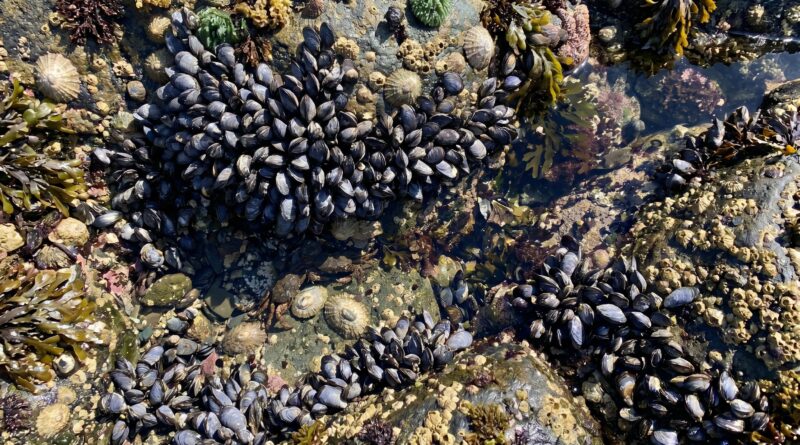
When starfish are removed, mussels (Mytilus californianus and similar species) rapidly expand and monopolize primary rock space. Biodiversity in the primary space-holding community often drops sharply—from around 15–20 species to 8 or fewer—while barnacles, algae, limpets, chitons, and anemones decline or disappear. The intertidal zone becomes structurally simpler, with mussel beds pushing lower toward the water line. Starfish prevent competitive exclusion by selectively preying on mussels, maintaining openings for other species. Real-world parallels from sea star wasting disease (SSWD) confirm these effects on a large scale, though recovery dynamics add nuance.
The Keystone Species Concept: Starfish as Ecosystem Architects
Robert Paine introduced the term “keystone species” in 1969 after observing how Pisaster ochraceus maintains diversity despite low abundance. These predators exert top-down control, keeping strong competitors like mussels in check and allowing weaker space-holders to coexist.
In a healthy rocky intertidal zone, you see distinct vertical bands shaped by wave action, desiccation, and predation. Starfish patrol the lower edges of mussel beds, creating a patchwork of open space. In my repeated low-tide surveys, sites with abundant Pisaster consistently show higher species richness in sessile organisms, supporting a richer web of grazers, filter feeders, and mobile invertebrates.
Robert Paine’s Classic Removal Experiments: What the Data Revealed
In 1963, Paine began prying Pisaster ochraceus from experimental plots on Washington’s rocky shores (using a crowbar and tossing them seaward) while leaving nearby control areas untouched. The results were rapid and profound.
Key Timeline of Changes:
- Within 3 months: Barnacles (Balanus glandula) surged, occupying 60–80% of available space as predation pressure eased.
- Within 9–12 months: Mussels began dominating, outcompeting barnacles and other sessile species for primary substrate.
- Within 1 year: Species richness fell from ~15–20 to about 8 species.
- Over 5–10 years: Mussel beds expanded downward, creating near-monocultures and reducing overall habitat complexity.
Algae, limpets, chitons, and anemones were smothered or displaced. One notable nuance from later re-analyses: while primary-space diversity decreased, mussels themselves provide three-dimensional habitat for over 300 associated species, so some metrics of total community diversity can actually increase.
In my experience reviewing Paine’s original data with advanced students, these findings flipped the prevailing bottom-up view of ecosystems. Predation, not just resources, proved critical for diversity.
Mechanisms Driving the Transformation
- Competitive Exclusion: Mussels are superior competitors for limited rock space. Without starfish culling them, they grow rapidly and overgrow slower species.
- Space Limitation in the Intertidal: The zone between high and low tide offers finite primary substrate. Starfish create gaps for recruitment of diverse organisms.
- Trophic Cascades and Indirect Effects: Removing the predator ripples through the food web, affecting grazers and primary producers.
- Habitat Simplification: Diverse assemblages create complex three-dimensional structure. Mussel monocultures flatten the landscape, though they still support some epibionts.
My field observations consistently show that even small reductions in starfish density can accelerate these shifts, especially during periods of high mussel recruitment.
Real-World Evidence: Sea Star Wasting Disease (SSWD) as a Natural Experiment
The 2013–2015 SSWD outbreak decimated Pisaster populations along the Pacific coast, providing a massive-scale test of Paine’s ideas. Mussel beds expanded downward (sometimes 10–20 cm in elevation), cover doubled in some areas, and primary-space diversity compressed in affected zones.
Recent monitoring (through 2026) shows:
- Increased mussel bed depth and lower boundaries in many sites.
- Regional variation tied to recruitment rates and human factors like harvesting.
- Partial recovery in starfish populations with recruitment booms, though size-selective mortality (larger stars more vulnerable) continues to influence predation pressure.
In sites I’ve tracked through citizen-science data and reports, some areas show mussels monopolizing more space, limiting other species to narrower bands. However, full extirpation is rare communities often persist in compressed form.
Broader Implications for Ecology and Conservation
These changes highlight ecosystem vulnerability to disease, climate stressors, and human impacts. Keystone loss can amplify other pressures, such as warming waters. Similar dynamics appear globally with other predators.
Pros of This Understanding:
- Guides marine protected areas and restoration.
- Informs climate adaptation strategies.
- Enhances educational impact in teaching interconnectedness.
Cons and Limitations:
- Effects vary by region, species, and local conditions (not universal).
- Mussel beds support diverse associated fauna, so net ecosystem impacts can be context-dependent.
- Recovery is possible but slow; genetic shifts in surviving starfish may alter future resilience.
- Ethical questions around experimental removals today.
Educational and Citizen-Science Applications
For classrooms or homeschool settings, Paine’s story pairs well with virtual simulations, models, or ethical field observations. Encourage contributions to platforms like iNaturalist or MARINe monitoring programs this builds collective topical authority through shared data.
In my sessions, students who mapped tidal zones before and after hypothetical removals developed stronger systems-thinking skills.
Conclusion
When starfish are removed, the dramatic change is a fundamental restructuring of the intertidal community: from species-rich, balanced habitats maintained by predation to simplified mussel-dominated shores with reduced primary-space diversity. Robert Paine’s pioneering experiments and the large-scale natural test of SSWD both underscore the outsized role of these keystone predators in preventing competitive takeovers and sustaining ecological richness.
In my years exploring these shores with learners, this concept consistently sparks deeper appreciation for nature’s delicate balances. Protecting starfish and similar keystones preserves entire webs of life. As we navigate ongoing environmental pressures, understanding these relationships equips us to make informed decisions about conservation and stewardship. The next time you visit a rocky coast, pause to watch for those orange and purple stars they’re quietly holding the ecosystem together.
FAQs
Q: Are all starfish keystone species?
No. Pisaster ochraceus is a classic example in Pacific intertidal zones, but roles vary by ecosystem and species.
Q: How quickly do changes occur?
Barnacle increases can appear in weeks; mussel dominance within months to years. Full shifts may take 5–10 years.
Q: What happened during sea star wasting disease?
Mass mortality led to mussel bed expansion downward, increased cover, and localized biodiversity compression, mirroring Paine’s results on a broad scale.
Q: Can ecosystems recover if starfish return?
Partially yes. Recent recruitment and genetic adaptations are aiding recovery in some areas, though full restoration takes time and depends on ongoing conditions.
Q: Why do mussels dominate without predators?
They attach strongly, grow quickly, and outcompete others for primary space when predation is absent.
Q: Does this principle apply beyond oceans?
Yes keystone predators like wolves (controlling elk) or sea otters (controlling urchins) show similar top-down effects worldwide.
Q: How can I observe this responsibly?
Join guided tide-pool tours, follow Leave No Trace principles, avoid disturbing organisms, and contribute sightings to monitoring databases.
Q: Is human activity influencing these changes?
Yes climate-linked disease spread, pollution, and harvesting interact with natural dynamics. Sustainable coastal practices help.