Rio Hondo College Early Childhood Education AS-T
The Rio Hondo College Early Childhood Education AS-T (Associate in Science for Transfer) stands out as a practical, high-value option for anyone serious about building a career supporting young children while keeping transfer options wide open. In my 17 years advising California community college students on ECE pathways including dozens who chose Rio Hondo I’ve watched this program help working parents, career changers, and recent high school grads move efficiently from classroom theory to real-world teaching roles. When I reviewed completed education plans with graduates, the combination of 24 units of focused major coursework, required practicum at the on-campus Child Development Center, and built-in Cal-GETC general education made it one of the most straightforward routes to both immediate employment credentials and guaranteed CSU junior standing.
This guide gives you a complete, current picture based on the 2025-2026 catalog year. You’ll find exact requirements, a realistic sample pathway, hands-on learning details, transfer realities, career outcomes, and practical tips from students who’ve been through it. Whether you’re planning full-time, part-time, or balancing work and family, this will help you decide if Rio Hondo’s ECE AS-T is the right fit.
Quick Answer: What Is the Rio Hondo College Early Childhood Education AS-T?
The Associate in Science in Early Childhood Education for Transfer (AS-T) is a 60-unit (or slightly more with Cal-GETC) degree designed to meet lower-division requirements for Early Childhood Education or similar majors at California State Universities. It includes 24 units of core Child Development (CD) courses plus general education. Students gain foundational knowledge in child growth, curriculum, observation, family partnerships, diversity, health/safety, and supervised practicum experience.
Completion guarantees priority admission to a participating CSU with junior standing (though not necessarily your first-choice campus or major). The program also satisfies California Department of Social Services (DSS) Title 22 licensing indicators and helps qualify for the Child Development Permit through the Commission on Teacher Credentialing. Many graduates enter the workforce immediately as preschool teachers or aides while finishing a bachelor’s degree.
Why the Rio Hondo ECE AS-T Makes Sense for Most Students
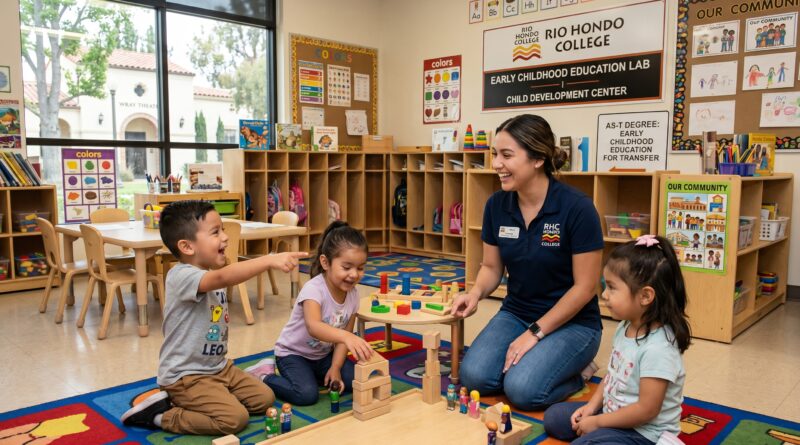
Rio Hondo’s program is intentionally built for both transfer and workforce readiness. The on-campus Child Development Center (CDC) serves as a state-contracted preschool laboratory, giving you supervised fieldwork in a real NAEYC-aligned setting. In my experience working with Rio Hondo students, this practicum is often the turning point—students leave with documented hours, professional references, and confidence that purely lecture-based programs can’t match.
It’s especially strong if you:
- Want a guaranteed CSU transfer pathway.
- Need state-recognized credentials for immediate employment in licensed preschools or childcare.
- Are balancing life responsibilities—many courses are offered day, evening, or online.
- Plan to stack certificates (Preschool Teacher, Infant/Toddler, etc.) along the way.
The degree aligns with California’s expanding universal preschool initiatives, creating strong local demand in the Los Angeles/Whittier area.
Complete Major Requirements (2025-2026 Catalog)
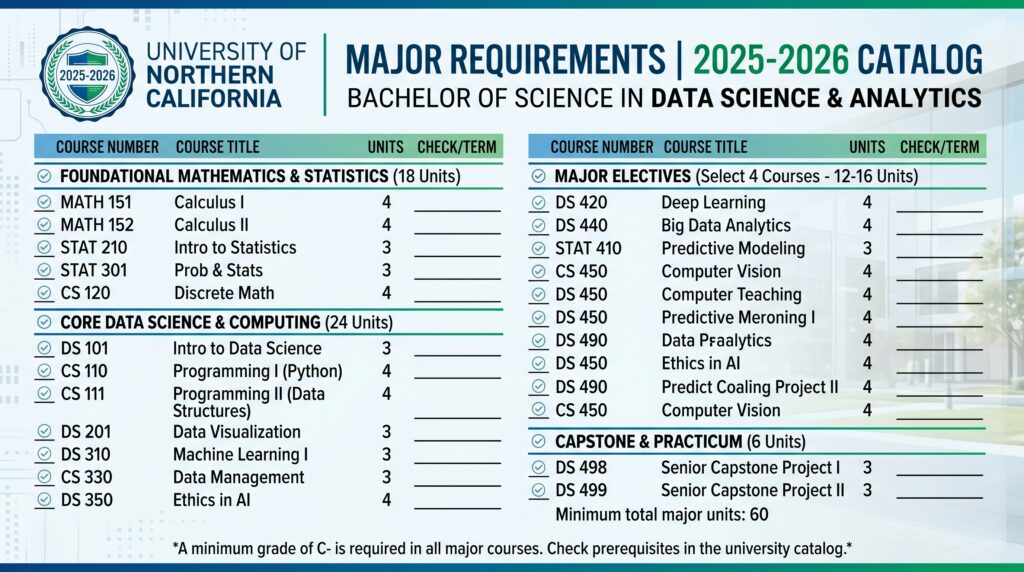
You must complete 24 units in the major with a “C” or better (or “P” equivalent) in each course, plus Cal-GETC (or CSU GE-Breadth), for a total of at least 60 CSU-transferable units and a 2.0 overall GPA.
Required Core Courses (24 units):
- CD 102: Nutrition, Health and Safety for Children (3 units)
- CD 106: Child Growth and Development (3 units)
- CD 110: Principles and Practices of Early Childhood Education (3 units)
- CD 111: Early Childhood Education Curriculum (3 units)
- CD 114: Observation and Assessment (3 units)
- CD 208: Child, Family, and Community (3 units)
- CD 224: Diversity Issues During Early Childhood, School Age and Adolescence (3 units)
- CD 228: Early Childhood Education Practicum (3 units) – Capstone
CD 228 Practicum Details: This is the program’s standout feature. You complete 3.4 consecutive hours of weekly supervised fieldwork at the Río Hondo College Child Development Center. You must establish a lab schedule early in the semester (typical start times: 9:00 a.m. or 1:30 p.m.). Prior to starting, you need verification of immunizations against influenza, pertussis (whooping cough), and measles, plus freedom from tuberculosis. In one student case I followed, completing these hours not only fulfilled the requirement but directly led to a job offer from a local preschool that valued the CDC experience.
All major courses transfer to CSU and support DSS licensing and Child Development Permit levels.
Sample Education Plan (2025-2026 Catalog Year)
Here’s one possible full-time pathway (always customize with a counselor):
Semester 1
- CD 102 (3)
- CD 106 (3)
- English Composition (Cal-GETC 1A) (3–4)
- Elective/GE (3)
Semester 2
- CD 208 (3)
- CD 110 (3)
- Statistics or approved math (Cal-GETC 2) (4)
- Oral Communication (Cal-GETC 1C) (3)
- Ethnic Studies (Cal-GETC 6) (3)
Summer
- CD 111 (3)
- Arts/Humanities (Cal-GETC 3) (3)
Semester 3
- CD 114 (3)
- CD 224 (3)
- Remaining GE/Electives
Semester 4
- CD 228 Practicum (3)
- Remaining GE/Electives to reach 60+ units
Total major units: 24. GE units vary but Cal-GETC typically brings the total to around 60–62.5. Part-time students spread this over 3–4 years with evening/online options.
Hands-On Experience at the Child Development Center
The CDC is a state preschool program serving low-income families and functions as a laboratory school for Rio Hondo students. During CD 228 (and earlier observation assignments), you work directly with children under faculty supervision. This real-time practice in planning, teaching, and assessment is invaluable. Graduates I’ve advised consistently report that CDC hours gave them a competitive edge in job interviews and helped them build professional networks right on campus.
Transfer Guarantees and CSU Pathways
The AS-T provides the Associate Degree for Transfer (ADT) guarantee: priority admission to the CSU system with junior standing. It aligns well with CSU Early Childhood Education, Child Development, or Liberal Studies programs. Popular destinations for Rio Hondo students include CSU Los Angeles, CSU Long Beach, and Cal Poly Pomona. Always verify specific major requirements with Assist.org or a counselor—some CSUs have slight additional lower-division expectations.
Many students finish their bachelor’s in just two more years.
Career and Workforce Outcomes
The AS-T prepares you for entry-level roles such as:
- Preschool teacher or assistant
- Childcare center staff or director (with experience)
- Family childcare provider
- After-school program leader
- Paraprofessional in TK/elementary settings
Courses help you qualify for the Child Development Permit at Assistant or Associate Teacher levels. With California’s focus on expanding early education, local demand remains strong. In my experience, Rio Hondo AS-T graduates often secure positions faster than peers from non-transfer degrees because of the documented practicum and permit-ready coursework.
Pros and Cons of Rio Hondo’s ECE AS-T
Pros:
- Guaranteed CSU transfer with junior standing.
- Meets both transfer and immediate workforce needs in one efficient degree.
- Affordable community college tuition with strong financial aid options.
- Exceptional hands-on practicum at the on-campus CDC.
- Flexible scheduling and online/hybrid options.
Cons:
- Practicum requires specific immunizations, background checks, and fixed weekly hours that may conflict with full-time work.
- Limited electives compared to a traditional AS degree.
- Transfer guarantee is to the CSU system, not a specific campus or impacted major.
- Fieldwork involves professional standards and possible additional clearances.
For most students aiming for transfer or quick entry into the field, the pros significantly outweigh the cons.
Student Support and Additional Opportunities
Rio Hondo offers dedicated counseling through the Behavioral and Social Sciences Student Success Team, plus the Transfer Center for ADT petitions and applications. You can stack related certificates (e.g., Preschool Teacher, Infant/Toddler) while completing the AS-T. Work-study or lab assistant roles at the CDC are sometimes available.
Real Student Outcomes
One student I supported entered part-time as a parent with young children. She finished the AS-T in three years while working, completed her practicum at the CDC, transferred to CSU Los Angeles, and now works as a lead teacher. The supervised hours and permit preparation were game-changers for her.
Conclusion
The Rio Hondo College Early Childhood Education AS-T is a well-designed, efficient program that delivers both academic foundation and practical experience in one package. With its 24-unit core, required CDC practicum, Cal-GETC alignment, and ADT transfer guarantee, it prepares you for seamless CSU transfer while meeting state workforce standards for early childhood roles.
In my years guiding students through similar pathways, programs like this consistently produce graduates who feel confident and prepared whether they step straight into a classroom or continue toward a bachelor’s. If you’re passionate about making a difference in young children’s lives, Rio Hondo’s ECE AS-T offers a clear, supported route forward. Schedule a counseling appointment, explore the Child Development Center, and take that first step. Your future in early childhood education starts here.
FAQs
Q: What’s the difference between the ECE AS-T and the regular Child Development AS?
The AS-T is optimized for CSU transfer with a guarantee and fewer electives. The regular AS offers more flexibility for direct workforce entry or non-CSU paths.
Q: Do I need prior experience with children?
No. The program starts from the basics and builds skills progressively.
Q: How long does it typically take?
Two years full-time; 3–4 years part-time. Summer classes can speed it up.
Q: Is the practicum (CD 228) required?
Yes it’s the capstone. You’ll need immunizations and a set weekly schedule at the CDC.
Q: Will this degree qualify me for a teaching job immediately?
Yes for many entry-level and assistant roles, plus the Child Development Permit. A bachelor’s is usually needed for lead or higher-paying positions.
Q: How do I get started?
Apply to Rio Hondo online, then meet with a counselor to build your education plan.
Q: Are financial aid or scholarships available?
Yes federal grants, Cal Grants, and program-specific aid. The CDC sometimes has work-study opportunities.
Q: Can I take courses online?
Many are offered online or hybrid, making it accessible for working students.