Coos Bay School District Elementary Social Studies Curriculum Review
Quick Answer: The Coos Bay School District (CBSD) in coastal Oregon employs an engaging, newspaper-based approach to elementary social studies, primarily through weekly educational periodicals such as Studies Weekly (adopted district-wide around 2019). This model prioritizes student engagement, literacy integration, and standards-aligned content over traditional textbooks. It aligns well with Oregon’s evolving Social Science Standards—particularly the 2024 revisions emphasizing inquiry, multiple perspectives, ethnic studies, and Tribal History/Shared History—but will benefit from targeted supplementation and professional development as full implementation approaches the 2026–27 school year. Strengths include high student interest and media literacy development; opportunities exist for deeper place-based learning tied to Coos Bay’s unique coastal and Indigenous heritage. Parents and educators can support learning through home discussions, local explorations, and active participation in district curriculum processes.
Why Elementary Social Studies Matters More Than Ever
Strong social studies instruction in the early grades builds the foundation for informed citizenship, critical thinking, and reading comprehension. Research consistently shows that background knowledge in history, geography, civics, and economics helps students understand complex texts across subjects. In an era of rapid information flow and civic challenges, elementary students need early, developmentally appropriate opportunities to explore identity, community, rules and laws, maps, economic choices, and diverse perspectives—including the rich histories of Oregon’s Tribal nations.
Coos Bay School District serves students across several elementary and intermediate schools in a region defined by its coastal location, maritime and timber heritage, and proximity to the Coquille Indian Tribe and other Tribal communities. A thoughtful social studies curriculum here has the power to connect children to their place while preparing them for broader participation in American democracy.
Coos Bay School District Context and Recent Priorities
Coos Bay Public Schools (District #9) maintains a clear focus on academic growth, school climate, and instructional improvement. Recent district communications highlight gains in early literacy and mathematics, alongside efforts to support the whole child. The Curriculum & Instruction team, led by Director of Teaching and Learning Chad Putman, oversees materials adoption, professional learning, and alignment efforts.
While detailed public scope-and-sequence documents or current elementary social studies pacing guides are not extensively posted online (a common practice that preserves teacher flexibility), the district has historically used a transparent review process that includes public display of proposed materials.
The 2019 Curriculum Update: Embracing the Newspaper Model
In 2019, Coos Bay School District undertook a significant social studies materials refresh across all grade bands. For elementary students, the district moved away from traditional textbooks in favor of academic children’s newspapers specifically a program built around Studies Weekly or a comparable weekly periodical format.
Why this approach?
- Engagement first: Colorful, photo-rich weekly issues feel fresh and relevant to young learners.
- Literacy integration: Every issue doubles as nonfiction reading practice, building vocabulary, comprehension, and writing skills within the social studies block.
- Timeliness: Content can address current events, holidays, elections, and seasonal topics in age-appropriate ways.
- Accessibility: Shorter articles with visuals support a wide range of readers, including English learners and students who benefit from chunked text.
- Cost and logistics: District-wide adoption at roughly $30,000 total represented a practical investment compared with full textbook replacements.
This model remains a core strength of Coos Bay’s elementary social studies program. Teachers receive ready-to-use articles, activities, maps, and discussion prompts that keep social studies lively rather than lecture-heavy.
Oregon’s 2024 Social Science Standards: The New North Star
All Oregon districts, including Coos Bay, are aligning instruction to the 2024 Oregon Social Science Standards (adopted June 2024 by the State Board of Education). Full implementation is expected no later than the 2026–27 school year.
These standards represent a meaningful evolution:
- Clear grade-band themes that spiral from self to community to state and nation:
- Kindergarten: Me and My World
- Grade 1: My School and Family
- Grade 2: My Neighborhood, My Community
- Grade 3: Our Community and Beyond
- Grade 4: Oregon (deep dive into Tribal sovereignty, shared history, geography, and economy)
- Grade 5: Colonial and Early U.S. History to 1800
- Four integrated domains: Civics, Geography, Economics, and History, each with progressive concepts (e.g., Political Institutions, Human-Environmental Interaction, Continuity and Change).
- Essential Disciplinary Practices that emphasize inquiry: developing compelling questions, analyzing primary and secondary sources, evaluating multiple perspectives, constructing evidence-based arguments, and considering civic action.
- Integrated ethnic studies and Tribal History/Shared History: Oregon leads nationally in requiring attention to underrepresented communities, resilience, and Indigenous sovereignty—especially prominent in Grade 4.
The 2024 standards align closely with the national College, Career, and Civic Life (C3) Framework developed by the National Council for the Social Studies, which many high-quality programs now reference.
How Well Does the Newspaper Model Align with the New Standards?
Strengths The weekly periodical format excels at sparking curiosity and delivering timely, visually supported content. Issues naturally lend themselves to discussion of current events, cultural celebrations, and basic economic or geographic concepts. Teachers can easily layer on the district’s existing literacy block strategies. For younger grades (K–2), short articles about community helpers, maps, and family traditions map well onto “Me and My World” through “My Neighborhood” themes. Media literacy skills develop organically as students learn to read informational text critically.
Opportunities for Enhancement Newer standards place heavier emphasis on sustained inquiry projects, primary source analysis, and deeper exploration of multiple perspectives—particularly Tribal histories and the forces that shaped Oregon. A weekly newspaper excels at breadth and engagement but may require deliberate supplementation for depth. Examples include:
- Extended inquiry arcs around compelling questions (e.g., “How have the Coquille people and other Tribal nations shaped life on the southern Oregon coast?”).
- Multi-week projects where students create their own classroom newspapers, podcasts, or museum exhibits.
- Explicit connections to local resources: Coquille Tribal history materials available through ODE’s Tribal History/Shared History resources, visits to local historical sites, or guest speakers.
- More robust performance assessments that go beyond weekly quizzes to include student-led research, map creation, or civic action projects (e.g., improving a school or neighborhood space).
Districts using Studies Weekly or similar programs successfully often pair the core periodical with supplemental inquiry modules, teacher-curated primary sources, and dedicated professional learning on the C3 inquiry arc.
Practical Classroom Realities and Best Practices
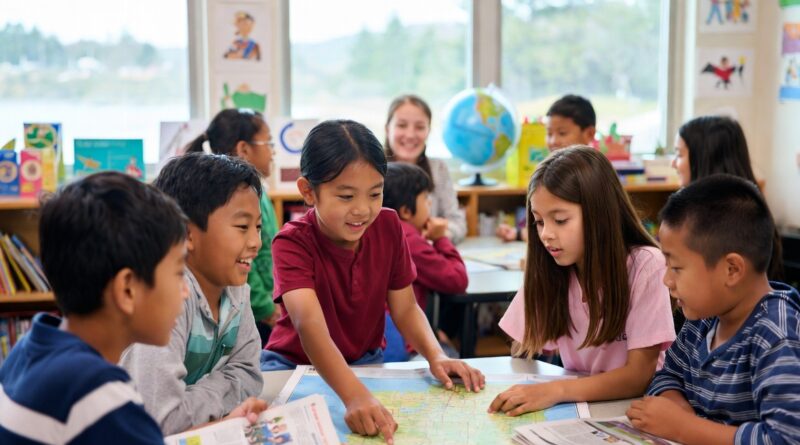
In effective implementations of weekly periodical programs, teachers report higher student participation and fewer complaints that “social studies is boring.” The format supports differentiation: advanced readers tackle longer articles or extension questions while emerging readers benefit from visuals and shared reading.
Coos Bay educators likely integrate social studies with English Language Arts through shared nonfiction texts, response journals, and vocabulary work. Geography and map skills receive regular reinforcement through the periodicals’ cartographic features. Economics concepts (needs vs. wants, producers/consumers, saving) appear in kid-friendly contexts such as community businesses or seasonal jobs tied to the coast.
Potential challenges (common across many districts):
- Social studies instructional minutes can be squeezed by heavy emphasis on math and reading. The newspaper model helps by doubling as literacy time.
- Ensuring vertical alignment and consistent depth across classrooms requires ongoing coaching and collaborative planning time.
- Fully realizing the ethnic studies and Tribal history components benefits from targeted professional development and partnerships with local Tribal education departments.
Supporting Your Child at Home and in the Community
Parents play a vital role. Here are practical ways to reinforce Coos Bay’s elementary social studies learning:
- Ask your child to share the weekly newspaper topic and one new fact they learned.
- Explore local connections: Visit the Coos History Museum, walk the waterfront, or learn about the Coquille Tribe’s history and contemporary contributions together.
- Read age-appropriate books about Oregon Tribes, coastal ecosystems, or famous Oregonians.
- Discuss current events at a child-friendly level—elections, community decisions, or environmental topics relevant to the coast.
- Encourage map exploration using both digital tools and paper maps of Coos Bay and Oregon.
- Attend curriculum nights, school board meetings, or contact the Curriculum & Instruction office when materials reviews occur.
Questions worth asking your child’s teacher or principal:
- How are we incorporating Tribal History/Shared History and multiple perspectives this year?
- What inquiry or project-based learning opportunities complement the weekly periodicals?
- How do we assess deeper understanding beyond weekly quizzes?
- What resources or training are teachers receiving to implement the 2024 standards?
Conclusion
Coos Bay School District’s choice of a weekly newspaper-based elementary social studies program reflects a thoughtful, student-centered philosophy. It prioritizes engagement and literacy integration—two ingredients that research links to better outcomes and more positive student attitudes toward the subject. The 2019 adoption positioned the district well for the era of standards that value active learning over passive textbook coverage.
As Oregon moves toward full implementation of the 2024 Social Science Standards, Coos Bay has a strong foundation to build upon. By strategically layering deeper inquiry, local place-based connections (especially with Tribal partners), and robust professional development, the district can deliver social studies instruction that is not only engaging but also rigorous, inclusive, and truly preparatory for civic life.
Curriculum is never static. The healthiest districts treat it as a living conversation involving educators, families, and community partners. Coos Bay families who stay informed and engaged will help ensure that every elementary student develops the knowledge, skills, and dispositions to understand their world and improve it.
FAQs
What specific materials does Coos Bay use for elementary social studies?
The district primarily uses a weekly educational newspaper program (Studies Weekly or equivalent) adopted around 2019. These colorful, standards-aligned periodicals arrive weekly and include articles, activities, maps, and discussion prompts.
How does the curriculum align with Oregon state standards?
It aligns with the Oregon Social Science Standards in use at the time of adoption and can be readily adapted to the 2024 standards. The format supports many required concepts in civics, geography, economics, and history, especially in younger grades. Deeper alignment with inquiry practices and Tribal History/Shared History will likely involve teacher supplements and professional learning.
Will my child learn about local Coos Bay and Tribal history?
Yes—particularly in Grade 4’s focused Oregon unit. Effective implementation includes local connections. Parents can reinforce this by exploring community resources and asking teachers how Tribal perspectives are integrated.
Is there a lot of homework in elementary social studies?
Typically minimal. The weekly periodical may include optional home extension activities or discussion prompts. Most substantive work happens in class through reading, discussion, mapping, and projects.
How are students assessed?
Through a combination of weekly checks, class discussions, projects (maps, presentations, written responses), and teacher observation. The program often includes built-in quizzes and performance tasks.
What if I have concerns about specific topics or perspectives?
Contact your child’s teacher first, then the principal or Director of Teaching and Learning (Chad Putman). The district has a formal materials review process that includes public input.
When will the new 2024 standards be fully in place?
Districts are planning now; full implementation is required no later than the 2026–27 school year. Coos Bay is well-positioned to make a smooth transition.
How can I see the actual materials or get involved in future reviews?
Reach out to the Curriculum & Instruction office at the district. Materials are often made available for public review during adoption cycles, consistent with district policy.
Does the program address current events and media literacy?
Yes. The weekly format naturally incorporates timely topics in age-appropriate ways and helps students practice reading informational text critically—valuable media literacy skills.
What makes a high-quality elementary social studies program?
According to national frameworks and Oregon’s standards, it should be inquiry-driven, culturally responsive, integrated with literacy, and focused on building civic knowledge and critical thinking rather than rote memorization. Coos Bay’s model emphasizes the engagement piece strongly; continued refinement around depth and local context will further strengthen it.