What to Look for in a Quality Preschool Curriculum in 2026
Choosing a preschool is one of the most important decisions parents make in the early years. In 2026, with growing awareness of how foundational these years are, families are looking beyond flashy marketing or convenient locations. They want programs whose curriculum genuinely supports the whole child socially, emotionally, cognitively, and physically while preparing children for kindergarten and life beyond.
A quality preschool curriculum is not a rigid script of worksheets or drills. It is a thoughtfully designed framework rooted in child development science, responsive to each child’s interests and needs, and implemented by caring, skilled educators in partnership with families. When done well, it creates joyful, engaged learning that builds strong brain architecture and lifelong skills.
Quick Answer: What Defines a Quality Preschool Curriculum in 2026?
A high-quality preschool curriculum in 2026 prioritizes developmentally appropriate practice (DAP) through rich, play-based experiences. It nurtures the whole child across all domains while embedding social-emotional learning, equity, and family partnership. Key hallmarks include:
- Play as the primary vehicle for learning, with intentional guidance toward developmental goals
- Strong emphasis on social-emotional skills and resilience
- Emergent academics (literacy, math, science) woven naturally into exploration rather than isolated drills
- Highly qualified educators who build responsive, nurturing relationships
- Individualized observation-based assessment instead of standardized testing
- Inclusive, culturally responsive environments that celebrate diversity
- Balanced integration of outdoor/nature-based learning and purposeful (limited) technology
- Deep family engagement as a core part of the curriculum
- Accreditation or alignment with rigorous standards (e.g., NAEYC) and low teacher turnover
Parents who prioritize these elements give their children a powerful foundation. Decades of research, including the landmark Perry Preschool Project and Abecedarian Project, show that high-quality early education delivers lasting benefits in education, earnings, health, and reduced social costs.
Also Read: How to Apply for the Georgia Promise Scholarship
1. Embracing Developmentally Appropriate Practice (DAP)
The gold standard for quality preschool curriculum comes from the National Association for the Education of Young Children (NAEYC). Developmentally appropriate practice means using methods that promote each child’s optimal development through a strengths-based, play-based approach to joyful, engaged learning.
DAP rests on three core considerations:
- Commonality — What we know about child development and learning in general
- Individuality — Each child’s unique characteristics, interests, and needs
- Context — The social, cultural, linguistic, and historical contexts that shape learning
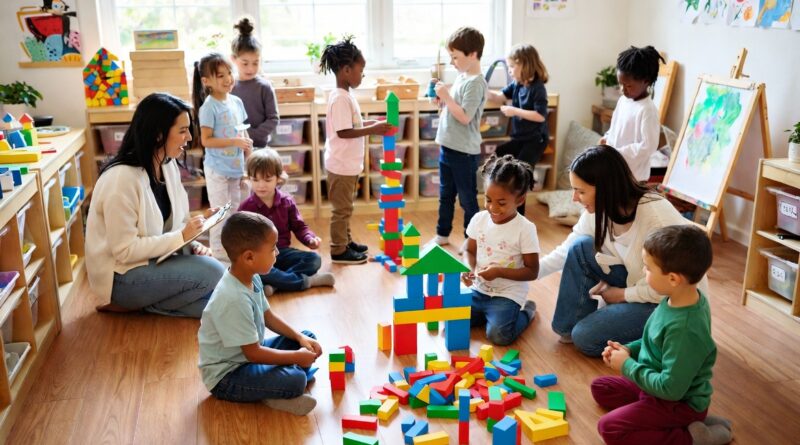
In practice, this looks like teachers observing children closely, planning experiences that build on their current abilities and curiosities, and adjusting in the moment. You will not see rows of children completing identical worksheets. Instead, you will see children deeply engaged in block building that teaches math and engineering concepts, dramatic play that builds language and social skills, and science explorations sparked by a child’s question about why leaves change color.
What to look for on a tour: Do teachers get down to children’s eye level? Do they extend children’s thinking with open-ended questions (“What do you notice about the ramp you built?”) rather than directing every step? Is the daily schedule flexible enough to follow children’s engagement?
2. The Power of Play-Based Learning
Play is not a break from learning—it is how young children learn best. In 2026, quality programs embrace both free play and guided play with clear intentionality. Teachers set up rich environments and then observe, document, and gently extend learning.
High-quality play develops self-regulation, executive function, language, social competence, creativity, and content knowledge across disciplines. When children negotiate roles in the dramatic play area (“You be the doctor and I’ll be the patient”), they practice empathy, vocabulary, and problem-solving far more effectively than through isolated lessons.
Red flag: Programs that heavily emphasize teacher-directed instruction, worksheets, or “kindergarten readiness” drills that look like first-grade work. These approaches often backfire by increasing stress and reducing engagement.
3. Nurturing Social-Emotional Development and Resilience
One of the clearest shifts in 2026 is the deepened focus on social-emotional learning (SEL) and mental health. Quality curricula intentionally build self-awareness, self-management, social awareness, relationship skills, and responsible decision-making.
Look for calm-down spaces, emotion vocabulary embedded in daily routines, books that explore feelings, and teachers who coach rather than punish during conflicts. Trauma-informed practices are increasingly standard—teachers understand that behavior is communication and respond with curiosity and support rather than consequences alone.
Programs strong in this area often have predictable routines, consistent warm relationships, and explicit teaching of skills like waiting turns or using words to express frustration.
Also Read: How to Choose the Best Secular Homeschool Curriculum
4. Supporting Cognitive Growth Across Domains
Quality curricula support emergent literacy, mathematical thinking, scientific inquiry, and critical thinking through meaningful contexts rather than isolated drills.
Literacy grows through rich conversations, read-alouds with discussion, environmental print, and children’s own storytelling and mark-making. Math emerges in block play (patterns, counting, spatial reasoning), cooking (measurement), and sorting games. Science thrives when children observe, question, predict, and experiment with natural materials, ramps, water tables, and living things.
The best programs avoid pushing academic content too early in ways that crowd out play and social development. They recognize that strong approaches to learning (curiosity, persistence, creativity) matter as much as specific skills.
5. Physical Well-Being and Active Learning
Movement is not optional. Quality programs provide ample opportunities for gross motor development (climbing, running, balancing) and fine motor work (drawing, cutting, manipulating small objects). Outdoor time is generous—ideally daily, in all but extreme weather—and often includes nature-based exploration.
Nutrition education and healthy habits are woven in naturally. Look for programs where children help prepare snacks, grow vegetables, or engage in yoga and mindfulness activities appropriate for their age.
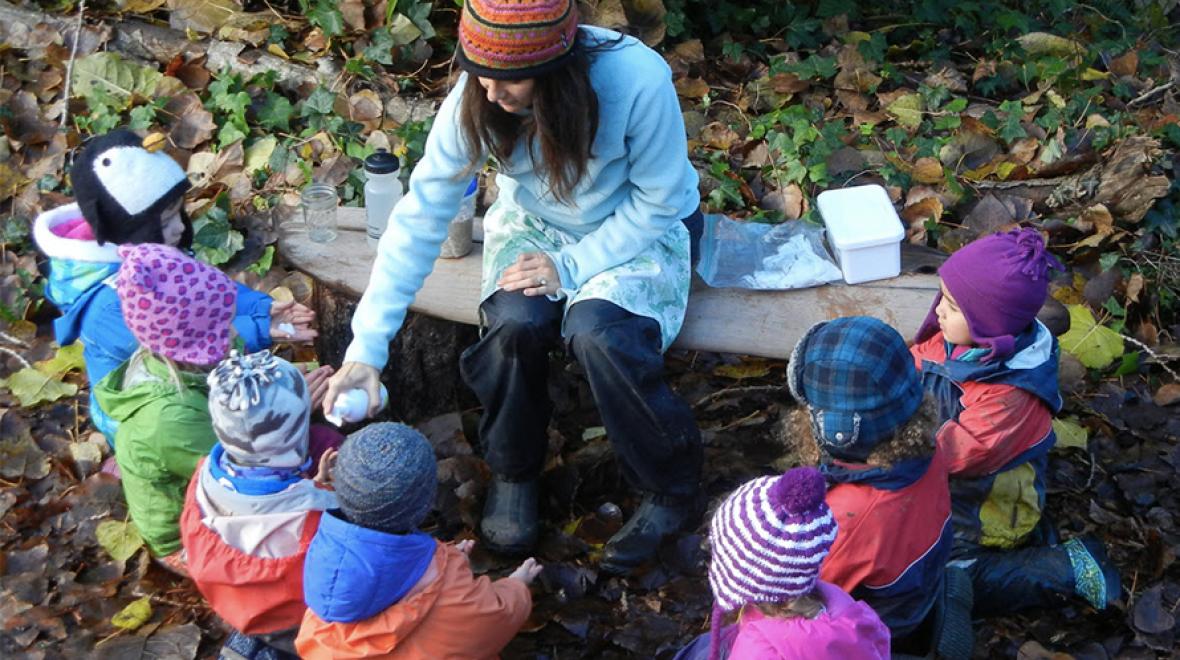
Outdoor and nature-based learning is a hallmark of quality programs in 2026, supporting physical health, curiosity, and calm focus.
6. Creativity and Expressive Arts
Process-oriented art, music, movement, and dramatic play are not “extras”—they are central to development. In quality programs, art is open-ended (no cookie-cutter crafts), music and rhythm activities happen daily, and dramatic play areas are well-stocked and rotated based on children’s interests.
These experiences build fine motor skills, emotional expression, imagination, and cultural appreciation.
7. Creating Inclusive, Culturally Responsive Environments
A quality curriculum in 2026 actively works to ensure every child feels seen, valued, and supported. This includes diverse books and materials that reflect many family structures, races, abilities, and cultures; support for dual language learners; and adaptations for children with disabilities or developmental differences.
Anti-bias education is embedded naturally—teachers address questions about differences honestly and age-appropriately. Family input on cultural traditions and home languages is welcomed and incorporated.
Also Read: The Pros and Cons of Home Education
8. Qualified Educators and Responsive Interactions
Curriculum is only as good as the people implementing it. Look for lead teachers with bachelor’s degrees in early childhood education or a related field (or actively working toward one), and assistants with strong training (CDA or equivalent). Ongoing professional development, coaching, and low turnover are strong indicators of quality.
The most important observable sign: warm, responsive, language-rich interactions. Teachers who know each child well, use their names frequently, and engage in serve-and-return conversations build the brain architecture that supports all future learning.
9. Thoughtful Assessment and Individualized Support
Quality programs assess through ongoing observation, documentation (photos, work samples, anecdotal notes), and developmental screenings—not standardized tests. They use this information to individualize experiences and communicate meaningfully with families.
Tools like Teaching Strategies GOLD or similar observation-based systems are common in strong programs. Progress is shared through portfolios, conferences, and daily or weekly communication rather than report cards with letter grades.
10. The Role of Families and Community Partnerships
In the best programs, families are not peripheral—they are essential partners. Curriculum includes regular two-way communication, opportunities for families to contribute their expertise, home-school connection activities, and genuine welcome for family involvement (including cultural traditions).
A Glimpse Inside a Quality Preschool Day
Imagine arriving at a bright classroom where children are welcomed by name. After a short morning meeting with songs, a story, and planning for the day, children choose from well-organized learning centers: blocks, dramatic play (currently a veterinarian’s office), art studio, sensory table with natural materials, and a cozy reading nook.
A small group works with the teacher on a ramp-building investigation sparked by yesterday’s question about why cars go faster on steeper ramps. Another group negotiates roles in dramatic play while a teacher nearby coaches conflict resolution. Outdoors, children dig, climb, and explore with magnifying glasses. Throughout the day, teachers document learning, adjust plans, and ensure every child is engaged and supported.
This is what intentional, play-based, whole-child curriculum looks like in action.
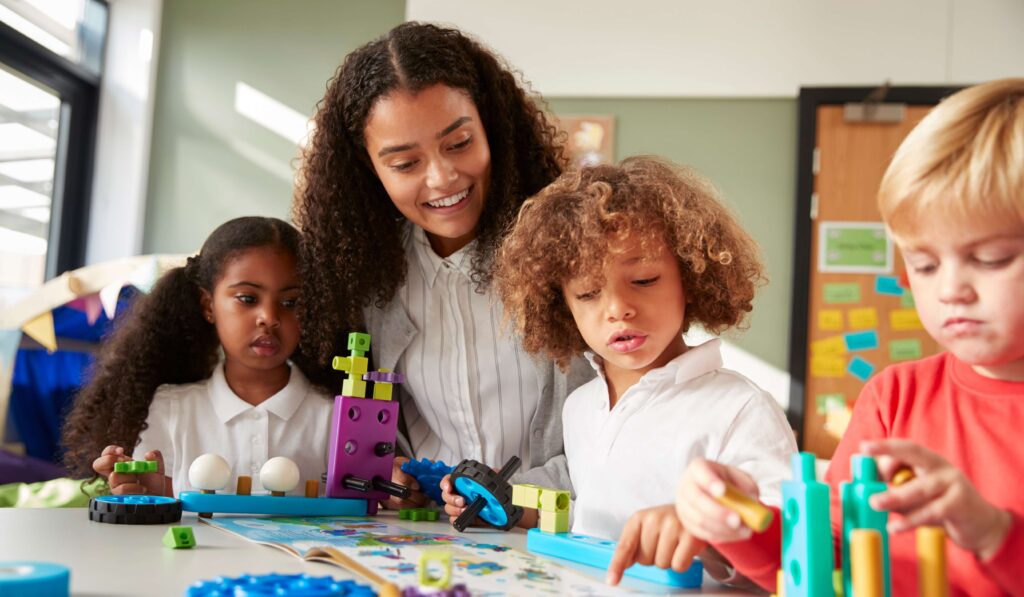
Responsive teachers extend children’s thinking during hands-on exploration—core to quality curriculum implementation.
Your Action Plan: Questions to Ask and What to Observe
When visiting programs, observe:
- Are children actively engaged and happy most of the time?
- Do teachers seem calm, present, and genuinely enjoying the children?
- Is the environment organized, clean, and rich with accessible materials?
- Is there a balance of active and quiet times, and generous outdoor time?
Key questions to ask:
- What curriculum framework or approach do you use, and how is it aligned with NAEYC’s Developmentally Appropriate Practice?
- How do teachers plan and individualize learning experiences?
- What is your approach to social-emotional learning and guiding behavior?
- How do you support children with diverse needs, languages, and abilities?
- What are the qualifications and ongoing training for teachers?
- How do you communicate with families and involve them in the program?
- Can you describe a typical day and how much time children spend in play vs. teacher-directed activities?
- How do you assess children’s progress and share information with families?
Also check licensing status, any accreditation (NAEYC is the gold standard), staff turnover rates, and talk with current parents.
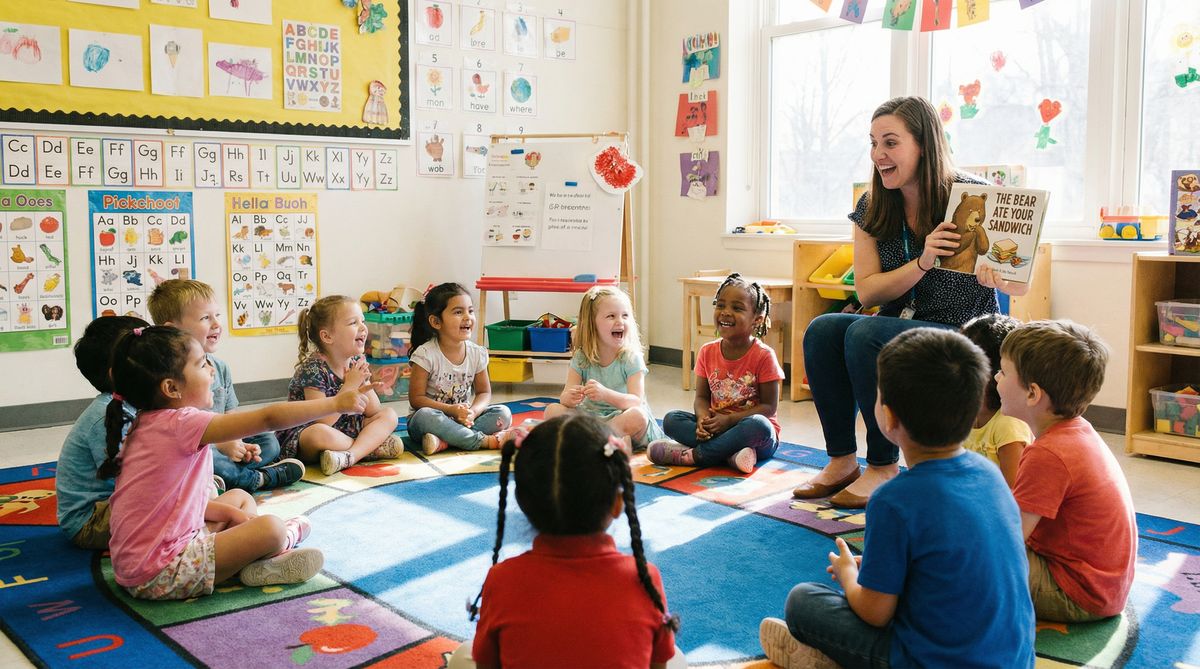
Circle time in a quality program is interactive, joyful, and used to build community and language skills—not passive listening.
Conclusion
The best preschool curriculum in 2026 does not race children toward academics at the expense of their childhood. It honors how young children learn best—through play, relationships, exploration, and joy—while intentionally building the skills and dispositions that lead to success in school and life.
When you visit programs, trust your observations of how children and teachers interact. Prioritize places where your child will feel safe, valued, and excited to learn every day. The investment in a truly high-quality early childhood experience pays dividends for decades.
FAQs
What is the difference between daycare and a quality preschool curriculum?
Daycare primarily provides care and supervision. A quality preschool has a clear educational curriculum focused on intentional learning and development across all domains, even while providing excellent care.
How much academics should there be in preschool?
Academics should be embedded in play and meaningful activities, not taught through worksheets or drills. Strong programs support emergent literacy and math in ways that feel natural and joyful to young children.
Does play-based learning really prepare children for kindergarten?
Yes—extensive research shows that play-based approaches build the self-regulation, social skills, language, and approaches to learning that predict later academic success better than early drill-based instruction.
How important is outdoor and nature-based learning?
Extremely important. Regular outdoor time supports physical health, reduces stress, sparks curiosity, and provides rich opportunities for science, math, and social development.
What role should technology play?
Very limited for direct child use. Quality programs may use technology for documentation or teacher planning, but screen time for children should be minimal, purposeful, and never replace hands-on experiences.
How do I know if a program is truly inclusive?
Observe whether diverse families are represented and welcomed, whether materials reflect many backgrounds, and whether the program has experience successfully supporting children with different abilities and needs.
Should I choose a program with a specific named curriculum (Creative Curriculum, Reggio-inspired, Montessori, etc.)?
Any of these can be excellent if implemented well with strong teachers and DAP principles. Focus more on the quality of implementation and relationships than the brand name.
What if my child has special needs or is very advanced?
Quality programs individualize for all children. Ask specifically how they differentiate experiences, collaborate with specialists, and support both challenges and strengths.