Curricular Resources for Homeschool
Homeschooling offers families unprecedented flexibility to tailor education to a child’s unique pace, interests, and values. In 2026, the landscape of curricular resources has never been richer—or more overwhelming. Whether you are brand new to homeschooling or refining an established routine, choosing the right curricular resources is one of the most consequential decisions you will make.
A strong homeschool curriculum is not merely a stack of textbooks. It is a thoughtful combination of materials, methods, and support systems that align with your family’s goals, your child’s learning style, and the practical realities of daily life. The best resources foster not only academic mastery but also curiosity, resilience, character, and a genuine love of learning.
Decades of research compiled by the National Home Education Research Institute (NHERI) show that, on average, homeschooled students score 15 to 30 percentile points higher than their public-school peers on standardized academic achievement tests. Many peer-reviewed studies also indicate strong social, emotional, and long-term outcomes. However, these are averages. Individual results depend heavily on the quality of implementation, the parent-child relationship, consistent routines, and the specific resources chosen.
This guide draws on current research, extensive work with homeschool families, and direct experience evaluating dozens of programs. It will help you navigate philosophies, compare popular options with transparent pros and cons, understand legal basics, and build a sustainable plan that works for your family.
Quick Answer: What Makes Curricular Resources Effective for Homeschooling?
Effective homeschool curricular resources in 2026 share these core qualities:
- Alignment with your philosophy and goals — Whether classical, Charlotte Mason, project-based, faith-based, or eclectic, the materials should feel like a natural fit rather than a constant battle.
- Flexibility with structure — Enough guidance to prevent overwhelm, but adaptable to your child’s pace and interests.
- Comprehensive yet customizable — Strong coverage of core subjects (language arts, math, science, history/social studies) plus room for electives, real-world learning, and character development.
- Support for the parent — Clear lesson plans, answer keys, placement tests, and community or coaching options.
- Engagement for the child — Materials that spark curiosity rather than just compliance.
- Practical for real life — Reasonable prep time, reasonable cost, and portability for busy or traveling families.
- Record-keeping friendly — Easy documentation for legal compliance and high school transcripts.
Most successful homeschoolers use an eclectic approach—mixing resources from multiple publishers or philosophies rather than following one program rigidly.
Also Read: What to Look for in a Quality Preschool Curriculum in 2026
1. Understanding Homeschool Philosophies and Approaches
Before selecting specific resources, clarify your educational philosophy. This single step prevents costly mistakes and constant switching.
Traditional / Worktext Approach Structured, textbook- or workbook-heavy. Clear scope and sequence, daily lessons, and built-in assessment. Best for families who want predictability and strong academics with minimal planning. Pros: Easy to follow, good for working parents, strong skill mastery. Cons: Can feel rigid or worksheet-heavy; less room for deep exploration or child-led interests.
Classical Education Focuses on the trivium (grammar, logic, rhetoric stages), memorization, Socratic discussion, and great books. Programs like Classical Conversations or Veritas Press emphasize history as the spine and integrate subjects. Pros: Excellent college preparation, develops strong thinking and communication skills. Cons: Heavy on memorization early on; can feel demanding for some children.
Charlotte Mason Emphasizes “living books,” narration, nature study, art and music appreciation, and short focused lessons. Ambleside Online (free) and similar programs follow this gentle, relationship-centered method. Pros: Nurtures wonder and deep thinking; beautiful and humane. Cons: Requires more parent reading aloud and curation; less “open-and-go” for some subjects.
Montessori or Project-Based / Unschooling Child-led exploration with prepared environments or interest-driven projects. Resources like Oak Meadow or self-designed unit studies. Pros: Highly individualized and engaging; builds intrinsic motivation. Cons: Requires confident, organized parents; can lack structure if not well-supported.
Online / Computer-Based or Hybrid Full platforms with video lessons, interactive activities, and automated grading (Time4Learning, Miacademy/Power Homeschool, K12-powered options). Many now blend live classes with self-paced work. Pros: Minimal parent prep, built-in assessment, flexible scheduling. Cons: Screen time concerns; less hands-on or relational for some families.
Eclectic (Most Popular) A thoughtful mix—e.g., Math Mammoth or Beast Academy for math, literature-based history, online science, and co-op classes for electives. This is where most long-term homeschoolers land.

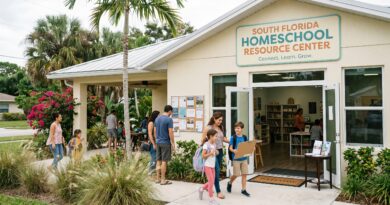
Many families thrive with a mix of structured materials and collaborative learning, as seen in multi-age homeschool settings.
Also Read: Home Education Grants: Funding Options for Your Child’s Education
2. Top Curricular Resources in 2026: Honest Reviews
Here are standout options across categories, based on current family feedback, implementation ease, and alignment with research-backed practices. Prices are approximate annual costs for one student (2026 figures) and vary by grade and format.
Time4Learning (Online, All-in-One) Popular, affordable, accredited option with animated lessons, printable worksheets, and automated grading. Covers K–12 with strong language arts and math; science and social studies are solid but lighter. Pros: Very parent-friendly, flexible pacing, good for multiple children, mobile app available. Cons: Some lessons feel repetitive; less depth in history and science compared to literature-based programs. Best for: Busy families, visual learners, or those new to homeschooling who want structure without heavy planning. Link: time4learning.com
Miacademy / Power Homeschool (Online) Emerging favorite for affordability and comprehensive coverage. Self-paced with some live elements in certain packages. Strong in core subjects and offers electives. Pros: Excellent value, engaging interface, good progress tracking. Cons: Newer brand means fewer long-term reviews than established players. Best for: Budget-conscious families wanting a complete digital solution.
Sonlight (Literature-Based, Christian) In-depth, story-driven program using high-quality literature, real books, and discussion. Strong history and science integration. Pros: Beautiful, relationship-building; develops excellent reading and thinking skills. Cons: Higher cost; more parent-intensive (read-alouds and discussions). Best for: Families who love reading together and want a rich, integrated experience.
Oak Meadow (Holistic, Secular) Project-based, arts-integrated, and nature-connected. Strong emphasis on creativity and whole-child development. Pros: Gentle yet rigorous; wonderful for artistic or sensitive children. Cons: Requires more parent facilitation and material gathering. Best for: Families seeking a balanced, creative, less worksheet-driven approach.
Classical Conversations (Classical, Community) Combines at-home curriculum with weekly community classes focused on memory work, presentations, and science experiments. Pros: Accountability, social element, strong classical foundation. Cons: Requires weekly commitment and additional cost for community. Best for: Families who want structure plus peer interaction.
Free / Low-Cost Options
- Ambleside Online (Charlotte Mason) – Completely free, high-quality book lists and schedules.
- Khan Academy – Excellent free/supplemental for math and science; pair with other resources.
- Easy Peasy All-in-One – Free Christian option with online lessons.
These work well for eclectic families or those on tight budgets but require more curation.
Live Online Classes & Electives Outschool offers thousands of teacher-led classes in every subject and interest area. Many families use it to supplement core curriculum with languages, coding, or arts.

3. How to Choose the Right Resources for Your Family
Start with these reflective questions:
- What are your core values and long-term goals (college prep, faith formation, creativity, real-world skills)?
- What is your child’s learning style and temperament? (Wiggly kinesthetic learner? Deep thinker who hates worksheets?)
- How much time and energy can you realistically devote to teaching and planning each day?
- What is your budget, including hidden costs like books, supplies, and activities?
- Do you prefer open-and-go or are you willing to customize?
Practical Tip from Experience: When I worked with the Ramirez family (two children, grades 3 and 6), they started with a rigid all-in-one online program because it seemed easiest. Within two months the younger child was disengaged and the older one was racing ahead bored. We switched to an eclectic mix—strong literature-based history, hands-on math, and one live science class. Engagement and retention improved dramatically within weeks. The key was matching the method to the child, not forcing the child to fit the method.
Create a simple trial period (4–6 weeks) with any new resource. Be willing to adapt or switch mid-year. Homeschooling’s greatest strength is its flexibility.
Also Read: What Is the Difference Between Primary School and Elementary School?
4. Legal Requirements and Record-Keeping
Homeschooling is legal in all 50 states, but requirements vary widely—from no notice at all to detailed portfolios and testing.
Always check your specific state’s current laws. The most reliable, up-to-date source is the Home School Legal Defense Association (HSLDA) state-by-state guide: https://hslda.org/legal
Common requirements include:
- Notice of intent or affidavit
- Record of attendance or instructional hours
- Annual testing or portfolio evaluation (in some states)
- Immunization or exemption records
Good record-keeping protects your freedom and makes high school transcripts straightforward. Many families use simple binders, digital portfolios (Google Drive or specialized apps), or curriculum-provided planners.
5. Building a Complete, Sustainable Homeschool
Core subjects form the foundation, but don’t neglect:
- Electives and interests — Music, art, coding, sports, foreign languages (Outschool or local co-ops shine here)
- Real-world learning — Field trips, apprenticeships, volunteering, household responsibilities
- Social and emotional development — Co-ops, sports, church/community groups, playdates
- Assessment — Informal observation, portfolios, standardized tests when required or desired
A realistic daily rhythm often includes short focused lessons, plenty of movement and outdoor time, read-alouds, and independent work that increases with age.
6. Common Pitfalls and How to Avoid Them
- Over-scheduling or buying too many resources (analysis paralysis and burnout)
- Ignoring your child’s feedback and pushing through misery
- Neglecting your own rest and support network
- Comparing your homeschool to someone else’s Instagram highlight reel
- Waiting until high school to think about transcripts and college planning (start building a portfolio early)
Also Read: What Is South Bay Faith Academy? Review
Conclusion
Choosing curricular resources for homeschooling is both an art and a science. The “best” program is the one that fits your child, your family’s values, and your real life and that you can sustain with joy over the long term.
Start where you are. You do not need the perfect plan on day one. Many families begin with one solid core resource and gradually layer in others as they learn what works. The freedom to adjust, experiment, and prioritize what truly matters is one of homeschooling’s greatest gifts.
Focus first on relationship, curiosity, and consistent habits. Academic excellence and character tend to follow.
Whether you choose a structured online platform, rich living books, classical rigor, or a custom eclectic blend, the resources are abundant. Your most important resource remains you—the engaged, loving parent who knows your child best.
FAQs
Is homeschooling legal everywhere in the US?
Yes, but regulations differ significantly by state. Check https://hslda.org/legal for your specific requirements before starting.
How much does homeschooling cost?
Anywhere from under $200/year (free resources + library) to $2,000+ per child for premium all-in-one or classical programs. Many families spend $500–$1,200 annually.
Will my child be properly socialized?
Research from NHERI and others shows homeschooled children often have strong social skills, self-esteem, and community involvement. Intentional opportunities (co-ops, classes, sports, volunteering) make a big difference.
What if my child has special needs or is gifted?
Many families successfully homeschool children with ADHD, autism, dyslexia, or giftedness by customizing pacing and methods. Specialized resources and therapies can be added as needed.
How do I handle high school and college applications?
Create a transcript with course descriptions, grades (or narrative evaluations), standardized test scores (ACT/SAT if desired), and a portfolio of work. Many colleges actively recruit homeschoolers.
Can I use religious materials if I want a secular education (or vice versa)?
Yes. You control the content. Many families adapt or supplement to match their values.
What if I’m not a “teacher”?
Most successful homeschool parents are not certified teachers. Patience, consistency, and a willingness to learn alongside your child matter far more than formal credentials.
How do I prevent burnout?
Build in margin, take regular breaks (including “deschooling” time), join supportive communities, and remember that relationships matter more than perfect academics.