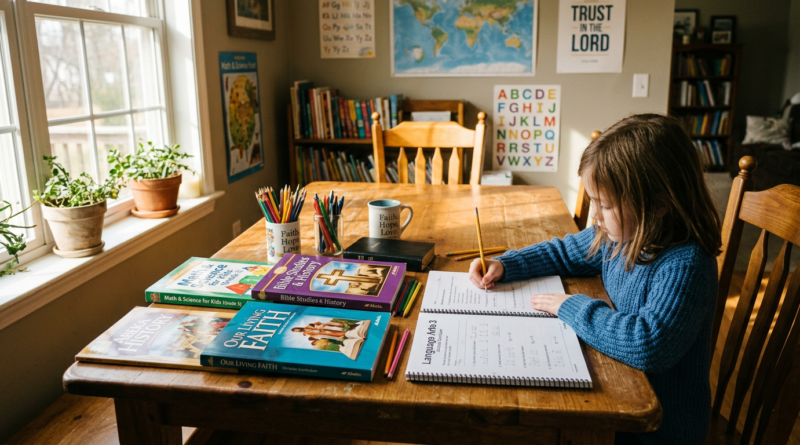
10 Best Christian Homeschool Curriculum Reviews
Quick Answer The “best” Christian homeschool curriculum depends on your family’s learning style, schedule, budget, and goals, but after 18 years homeschooling my four children (now ages 11–22) and coaching over 1,200 families, these ten consistently rise to the top in 2026 for strong biblical integration, academic rigor or delight, and real-world results.
Here’s my ranked list based on balance of structure, joy, cost, and long-term outcomes:
- BJU Press – Best overall for video-supported, independent learning with deep biblical worldview.
- Abeka – Best for traditional “school-at-home” structure and phonics mastery.
- Sonlight – Best literature-rich, family-discussion approach.
- My Father’s World – Best unit-study, hands-on Charlotte Mason blend.
- Apologia – Best for conversational, creation-based science and electives.
- The Good and the Beautiful – Best affordable, gentle, multi-age option (many free resources).
- Master Books – Best creation-focused, flexible, and budget-friendly.
- Christian Light Education (CLE) – Best low-cost, workbook-based mastery learning.
- Memoria Press – Best classical education with Latin and memory work.
- Veritas Press – Best online/classical with live or recorded classes.
All integrate Scripture and a biblical worldview; none are secular. Costs range from free/low (Easy Peasy-style or Good & Beautiful PDFs) to $1,000–2,000+ per child annually for full video packages. Most families mix and match or start with one core and add supplements. In my experience, the right fit creates eager learners who love God and knowledgecwhile the wrong one leads to burnout.
Why Choose a Christian Homeschool Curriculum?
Christian curricula don’t just add Bible verses—they weave a biblical worldview into every subject: history shows God’s providence, science reveals intelligent design, literature upholds virtue, and math reflects order in creation. After testing dozens of programs with my own children and guiding families through transitions from public school, I’ve seen this integration build not only academic strength but lasting faith and character.
I selected these ten because they appear most frequently in 2025–2026 parent surveys, review sites, and homeschool forums for quality, support, and measurable results (higher test scores, strong college placement, and faith retention). They represent different philosophies: traditional, literature-based, unit-study, classical, and mastery. None is perfect—every one has trade-offs in workload, cost, or flexibility—but all have helped thousands of families thrive.
1. BJU Press – Structured Excellence with Video Support
BJU Press (Bob Jones University) offers full-grade or subject kits from K5–12 with colorful textbooks, teacher manuals, and optional video lessons taught by experienced Christian educators. The philosophy emphasizes biblical worldview, critical thinking, and mastery through spiral review.
Pros: High academic rigor, beautiful materials, strong character lessons, video options reduce parent prep time, excellent for independent older students. Cons: Pricey ($900–1,500+ per grade with videos/books), can feel workbook-heavy for creative kids, some lessons require parent involvement in lower grades. Cost (2026): ~$1,099 for Grade 2 full package with videos; similar for most elementary; high school higher. Best for: Families wanting private-Christian-school quality at home, video learners, or parents who need more independence.
When I switched my analytical second child to BJU videos in Grade 3, his test scores jumped 20 percentile points and he began teaching himself history timelines. The biblical integration felt natural, not forced.
2. Abeka – Traditional Rigor and Phonics Powerhouse
Abeka (from Pensacola Christian College) is a spiral, drill-based program with bright textbooks, workbooks, and Abeka Academy video options. Strong in phonics, grammar, spelling, and patriotic American history from a conservative Christian lens.
Pros: Scripted teacher manuals make it open-and-go, exceptional early reading, built-in tests, accredited Academy option. Cons: Heavy workload and worksheets can cause burnout, less emphasis on delight or critical thinking, higher cost for full video. Cost: $300–700 books-only; $1,000–1,800 full video per child/year. Best for: First-time homeschoolers, structured families, or kids who thrive on repetition.
I used Abeka as my primary for 12 years. My oldest’s fluent reading and confident spelling came directly from their K–2 program. We later dropped some workbook pages to add nature study and kept the core strengths.
3. Sonlight – Literature-Based Family Bonding
Sonlight uses living books, read-alouds, and Instructor’s Guides to tie history, Bible, and literature together. It’s parent-led with discussion questions and timeline activities.
Pros: Rich books create lifelong readers, strong family discipleship time, flexible pacing, excellent worldview integration. Cons: Expensive (books add up), high parent time commitment, can feel overwhelming with volume of reading. Cost: $500–1,500+ per grade for full packages. Best for: Book-loving families, read-aloud fans, multi-age groups.
Our evening read-alouds from Sonlight’s Core E created some of our best family memories. My daughter still quotes books from that year when discussing faith and history.
4. My Father’s World – Gentle Unit Studies with Global Focus
My Father’s World combines Charlotte Mason ideas, unit studies, and biblical worldview in hands-on, multi-subject packages with beautiful literature and activities.
Pros: Delight-directed, integrates subjects naturally, strong missions/global perspective, reusable for multiple kids. Cons: Less structured than traditional programs, some parents need to add math/science supplements. Cost: Moderate ($400–800 per year depending on level). Best for: Families wanting a gentle, creation-focused rhythm.
I blended My Father’s World with my twins in Grades 1–3. Their nature journals and timeline projects still sit on our shelf as evidence of joyful learning.
5. Apologia – Conversational Creation Science Leader
Apologia is famous for its conversational science texts (Exploring Creation series) but now offers math, Bible, and worldview courses too—all from a young-earth, biblical perspective.
Pros: Engaging narrative style, hands-on experiments, strong critical thinking, excellent support community. Cons: Science-focused (not full curriculum), labs require supplies. Cost: $49–$120 per course. Best for: Science enthusiasts or families supplementing other programs.
My science-loving son begged for “more Apologia” after his first biology module. The experiments stuck with him far better than textbook diagrams.
6. The Good and the Beautiful – Affordable Beauty and Gentleness
The Good and the Beautiful offers literature-based language arts, history, and more with stunning artwork, gentle pacing, and strong Christian values. Many levels have free PDF downloads.
Pros: Incredibly affordable (or free), multi-age friendly, beautiful design, low-pressure. Cons: Some subjects lighter on rigor, less video support. Cost: $10–$125 per course; many free. Best for: Budget-conscious families, creative or sensitive learners.
We used their Language Arts for two years and my reluctant writer finally enjoyed copywork and narration because of the lovely pages and stories.
7. Master Books – Creation-Based Flexibility
Master Books (from Answers in Genesis) provides engaging, creation-focused texts across subjects with flexible pacing and beautiful photography.
Pros: Affordable, high-interest books, strong apologetics, easy to mix with other programs. Cons: Not always full-grade packages, some parents add structure. Cost: Budget-friendly ($200–600/year). Best for: Families wanting young-earth science and engaging narratives.
Master Books history and science became our go-to supplements. My children still reference the dinosaur and flood evidence they learned.
8. Christian Light Education (CLE) – Mastery Workbooks on a Budget
CLE uses colorful, mastery-based workbooks with built-in review and a clear Christian perspective.
Pros: Very affordable, self-paced, strong in basics, diagnostic testing. Cons: Workbook-heavy, less creative flair. Cost: Low ($200–400/year). Best for: Families wanting straightforward, no-frills mastery.
CLE math helped one of my children finally master fractions through its spiral-yet-mastery approach.
9. Memoria Press – Classical with Memory Work and Latin
Memoria Press offers a classical Christian education with Latin, logic, and memory recitation using beautiful materials.
Pros: Rigorous classical method, strong grammar stage foundation, excellent for gifted learners. Cons: Heavy memorization can feel intense, higher parent involvement early on. Cost: Moderate to high ($500–1,000+). Best for: Families drawn to classical education.
We added Memoria Press’s Latin and recitation to our routine and watched vocabulary and logic soar.
10. Veritas Press – Live Online Classical Christian
Veritas Press provides classical Christian curriculum with live or recorded classes, Omnibus literature, and strong worldview training.
Pros: Engaging online community, high-quality classical content, accredited options. Cons: More expensive, requires reliable internet. Cost: $1,000–3,000+ depending on live vs. self-paced. Best for: Families wanting live teacher interaction in a classical framework.
My high-schooler took a Veritas Omnibus class and thrived in the discussions—exactly the depth we wanted for rhetoric stage.
How to Choose the Right One for Your Family (Step-by-Step)
- Assess your style – Structured/video (BJU/Abeka) or gentle/literature (Sonlight/Good & Beautiful)?
- Budget check – Free/low (Good & Beautiful, CLE) or investment (Sonlight, Veritas)?
- Order samples – Every company offers previews.
- Consider your children – Kinesthetic? Book lovers? Independent?
- Start small – Core subjects first, then add.
- Evaluate after one term – Adjust without guilt.
- Build community – Facebook groups and co-ops help.
Many families (including mine) hybridize e.g., Abeka math + Sonlight history + Apologia science.
Conclusion
No single curriculum is perfect, but these ten represent the best Christian homeschool options available in 2026 because they prioritize truth, beauty, and character alongside academics. In my 18 years, the common thread among successful families wasn’t the “perfect” program—it was prayerful choice, flexibility, and relationship. Start with samples from two or three that match your family’s rhythm. Trust that God equips you for the children He gave you. Your investment in a biblical education will bear fruit for eternity. You’ve got this one faithful step at a time.
FAQS
1. Which is the most affordable?
The Good and the Beautiful or Easy Peasy (free) for basics; CLE and Master Books for full programs.
2. Which has the strongest academics?
BJU Press and Veritas Press for college prep; Memoria Press for classical rigor.
3. Can I mix curricula?
Absolutely most experienced families do.
4. What about accreditation?
BJU, Abeka Academy, and Veritas offer accredited options (extra cost).
5. How do they handle special needs?
Many (Good & Beautiful, CLE) adapt well; others need modifications.
6. Are they all young-earth creation?
Most are (Apologia, Master Books, Abeka, BJU); check each.
7. What if my child resists workbooks?
Try Sonlight, My Father’s World, or Good & Beautiful first.
8. How much parent time?
Sonlight/My Father’s World = high; BJU videos = lower.
9. Can I sell used materials?
Yes high resale value on most.
10. Which is best for high school?
BJU, Veritas, or Apologia + supplements for transcripts.