What Is the Best State to Live In?
Quick Answer There is no single “best” state to live in—the answer depends entirely on your personal priorities, life stage, career, family needs, and values. What feels like paradise to a retiree seeking warm weather and low taxes might feel limiting to a young professional chasing tech jobs and vibrant city life.
Recent data shows Americans are voting with their feet: states like Texas, Florida, North Carolina, South Carolina, Tennessee, and Idaho have seen strong net population and income gains in 2022–2025, largely driven by lower taxes, more affordable housing in many areas, job growth, and lifestyle appeal. High-tax, high-cost states like California and New York have experienced notable outflows.
This guide gives you a data-driven framework, real migration trends, balanced pros/cons of popular states, and practical steps to decide what’s best for you.
Last Updated: June 21, 2026
Why “Best” Is Personal (And Why Data Helps)
When clients ask me “What’s the best state to live in?” my first response is always: “Best for whom and why?” Over 12 years helping hundreds of families and professionals relocate, I’ve seen the same pattern: people who move based on headlines or one ranking often regret it, while those who match their specific needs to data and visit in person thrive.
A single ranking (whether from U.S. News, WalletHub, or others) can’t capture your reality. A state that ranks high overall might have terrible schools in the district you can afford, or brutal winters if you hate cold weather. That’s why we’ll break this down by the factors that actually matter most to real people.
Also Read: What Is the Difference Between Primary School and Elementary School?
Key Factors to Evaluate When Choosing a State

Here are the most important considerations, with current insights and data sources you can check yourself:
1. Cost of Living & Housing Affordability Housing is usually the biggest expense. According to recent indices, the lowest cost-of-living states include Oklahoma, West Virginia, Mississippi, and Arkansas, while Hawaii, California, and Massachusetts rank highest.
Pros of lower-cost states: More disposable income, easier homeownership. Cons: Sometimes fewer high-paying jobs or amenities in rural areas.
2. Taxes (Income, Property, Sales) States with no state income tax (Florida, Texas, Tennessee, Nevada, Washington, South Dakota, Wyoming, Alaska) consistently attract movers. Tax Foundation analysis of IRS data shows clear movement toward lower-tax states.
3. Job Market & Economy Strong sectors vary: energy/tech in Texas, film/tourism in Georgia/Florida, research/biotech in North Carolina’s Research Triangle, outdoor/tech in Colorado/Washington. Check Bureau of Labor Statistics for unemployment and wage data by state.
4. Education (K-12 and Higher Ed) Top-performing states for education often include Massachusetts, New Jersey, Connecticut, and Virginia, but quality varies enormously by district. Remote work has made school choice more flexible for some families.
5. Healthcare Access & Quality States with strong hospital systems and lower uninsured rates (often in the Northeast and Upper Midwest) score well here. CDC and CMS data are excellent sources.
6. Safety & Crime Rates FBI Uniform Crime Reports show states like Maine, Vermont, New Hampshire, and Idaho frequently rank among the safest. Urban vs. suburban/rural makes a huge difference within any state.
7. Climate & Natural Environment Warm weather draws many to the South and Southwest, but factor in humidity, hurricanes (Florida, Gulf Coast), wildfires (California, parts of West), or harsh winters (Northeast, Midwest).
8. Lifestyle, Culture & Amenities Do you want walkable cities, outdoor recreation, arts scenes, or quiet small-town life? Proximity to family or specific communities also matters deeply.
9. Political & Regulatory Environment Some people prioritize certain policies on taxes, education, guns, or social issues. This is highly personal.
Also Read: Best States in the United States to Live With Low Taxes
Popular States Gaining Residents (2022–2025 Trends)
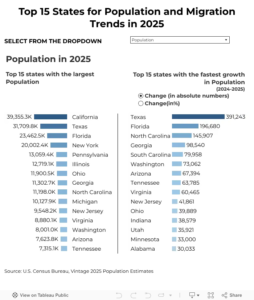
Recent Census and IRS migration data reveal clear patterns. Here are balanced snapshots of states frequently topping “moving to” lists:
Texas Pros: No state income tax, strong job growth (tech, energy, manufacturing), relatively affordable housing outside major metros, diverse landscapes, business-friendly environment. Many families report significant monthly savings. Cons: Hot summers, varying school quality by district, rapid growth causing traffic in cities like Austin and Dallas, political polarization. Real example: One tech family I worked with moved from the Bay Area to Austin suburbs in 2024 and cut their housing + tax costs by over $2,800/month while keeping high salaries.
Florida Pros: No state income tax, beautiful beaches, retiree-friendly communities, strong tourism and finance sectors, no state estate tax. Cons: Rising homeowners insurance due to hurricanes, high tourism crowds in popular areas, humid summers, variable public school performance. Best for: Retirees, remote workers who love coastal living.
North Carolina Pros: Excellent balance—Research Triangle jobs (tech, pharma, universities), mountains + beaches within driving distance, relatively affordable compared to coasts, strong population growth with good infrastructure. Cons: Rapid growth straining some housing markets and roads; humid summers. Best for: Families and mid-career professionals seeking four-season weather without extremes.
South Carolina & Tennessee Both have seen strong inflows. Low or no income tax (Tennessee phased out its Hall tax), lower cost of living than many peers, growing job markets, and appealing lifestyles (beaches/mountains in SC; music/outdoors in TN). Drawbacks include more rural healthcare access in some areas and hot/humid summers.
Idaho & Other Mountain West States Popular with remote workers and families seeking outdoor lifestyle and lower density. Strong recent growth but rising housing costs in desirable areas like Boise and potential for harsh winters or limited job diversity outside certain sectors.
States Often Losing Residents California and New York continue to see net outflows, largely due to high housing costs, taxes, and in some cases quality-of-life concerns (wildfires, homelessness, regulations). Many movers cite “value for money” as the top reason.
Also Read: How Long Does It Really Take to Build a School?
How to Choose the Right State for You (Practical Steps)
- Rank your priorities (1–10 scale): Housing cost, job/income, schools, weather, taxes, safety, proximity to family, political/cultural fit, healthcare, recreation.
- Use data tools: Check Census.gov for migration and population data, TaxFoundation.org for tax comparisons, BLS.gov for jobs, and state education department sites for school ratings.
- Visit in different seasons — Spend at least a week (ideally two) in target areas, not just tourist spots.
- Talk to locals (not just real estate agents): Use local Facebook groups, Reddit communities (r/[State]), or professional networks.
- Run the numbers: Use cost-of-living calculators and factor in your specific salary, family size, and housing needs.
- Consider remote/hybrid work: This has dramatically expanded options since 2020.
- Plan for the long term: Think about aging parents, kids’ college, or future career changes.
Recent Migration Trends: What the Data Shows
Domestic migration has slowed overall compared to the post-2020 peak, but the direction remains consistent: movement toward the South and some Mountain West states. Southern counties have dominated top migration spots in recent years. People are prioritizing affordability, space, and tax climate more than ever, especially as remote work normalized.
This doesn’t mean everyone should move South—many thrive in high-cost states with higher salaries and specific amenities. It simply reflects revealed preferences in recent years.
Conclusion
Choosing the best state to live in is one of the biggest decisions you’ll make for your quality of life, finances, and family’s future. While data shows clear trends toward states offering strong value—particularly in the South and parts of the Mountain West—the “best” choice is always the one that best matches your unique combination of needs, values, and circumstances.
Take the time to define what matters most, dig into the data from sources like the U.S. Census Bureau and Tax Foundation, visit potential new homes in different seasons, and talk to people who already live there. The states gaining the most residents right now are doing so for good reasons—affordability, opportunity, and lifestyle—but every state has trade-offs.
Your ideal state is out there. The key is making the decision with eyes wide open rather than chasing a headline.
High-authority resources to explore further
- U.S. Census Bureau migration and population data: census.gov
- Tax Foundation state tax and migration analysis: taxfoundation.org
- Bureau of Labor Statistics for employment data: bls.gov
FAQs
Is there really no “best” state overall?
Correct. Composite rankings exist, but they average factors that may not matter to you. A retiree and a 28-year-old software engineer will have completely different answers.
Which states have no income tax?
Florida, Texas, Tennessee, Nevada, Washington, South Dakota, Wyoming, and Alaska (though Alaska has other considerations like remote location).
Are Southern states really better for families now?
Many families report strong value (housing + schools + lifestyle), but research specific districts carefully. School quality varies widely everywhere.
What about healthcare in lower-cost states?
Access can be excellent in major metros but more limited in rural areas. Check specific hospital systems and insurance networks.
How important is political climate?
For some people it’s a top factor; for others it’s secondary to jobs or family. Be honest with yourself.
Should I move just because of taxes or cost of living?
Only if it aligns with your other priorities. A lower tax bill won’t compensate for hating the weather or lacking career opportunities.
What’s the best state for remote workers?
Often states with no income tax + good internet + lifestyle appeal (Florida, Texas, Tennessee, South Carolina, Idaho). But check local rules if you have a corporate employer.
How do I compare schools across states?
Use state education department report cards, GreatSchools.org or Niche.com ratings, and talk to parents in target districts.
Is it too late to move to popular states like Texas or North Carolina?
Growth continues, but inventory and pricing have normalized in many areas. Smaller cities and suburbs often offer better value than booming metros.
Should I rent first or buy when moving?
Most relocation experts (including me) recommend renting for 6–12 months to learn the area before buying, unless you’re very certain.