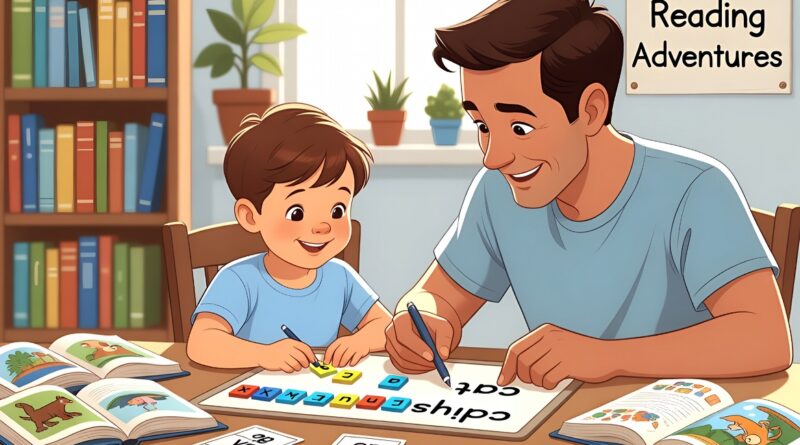
How to Choose the Right All About Reading Curriculum Level
Quick Answer The most reliable way to choose the right All About Reading (AAR) level is to use the free official placement test from All About Learning Press. This two-part assessment checks your child’s reading fluency, comprehension, and specific phonics skills to recommend Pre-Reading or one of Levels 1–4.
Because AAR is strictly mastery-based (not grade- or age-based), starting at the correct level prevents frustration, guessing habits, or boredom. Most families see the best results—and the fastest confidence gains—when they trust the placement test results, even if the recommended level feels “too easy” at first. Supplement the test with informal observations of your child’s phonological awareness, letter-sound knowledge, and blending ability, then review sample stories from the suggested level before purchasing.
Introduction
Choosing a reading curriculum is one of the most important decisions homeschooling parents make in the early years. The right program can ignite a lifelong love of reading; the wrong starting point can create anxiety, resistance, or gaps that take years to repair.
All About Reading stands out as one of the most popular and effective structured literacy programs used by homeschool families across the United States. Built on Orton-Gillingham principles and aligned with the Science of Reading, it uses multisensory techniques, beautifully illustrated decodable readers, and lightly scripted lessons that make teaching manageable even for parents with no formal teaching background.
Yet its greatest strength—its carefully sequenced, mastery-based design—also creates a common challenge: Where exactly should my child begin?
Start too high and your child may guess, memorize, or become discouraged. Start too low and they may feel bored or lose momentum. The good news? All About Learning Press provides excellent free tools to remove the guesswork.
In this comprehensive guide, I’ll walk you through exactly how to choose the right All About Reading level with confidence. You’ll learn what each level covers, how to interpret placement results, the most common mistakes parents make, and practical strategies that help children thrive once they’re in the correct level. Whether your child is a preschooler just learning letter sounds, a first-grader ready for CVC words, or an older struggling reader who needs a fresh, systematic start, this article will help you make the best decision for your family.
What Is All About Reading? A Research-Based, Parent-Friendly Program
All About Reading is a complete, Orton-Gillingham-inspired phonics program designed for one-on-one instruction. Lessons typically take 15–20 minutes per day, plus recommended read-aloud time. The program emphasizes:
- Multisensory learning — Children see, hear, say, and physically manipulate letter tiles and cards.
- Decodable readers — Every story uses only the phonograms and rules the child has already been taught. No frustrating “leveled” books with unknown words.
- Limited sight words — Only a small number of high-frequency “Leap Words” are taught as exceptions; the program teaches that 97% of English words are decodable with the right tools.
- Mastery-based progression — Children move forward only when they demonstrate solid understanding, eliminating the gaps that plague many traditional programs.
- Built-in fluency and comprehension — Every level includes word cards, fluency pages, and discussion questions.
The program is secular but warmly presented and works exceptionally well for children with dyslexia, ADHD, or other learning differences, as well as typically developing readers. It is also highly effective for older remedial students because the stories and illustrations feel engaging rather than babyish.
Overview of the Five Levels
All About Reading consists of one Pre-Reading program and four core reading levels. Here’s a high-level map:
| Level | Focus | Typical Readiness | Approx. Lessons | Readers Included |
|---|---|---|---|---|
| Pre-Reading | Phonological awareness, letter knowledge, print awareness, listening comprehension | Limited or inconsistent letter-sound knowledge; difficulty rhyming or blending sounds | ~60–70 | 2 poetry books (read aloud by parent) |
| Level 1 | Basic phonograms, short & some long vowels, blending, simple digraphs | Knows most letter names/sounds; ready to blend CVC words | ~57 | 3 hardcover decodable readers |
| Level 2 | Additional phonograms, silent-e rules, syllable division intro | Comfortable with Level 1 skills; needs vowel teams and silent-e patterns | ~~50+ | 2 hardcover decodable readers |
| Level 3 | Advanced phonograms, syllable types, prefixes/suffixes, figurative language | Strong decoding of Level 2 patterns; ready for multisyllabic words | ~~50+ | 2 hardcover decodable readers |
| Level 4 | Advanced morphology, silent letters, word origins, complex suffixes | Solid mastery of previous levels; ready for sophisticated decoding and comprehension | ~~50+ | 2 hardcover decodable readers |
After Level 4, students have the tools to decode the vast majority of English words and are ready to transition into rich chapter books and independent reading with greater confidence.
Deep Dive: What Each Level Covers and Who It’s For
Pre-Reading Level
This gentle preparatory program is ideal for preschoolers, young kindergartners, or any child who needs stronger foundational skills before formal decoding instruction.
Key skills taught:
- Uppercase and lowercase letter recognition and formation awareness
- Phonological awareness (rhyming, syllable counting, segmenting and blending sounds)
- Print awareness and book handling
- Listening comprehension through charming poetry books (The Zigzag Zebra and Lizard Lou)
- Motivation and positive associations with reading
Lessons are short, playful, and activity-rich (cutting, pasting, simple crafts). The parent reads the poetry books aloud; the child is not expected to read independently yet. Many families use this level with 4- and 5-year-olds or with older children who have significant gaps in phonological awareness.
Signs your child is ready for Pre-Reading: Struggles to identify most letters or their sounds, cannot consistently rhyme or clap syllables, or shows little interest in books and letters.
Level 1
This is where most children begin formal reading instruction. Level 1 systematically teaches the building blocks of decoding.
Key skills:
- All single-letter phonograms (with focus on short vowel sounds first)
- Common consonant digraphs (th, sh, ch, ck, ng, nk)
- Blending procedure for CVC and CCVC words
- Introduction to some long vowel patterns and a limited set of Leap Words (sight words)
- Compound words and simple punctuation
The three delightful hardcover readers (The Apple Pie Tree, stories featuring Ziggy the Zebra and friends) are perfectly matched to the skills taught. Children experience immediate success because every word is decodable.
Signs your child is ready for Level 1: Knows most letter names and sounds reliably, can identify vowels vs. consonants with support, and is ready to blend three-sound words.
Level 2
Level 2 builds directly on Level 1 and introduces more complex vowel patterns and the powerful silent-e rules.
Key skills:
- 12+ new phonograms (ee, er, ar, or, oy, aw, ow, etc.)
- Multiple jobs of silent e
- Introduction to syllable division as a decoding strategy
- Expanded vocabulary and fluency practice
Stories become slightly longer and more engaging while remaining fully decodable.
Signs your child is ready for Level 2: Comfortably decodes CVC and simple digraph words from Level 1, understands basic blending, and needs tools for words like “cake,” “bike,” or “team.”
Level 3
This level significantly expands a child’s decoding power with advanced phonograms and morphological awareness.
Key skills:
- 17 new phonograms (oa, ir, igh, ew, kn, ti, etc.)
- All six syllable types
- Prefixes, suffixes, and syllable division rules
- Introduction to figurative language (similes, onomatopoeia, personification)
- Stronger emphasis on expressive reading and comprehension discussions
Signs your child is ready for Level 3: Fluent with Level 2 patterns, ready for multisyllabic words, and showing interest in richer stories.
Level 4
The final level completes the core phonics code and equips students for almost any word they will encounter.
Key skills:
- 15+ advanced phonograms
- Silent letters, unaccented syllables, and advanced suffix rules
- Word morphology and etymology (Greek, Latin, French, Spanish influences)
- Literary elements and deeper comprehension strategies
After Level 4, most students are ready to read widely and independently with strong decoding and growing comprehension skills.
Why Accurate Placement Matters So Much
When children are placed too high, they often develop guessing strategies or lose confidence. When placed too low, bright children can become bored and disengaged. Because AAR lessons are cumulative and review is built in strategically (but not endlessly), starting at the correct level sets the stage for smooth, enjoyable progress through the entire series.
Parents frequently share that the “lightbulb moment” happens within the first week or two of correct placement—the child suddenly feels capable and excited rather than frustrated.
Step-by-Step Guide to Choosing the Right Level
- Observe Foundational Skills Informally Can your child reliably produce letter sounds? Blend simple CVC words? Rhyme? Segment sounds in spoken words (“What sounds do you hear in ‘ship’?”)? These quick checks give you a rough idea before testing.
- Take the Official Placement Test Visit the All About Learning Press website and complete the free two-part placement test. Part 1 assesses oral reading of story excerpts for fluency and comprehension. Part 2 checks specific phonics skills. The test is designed to be administered by a parent or teacher and takes 15–30 minutes.
- Review Sample Stories and Scope & Sequence The publisher provides sample lessons and scope-and-sequence PDFs. Have your child read a page or two from the recommended level’s reader. They should be able to decode with 95%+ accuracy and reasonable fluency.
- Factor in Your Child’s Unique Profile Consider age, attention span, any diagnosed or suspected learning differences, previous reading instruction, and whether this is your first or fifth child using the program. Older struggling readers often start lower than expected and move quickly once foundations click.
- When in Doubt, Start Slightly Lower A solid foundation in earlier levels almost always accelerates progress in later levels. The review built into AAR is efficient, not redundant.
- Contact Publisher Support All About Learning Press offers excellent customer service and placement guidance. Many families report quick, helpful email responses.
Common Mistakes to Avoid
- Relying on grade level or age instead of skills
- Skipping the placement test
- Starting too high because “my child is smart”
- Ignoring phonological awareness gaps
- Buying all levels at once without testing
- Not doing the multisensory components (letter tiles make a huge difference)
Success Strategies Once You’ve Chosen a Level
- Keep lessons short and positive (stop at 20 minutes even if you’re in the middle)
- Use the letter tiles and cards consistently—the multisensory piece is powerful
- Pair with All About Spelling for best results (many families do both)
- Prioritize daily read-alouds for vocabulary and comprehension development
- Track mastered words with the review box system
- Celebrate small wins and re-read favorite stories for fluency
Conclusion: Give Your Child the Gift of the Right Starting Point
Choosing the right All About Reading level is one of the highest-leverage decisions you can make in your child’s literacy journey. When placement is accurate, lessons flow smoothly, confidence soars, and reading becomes a source of joy rather than stress.
The free placement test, combined with careful observation and a willingness to start where your child actually is (rather than where you wish they were), removes almost all the uncertainty. Thousands of families have used this exact process to launch their children into confident, capable reading.
If you’re ready to begin, head to the All About Learning Press website, download or take the placement test today, and give your child the strong foundation they deserve. The right level isn’t just about faster progress—it’s about protecting your child’s love of learning for years to come.
FAQs
Is All About Reading good for children with dyslexia?
Yes. Its Orton-Gillingham foundation, multisensory approach, and systematic code instruction make it one of the most recommended programs for dyslexic learners in the homeschool community.
How long does each level take?
Most families complete a level in 4–8 months depending on lesson frequency (4–5 days per week) and the child’s pace. Mastery, not speed, is the goal.
Can I skip levels?
Generally no. The program is cumulative. Use the placement test instead of guessing.
What if the placement test puts my child in a lower level than I expected?
Trust it. Many parents report that filling small gaps dramatically improves later progress and confidence.
Do I need to buy the Interactive Kit or other add-ons?
The core package for each level includes what you need to teach. Optional items (tote bag, extra tiles, games) enhance organization and fun but are not required.
Is AAR secular?
Yes, it is completely secular while remaining warm and family-friendly.
How does AAR compare to other programs?
It is more parent-intensive than fully independent programs but offers superior teacher support through scripting and multisensory tools. Many families who tried multiple programs find AAR produces the strongest decoding foundation.
Can older children (8–12) use AAR successfully?
Absolutely. The stories and illustrations appeal across a wide age range, and the systematic approach helps fill gaps that traditional instruction missed.