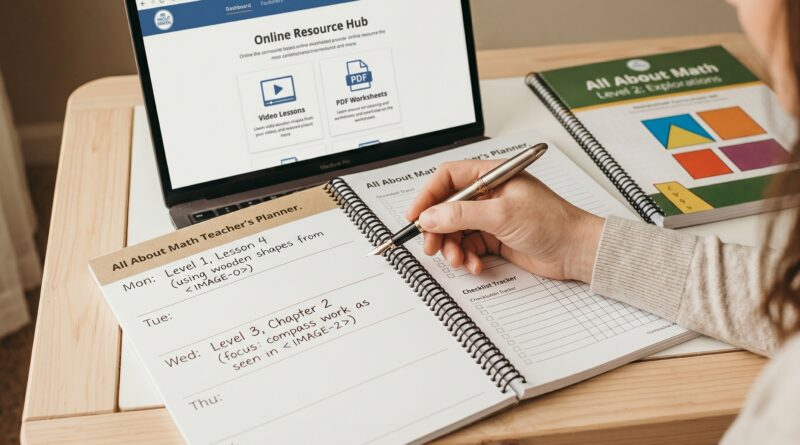
How to Use All About Math in Your Homeschool
Quick Answer All About Math from All About Learning Press is a multisensory, mastery-based elementary math curriculum (Levels 1–5 for roughly K–5th grade) that uses scripted lessons, hands-on manipulatives, games, and explicit teaching to build deep conceptual understanding.
To use it successfully in your homeschool:
- Start with the free placement tools or readiness checklists on the publisher’s site to choose the right level (most new students begin with Level 1).
- Gather the required materials: Teacher’s Manual, Student Packet, the one-time Manipulatives Kit, and a whiteboard.
- Teach short 15–25 minute lessons, moving at your child’s pace until mastery is demonstrated.
- Use the built-in games for reinforcement and the “Math Reflection” questions to develop deeper thinking.
- Track progress with the Daily Review Tracker and sticker chart instead of traditional tests.
The program works especially well for families who want a structured yet flexible, hands-on approach. It requires active parent involvement but delivers strong conceptual foundations without gaps. Many parents report noticeable improvements in their children’s math confidence once the concrete-to-abstract progression takes hold.
Why All About Math Might Be the Right Fit for Your Homeschool
Choosing a math curriculum can feel overwhelming. You want something that builds real understanding, keeps your child engaged, and doesn’t require you to be a math expert. All About Math, the newest program from All About Learning Press (the team behind All About Reading and All About Spelling), brings their proven multisensory, explicit-instruction model to mathematics.
Launched recently, the program currently offers Levels 1–4, with Level 5 expected by the end of 2026. It covers core skills typically taught from kindergarten through fifth grade using a mastery-based approach. Lessons are fully scripted, highly interactive, and built around concrete experiences with manipulatives before moving to pictures and abstract thinking.
In this guide, I’ll walk you through exactly how to implement All About Math what materials you need, how lessons flow in real life, how to pace and adapt them, and practical tips drawn from the program’s design and early user experiences.
Understanding All About Math’s Core Philosophy
All About Math is grounded in research-based practices, particularly the Concrete-Pictorial-Abstract (CPA) progression and mastery learning. Concepts are taught incrementally with plenty of hands-on practice, games, and discussion so children understand why math works, not just how to get the right answer.
Key principles include:
- Explicit, scripted teaching — The Teacher’s Manual tells you exactly what to say and do, making it accessible even if you’re not confident in math.
- Multisensory learning — Children see, hear, say, and touch concepts using manipulatives, drawings, movement, and discussion.
- Mastery focus — Students must demonstrate understanding before advancing. This prevents gaps but means pacing is flexible.
- Built-in games and review — Dozens of games per level turn practice into play and reduce the need for tedious drills.
- Metacognition through reflection — Every lesson ends with “Math Reflection” questions that prompt children to explain their thinking.
This approach mirrors the successful style of All About Reading and All About Spelling. Families already using those programs often find the transition seamless.
What’s Included and What You’ll Need
Each level includes:
- Teacher’s Manual — Full-color, scripted lessons with objectives, materials lists, teaching notes, and optional extensions.
- Student Packet — Themed activity book, cardstock math tools, stickers, progress chart, and Daily Review Tracker.
- “Show What You Know” assessments — Five interactive, conversational assessments per level instead of traditional tests.
One-time purchases:
- All About Math Manipulatives Kit (counters, base-10 blocks, fraction circles, etc.). One kit works for 2–3 children.
- Whiteboard and dry-erase markers.
While you could substitute household items, the publisher-designed kit ensures consistency and effectiveness across levels.
Placement: Choosing the Right Starting Level
Because All About Math is mastery-based rather than strictly grade-based, placement is important. All About Learning Press provides free readiness checklists (Level 1) and placement tests (higher levels) on their website.
- Level 1: Covers kindergarten concepts plus a significant portion of first-grade material.
- Level 2: Completes first grade and covers all of second grade.
- Levels 3–5: Align more closely with traditional third through fifth grade while maintaining depth.
Practical tip: When in doubt, start one level lower. The early review builds confidence and prevents gaps. I’ve seen families rush ahead only to backtrack later—the mastery model rewards patience.
How Lessons Actually Work: A Day in the Life
Lessons are designed to be short—typically 15–25 minutes—but they are not meant to be rushed. Some lessons span several days, especially when introducing new concepts.
A typical lesson includes:
- Before You Begin — Quick prep notes and materials list.
- Teaching the Concept — Scripted dialogue introducing the idea with manipulatives and clear explanations.
- Guided Activities and Games — Hands-on practice through engaging games.
- Student Practice — Work in the activity book.
- Math Reflection — Discussion questions to help your child articulate what they learned.
The scripted nature means you can pick up the manual and teach effectively even on days when you’re tired or less confident.
Pacing Tips for Real Homeschool Life
- Aim for consistency rather than perfection. Some days you might complete one full lesson; other days you might only do the game or reflection.
- Watch your child’s engagement and stamina. If attention wanes, stop and pick up the next day—mastery is the goal, not speed.
- Use the Daily Review Tracker to revisit previously mastered skills.
- Many families do math 4–5 days per week.
In practice, a level can take anywhere from 9–18 months depending on your child’s age, prior knowledge, and how quickly they achieve mastery. This flexibility is one of the program’s strengths.
Adapting All About Math for Your Unique Child
For struggling learners or those with attention challenges: Shorten sessions, focus on one new concept per lesson, and lean heavily on the games and manipulatives. The multisensory design is particularly supportive for children with dyslexia, dyscalculia tendencies, or ADHD.
For advanced or quick learners: Move through mastered sections briskly, combine lessons when appropriate, and use the optional extension activities.
For wiggly or hands-on kids: The games and manipulatives are a natural fit. Some families add physical movement (hopping while counting, acting out story problems) to increase engagement.
Parent involvement note: This is not an independent workbook program. You’ll be actively teaching most lessons, at least in the early levels. Many parents find the scripting actually reduces prep time and stress once the routine is established.
Pros and Cons of All About Math
Pros:
- Excellent conceptual foundation that reduces later gaps and frustration.
- Scripted lessons make teaching accessible for non-mathy parents.
- Engaging games and multisensory elements increase enjoyment and retention.
- Strong progress tracking without high-stakes testing pressure.
- Reusable materials and one-time manipulatives investment.
- Seamless fit for families already using All About Reading or Spelling.
Cons:
- Requires consistent parent teaching time (not fully independent).
- Lessons can feel long on days with multiple components; pacing requires flexibility.
- Upfront cost for the full set of materials.
- Mastery approach means some levels may take more than a traditional school year.
- Limited to elementary (through ~5th grade).
Overall, the pros outweigh the cons for families who value depth over speed and are willing to invest teaching time in the early years.
Common Challenges and How to Overcome Them
“My child resists the manipulatives.” Start with the games that use them. Make it playful. Many children warm up once they see how the tools make hard problems easier.
“We’re moving too slowly.” Check for true mastery versus perfectionism. The “Show What You Know” sessions and your observations will guide you. It’s okay (and often beneficial) for a level to take 12–18 months.
“I’m not sure if we’re doing it right.” Trust the script and the built-in assessments. All About Learning Press is known for excellent customer support. Watching a sample lesson video on their site can also build confidence.
Conclusion: Building Math Confidence That Lasts
All About Math offers homeschool families a thoughtful, research-aligned path to elementary math mastery. By combining explicit teaching, multisensory tools, engaging games, and a genuine focus on understanding over speed, it helps children develop not just skills but confidence and a positive relationship with mathematics.
Success with this program comes from consistency, flexibility in pacing, and embracing the hands-on, interactive nature of the lessons. When implemented with patience and the built-in supports, it often transforms math time from a source of stress into one of discovery and accomplishment.
If you’re considering All About Math, download the free samples and placement tools from the All About Learning Press website. Try a lesson or two with your child—you’ll quickly sense whether the style resonates. Many families find it becomes a favorite part of their homeschool day once the routine is established.
Math foundations built this way tend to serve children well for years beyond elementary school. That long-term confidence and competence is the real gift of a program like All About Math.
FAQs
How long does each lesson really take?
Most lessons are designed for 15–25 minutes of focused teaching, but hands-on portions or new concepts may extend across multiple short sessions over several days.
Do I need to buy the manipulatives kit, or can I substitute?
The kit is strongly recommended for full effectiveness and consistency. Substitutions are possible but may require more adaptation.
Is All About Math religious or secular?
It is secular but Christian-friendly, with no faith-based content.
Can I use it with multiple children at once?
Yes, especially with the shared manipulatives kit. You may need to stagger lessons or adapt games for group play.
What happens after Level 5?
Level 5 (expected late 2026) completes the elementary series. Families then transition to pre-algebra or middle school programs.
How does it compare to Math-U-See?
It shares the mastery and manipulative focus but adds more scripted dialogue, built-in games, and the specific multisensory style of All About Learning Press.
Is parent training or prior math knowledge required?
No. The scripted lessons and thorough explanations in the Teacher’s Manual equip parents effectively.