What Is Unschooling and How Does It Work?
Unschooling is one of the most intriguing and sometimes misunderstood approaches to education today. As an education consultant who has worked with hundreds of families transitioning to alternative learning models, and as someone who helped facilitate unschooling-inspired programs in community settings, I’ve seen its transformative potential up close. When implemented thoughtfully, it nurtures curious, self-motivated learners. But it’s not a one-size-fits-all solution, and success depends heavily on family dynamics, resources, and realistic expectations.
In this comprehensive guide, I’ll draw from decades of research, practitioner insights (including the foundational work of John Holt), real family case studies, and my own observations to explain what unschooling is, how it works in practice, its benefits and challenges, and practical steps for getting started. Whether you’re a parent exploring options or an educator curious about child-led learning, this article aims to provide clear, balanced information.
Quick Answer: Unschooling is a form of self-directed homeschooling where children learn through their natural curiosity, real-life experiences, play, and interests rather than a structured curriculum or traditional schooling. Coined by John Holt in the 1970s, it emphasizes trust in children’s innate desire to learn. It works by providing rich environments, resources, and gentle facilitation while allowing kids to pursue passions at their own pace. Pros include deeper engagement and strong family bonds; cons involve potential gaps in standardized skills and societal/legal hurdles. It’s legal in most places but requires parental commitment and often record-keeping for compliance.
Also Read: 25 Must-Read Books for 7th Grade
The Origins and Philosophy of Unschooling
Unschooling emerged in the 1970s as part of a broader critique of institutional education. John Holt, a former teacher and author of influential books like How Children Fail and How Children Learn, coined the term. He observed that traditional schooling often stifled natural curiosity through coercion, grading, and rigid schedules. Instead, Holt advocated trusting children to direct their own learning.
Drawing from thinkers like Jean-Jacques Rousseau and Ivan Illich, unschooling views learning as an organic, lifelong process integrated into daily life—not confined to desks and textbooks. In my experience consulting with families, this philosophy resonates most with parents disillusioned by standardized testing pressures or seeking personalized education.
Key principles include:
- Children are natural learners.
- Intrinsic motivation outperforms external rewards or punishments.
- Real-world experiences provide richer education than abstract lessons.
- Parents act as facilitators, not authoritarian teachers.
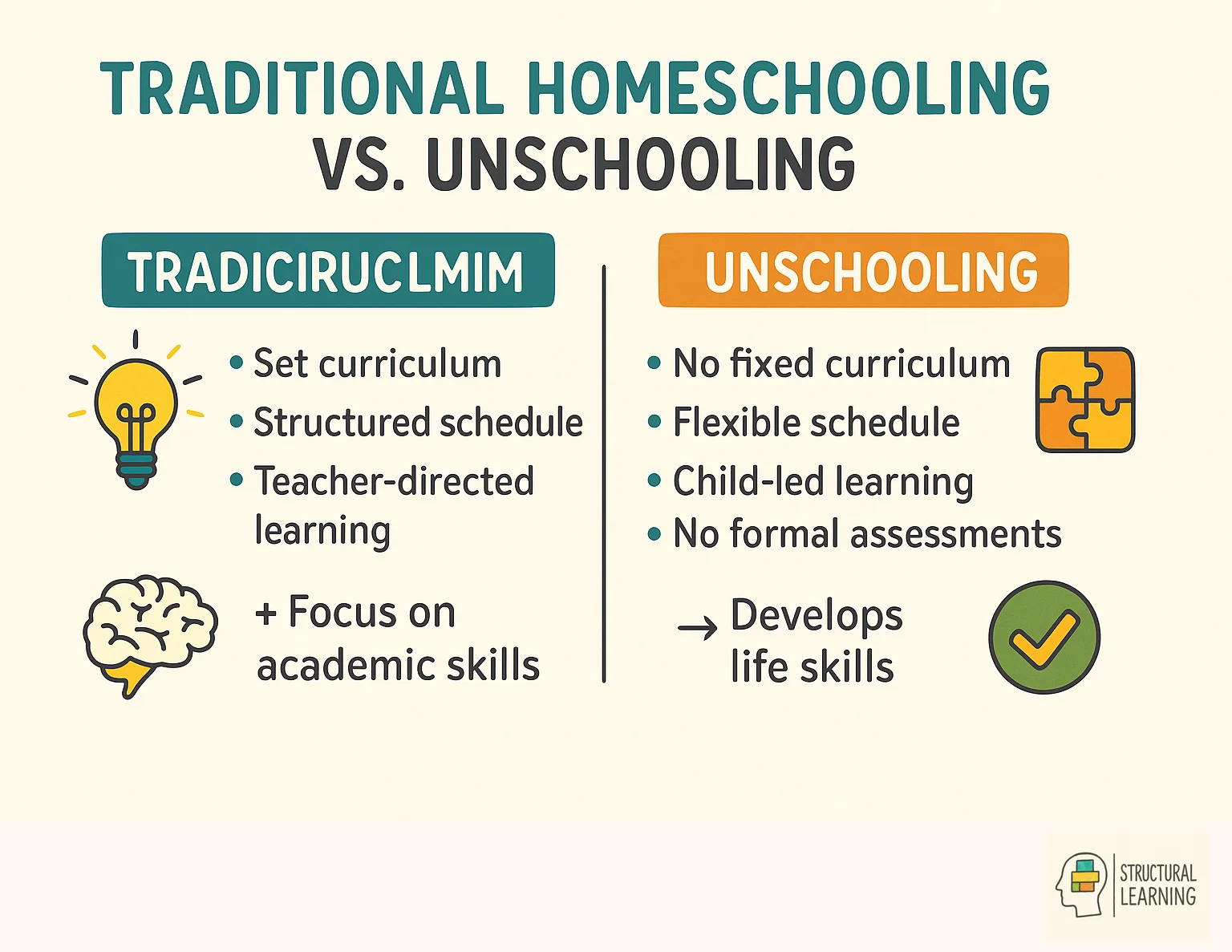
Unlike structured homeschooling, which may mimic school at home with curricula and schedules, unschooling is radically child-led. There’s no fixed timeline for subjects; math might emerge from baking or budgeting, history from family stories or travel.
Also Read: First Day of Homeschool: A Stress-Free Guide for New Families
How Unschooling Works in Practice: A Day in the Life
Unschooling looks different for every family because it’s highly individualized. There’s no single “curriculum,” which can feel liberating or overwhelming.
Core Practices:
- Follow Interests: Kids pursue what fascinates them—dinosaurs, coding, gardening, music—deeply and for as long as desired.
- Rich Environment: Parents provide books, tools, outings, mentors, and materials. Screen time, hobbies, chores, and conversations all count as learning.
- Facilitation: Adults answer questions, connect interests to skills, and model lifelong learning without forcing lessons.
- Documentation (Where Required): Many families keep portfolios, journals, or logs for legal compliance, even if not using formal assessments.
- Community and Resources: Co-ops, libraries, online groups, apprenticeships, and travel expand opportunities.
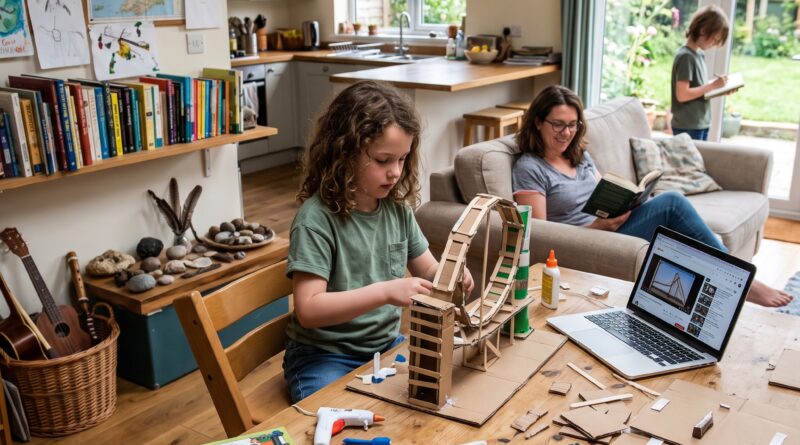
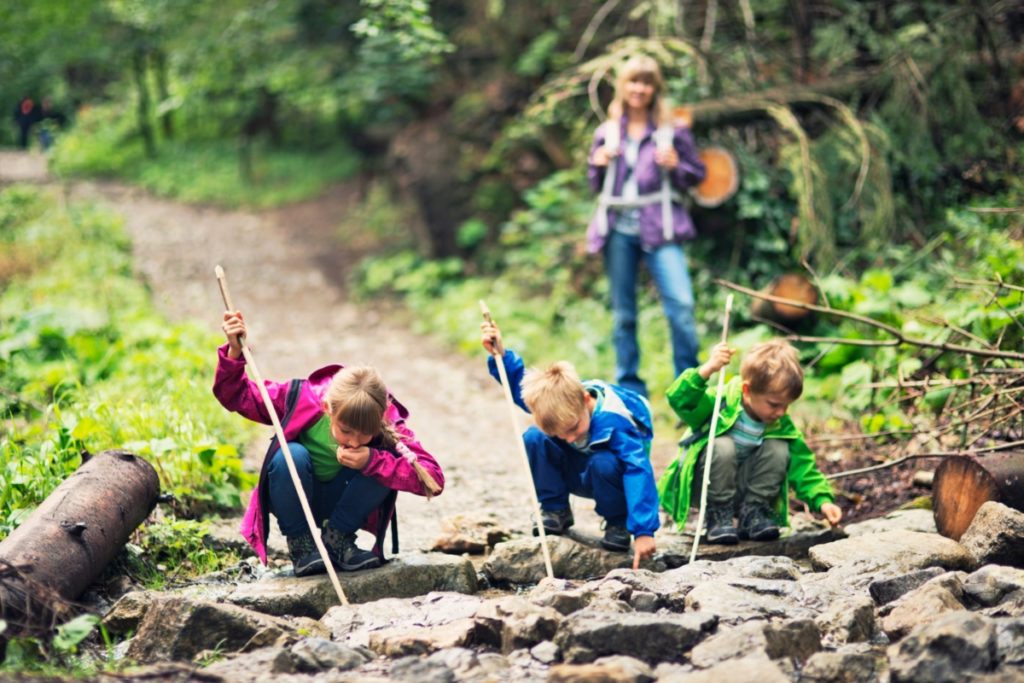
From my work with transitioning families, a typical “day” might include morning nature exploration, afternoon project work (building a fort that teaches engineering), reading aloud, cooking (fractions and chemistry), and evening discussions. One family I advised had their teen master coding through game modding, leading to freelance work by age 16—far beyond what a standard class might achieve.
Age Considerations:
- Younger Children (Ages 4-10): Heavy emphasis on play, sensory experiences, and exploration. Research supports delayed formal academics for many.
- Tweens and Teens: Interests often deepen into specialized knowledge or career exploration via internships and self-study.
Benefits of Unschooling: Evidence and Real Results
When I’ve observed or supported unschooling families over months or years, common outcomes include:
- Love of Learning: Kids retain curiosity without burnout. A 2013 survey of 232 unschooling families reported improved attitudes toward learning and psychological wellbeing.
- Self-Motivation and Life Skills: Unschoolers often excel in time management, problem-solving, and adaptability. Many pursue college successfully or thrive in entrepreneurial paths.
- Stronger Family Bonds: Prioritizing relationships reduces conflict. Parents report deeper connections and less power struggles.
- Personalized Depth: A child obsessed with space might study astronomy, physics, history, and ethics holistically.
In one case study from my consultations, a neurodiverse child who struggled in traditional school flourished, developing advanced robotics skills through hobby projects and later gaining admission to a competitive program. Data from homeschooling research (which includes unschoolers) shows comparable or better outcomes in socialization and academics for many.
Also Read: How to Choose the Best Secular Homeschool Curriculum
Challenges and Potential Drawbacks
Transparency is key: Unschooling isn’t perfect. In my experience, common pitfalls include:
- Gaps in Foundational Skills: Without intentional exposure, some kids may lag in reading, writing, or math until motivation kicks in. Children with learning differences (e.g., dyslexia) often need targeted support.
- Parental Demands: It requires time, patience, financial resources for activities, and confidence to resist societal pressure. Not all parents can commit fully while working.
- Legal and Social Hurdles: Varies by location—some areas mandate testing or portfolios. Judgment from relatives or institutions is common.
- Transition to Structured Paths: College applications or jobs may require demonstrating “equivalency.” Preparation (SAT/ACT, transcripts) takes extra effort.
- Equity Concerns: Families with limited resources or support networks may struggle more.
Pros and cons must be weighed honestly. Unschooling shines for self-directed kids in supportive homes but may not suit every child or circumstance.
Getting Started with Unschooling: Practical Steps
- Research Thoroughly: Read Holt’s books and connect with communities.
- Deschooling Period: Allow 1-3 months (or more) for adjustment after leaving school.
- Build Resources: Libraries, museums, online platforms (Khan Academy for optional support), local groups.
- Legal Compliance: Check state laws. Resources like HSLDA or local homeschool associations help.
- Track Progress Gently: Portfolios, interest logs, or conversations often suffice.
- Seek Support: Online forums, conferences, or mentors prevent isolation.
- Hybrid Approaches: Many blend elements—using unschooling principles with light structure for certain subjects.
In my tested programs, starting small (e.g., one interest-led project week) eases the shift and builds confidence.
Also Read: 10 Best Free Resources for Home Education Every Parent Should Know
Unschooling and Modern Contexts
Today’s tools YouTube, Coursera, maker spaces enhance unschooling. During disruptions like pandemics, many families discovered its flexibility. Outcomes vary, but growing numbers report success into adulthood. Always prioritize the child’s wellbeing over ideology.
For authoritative guidance, explore the John Holt/Growing Without Schooling archives or established homeschool research organizations.
Conclusion
Unschooling invites us to rethink education as a joyful, natural process rather than a forced march through standardized content. In my years supporting families, I’ve witnessed children blossom into confident, passionate individuals when trusted to lead their learning. However, it demands honesty about your family’s readiness, resources, and the child’s needs. It’s not “doing nothing” it’s active, responsive parenting that values autonomy and curiosity.
If it aligns with your values, start small, stay connected to support networks, and remain flexible. Education is ultimately about preparing young people for meaningful lives, and unschooling offers one powerful path among many. Explore, observe your children, and choose what serves them best. For more, dive into primary sources from pioneers like John Holt.
This is not educational or legal advice consult qualified professionals for your specific situation.
FAQs
Q: Is unschooling legal?
Yes, in all U.S. states as a form of homeschooling, but requirements differ. Consult local laws and professionals.
Q: How do unschoolers learn math/reading?
Through real needs (recipes, games, signs). Some use resources when ready; others need guidance for challenges.
Q: What about socialization?
Often richer via mixed-age groups, activities, and community involvement compared to age-segregated classrooms.
Q: Can unschooled kids go to college?
Yes. Many do, using portfolios, GEDs, or standardized tests. Success stories abound.
Q: How does it differ from homeschooling?
Unschooling avoids structured curricula; traditional homeschooling may follow school-like plans.