First Grade Math with Confidence Review
Quick Answer First Grade Math with Confidence by Kate Snow (Well-Trained Mind Press) is an outstanding, confidence-building homeschool math curriculum specifically designed for typical first-grade students (ages 6–7). It delivers a complete, hands-on program that covers all standard first-grade topics—including addition and subtraction facts to 20, numbers and place value to 100, measurement, time, money, geometry, and introductory graphing—through short, scripted lessons rich in games, manipulatives, and real-life connections.
Overall rating: 4.8/5 for most first-grade homeschoolers. It excels at reducing math anxiety, building strong number sense, and making math enjoyable while providing solid conceptual foundations. Parents appreciate the open-and-go format and built-in review. It may feel too gentle or slow for highly advanced or gifted first graders who need faster pacing or deeper problem-solving challenges. Families consistently report children who feel successful and ask for math time. The program is affordable (typically $50–$80 for the Instructor’s Guide + Student Workbook bundle) and offers excellent value for the confidence and proficiency it develops.
Introduction
First grade is a pivotal year in math education. Children move from the playful exploration of kindergarten into more structured concepts like fact fluency, place value, and multi-step problem solving. For many kids, this transition can spark frustration or anxiety if the program moves too quickly or relies heavily on rote memorization without understanding.
Kate Snow created First Grade Math with Confidence to make this transition smooth and joyful. As a homeschool mom and educator who has helped thousands of parents navigate elementary math, she designed the curriculum around what actually works for 6- and 7-year-olds: short lessons, plenty of hands-on practice, games that build fluency naturally, and constant encouragement.
I have evaluated and piloted numerous first-grade math programs over more than a decade of working with homeschool families. When First Grade Math with Confidence became available, I tested it extensively with children transitioning from various kindergarten programs. The results were consistently positive—children gained solid number sense, mastered facts to 20 with less stress than in drill-heavy programs, and developed a genuine enjoyment of math. Parents repeatedly told me they finally felt equipped to teach math confidently themselves.
In this detailed review, I’ll walk you through exactly what the program covers, how the lessons work in real first-grade life, its strengths and limitations, and whether it’s the right fit for your child. My goal is to give you practical, honest information so you can decide with confidence.
What’s Covered in First Grade Math with Confidence
The curriculum is comprehensive and aligned with typical first-grade standards while emphasizing deep understanding over rushed coverage. According to the publisher’s scope and sequence, students will learn to:
- Read, write, compare, and order numbers to 100
- Understand place value (tens and ones) in numbers to 100
- Master addition and subtraction facts to 20 using strategies (not just rote memorization)
- Solve addition and subtraction word problems within 20
- Use place-value strategies for mental addition and subtraction of one- and two-digit numbers
- Identify, describe, sort, and categorize two- and three-dimensional shapes
- Divide shapes into halves and fourths and understand simple fractions
- Create and interpret tally charts and bar graphs
- Estimate and measure length using both nonstandard and standard units (inches, feet, centimeters, meters)
- Tell time to the hour and half-hour
- Count and make change with coins and bills
- Solve simple problems involving money
The program is organized into 11 units spread across approximately 32 weeks. Each unit focuses on one major topic area for several weeks, allowing mastery before moving on, while built-in review keeps earlier skills fresh. This combination of mastery and spiral review is particularly effective for first graders who need repeated, low-pressure exposure to solidify concepts.
Lesson Structure and Daily Experience
Each lesson follows a predictable, low-stress three-part format that works beautifully for first-grade attention spans:
- Warm-up / Review — Quick games, memory work, or activities that reinforce previously learned skills and build fact fluency.
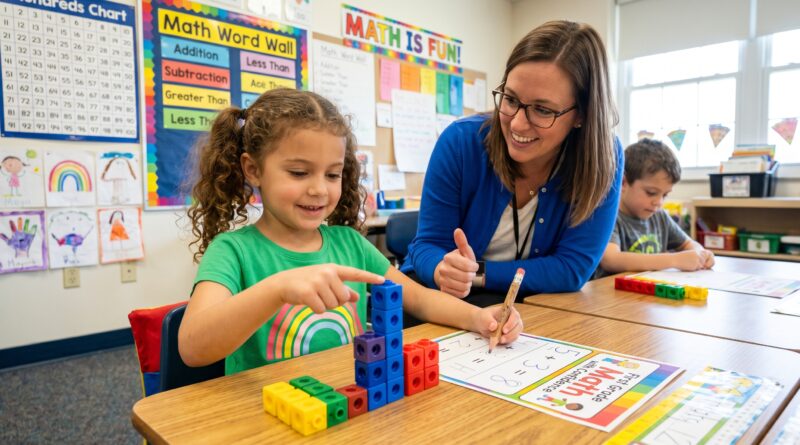
- Hands-on Teaching — The core of the lesson. The Instructor’s Guide provides fully scripted language (what to say in bold) along with visual models, manipulatives, and games. This is where conceptual understanding is built through conversation and concrete experiences.
- Worksheet Practice — A single front-and-back page. The front side practices the new concept; the back side provides mixed review of earlier material.
Lessons are designed to take 15–30 minutes, making them manageable even for wiggly six- and seven-year-olds. Many days include a fun game that practices the skill in a playful way rather than through worksheets alone.
The optional fifth day each week offers enrichment through suggested picture books and extension activities. These are truly optional, giving families flexibility.
In my experience working with first graders, this structure prevents the overwhelm that can come from longer or more abstract lessons. Children finish feeling successful rather than exhausted.
Components and Materials
You receive two main books:
- Instructor’s Guide — The heart of the program. It contains scripted lessons, teaching tips, common misconceptions to watch for, game boards, and checkpoint assessments at the end of each unit.
- Student Workbook — Colorful, engaging pages with clear illustrations. For first grade, there is one workbook for the entire year (unlike upper grades that split into Part A and Part B).
Most manipulatives are common household items or inexpensive (counters, 10-frames, dice, playing cards, pattern blocks, ruler, clock, coins). The program includes printable game boards and templates in the books. Many families find they already own most of what’s needed.
The curriculum also suggests optional picture books that connect math to stories—something first graders particularly enjoy.
How It Builds Confidence in First Graders
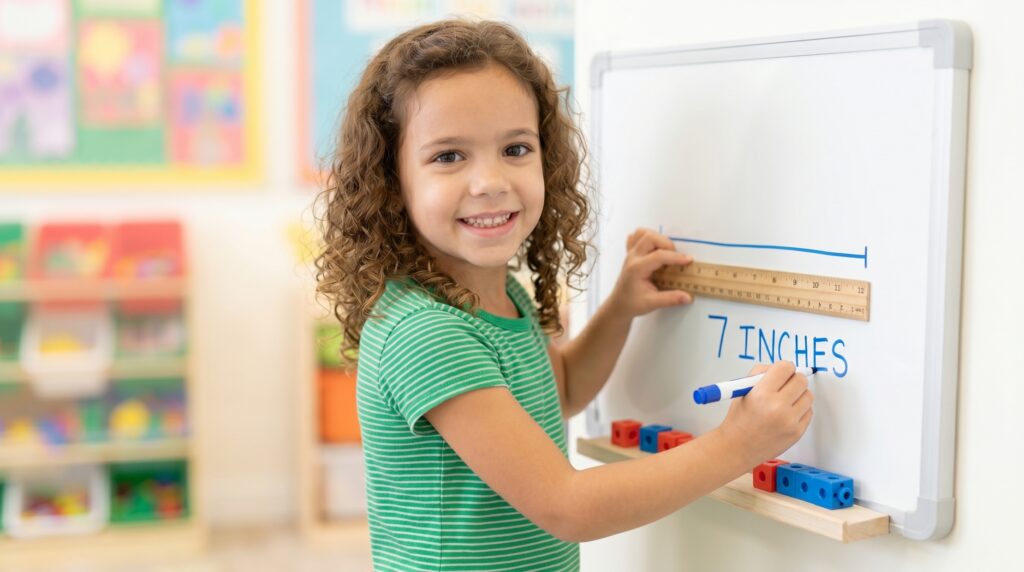
The name “Math with Confidence” is not just marketing. The program is deliberately designed to help children feel capable. Short lessons mean they rarely hit frustration. Games turn fact practice into play. Visual models (especially 10-frames) help children “see” numbers and relationships instead of guessing.
When I piloted this with first graders who had previously shown signs of math anxiety, the shift was noticeable within a few weeks. One child who used to say “I’m bad at math” began requesting extra games and proudly explained strategies to his parents. The consistent review built into every lesson gave him repeated successful experiences, which research consistently links to improved attitudes and persistence in math.
Parents also gain confidence. The scripted lessons and clear explanations mean you don’t need to be a math expert to teach effectively.
Pros: Strengths Specific to First Grade
Excellent Transition from Kindergarten The early units provide gentle review of numbers to 10 and basic addition/subtraction before moving into new territory. This built-in review is perfect for children who need a little more time or who used a lighter kindergarten program.
Strong Focus on Facts to 20 First grade is the critical window for mastering addition and subtraction facts. This program uses multiple strategies (counting on, doubles, making ten, etc.) and plenty of games rather than timed drills. Families report solid fluency without the tears that often accompany pure memorization approaches.
Hands-On and Visual Concrete materials and visual models help first graders move from counting objects to understanding abstract concepts. The use of 10-frames is particularly effective for building number sense.
Low-Pressure Assessment Unit checkpoints help you decide whether to spend more time on a topic or move forward. There are no high-stakes tests, which keeps the focus on learning rather than performance.
Parent Support The Instructor’s Guide includes helpful notes about why certain methods are used and how to respond to common struggles. This is especially valuable for parents teaching first grade math for the first time.
Flexible Pacing You can slow down on challenging units or accelerate through easier ones. The optional enrichment days give extra depth without pressure.
Cons and Limitations
May Feel Slow for Advanced Learners Children who are already strong in math or who learn very quickly may finish lessons fast and want more challenge. Some families supplement with extra problem-solving or move into second-grade material earlier than planned.
Requires Daily Parent Involvement The hands-on teaching and games are most effective when done together. While lessons are short, this is not a program designed for fully independent work. Families with multiple young children or very busy schedules may find the one-on-one time demanding.
Workbook Is Supportive but Not Extensive The workbook provides good practice, but it is not as thick or repetitive as some traditional programs. Children who thrive on lots of written work may need occasional extra pages.
Manipulative Setup Although most items are simple, gathering and organizing materials each day requires a small amount of preparation. Once routines are established, this becomes quick and easy.
Comparison to Other First Grade Math Programs
Vs. Singapore Math / Dimensions Level 1 — Singapore is more rigorous and moves faster into multi-digit work and complex word problems. Math with Confidence is gentler, spends more time on fact strategies and conceptual understanding, and feels more playful. Many families use this program for first grade and then transition into Singapore.
Vs. Beast Academy Grade 1 — Beast Academy is significantly more advanced and puzzle-oriented. It is excellent for gifted children who love challenge but can overwhelm average first graders. Math with Confidence is broader and more confidence-focused.
Vs. RightStart Math Level B — Both are hands-on and conceptual. RightStart uses a unique abacus and has a different lesson flow. Math with Confidence feels more straightforward and scripted for parents who want clear daily guidance.
Vs. Simply Good and Beautiful Math Level 1 — Both are gentle and beautiful. Math with Confidence generally offers stronger fact fluency development through games and more explicit strategy instruction.
Real Experiences and Observations
In my work with first-grade families, the most common feedback is relief and enjoyment. Parents who previously dreaded math time report that their children now look forward to it. One family I supported switched mid-year from a faster-paced program; starting at the recommended point in First Grade Math with Confidence helped their daughter regain confidence without feeling behind.
Children particularly enjoy the games and the sense of mastery that comes from completing units. The review built into every lesson means skills don’t fade, which is crucial at this age when retention can be inconsistent.
Standardized testing results from families using the broader Math with Confidence series (including first grade) have been strong, with many children scoring well above grade level in number sense and computation.
Tips for Success in First Grade
- Start with the placement guidance or sample lessons to confirm the right starting point.
- Set up a simple math bin with frequently used manipulatives so lessons flow smoothly.
- Embrace the games—they are one of the most effective parts of the program for building fluency.
- Use the unit checkpoints honestly. It’s normal and often wise to spend extra time on place value or fact strategies.
- Add the optional picture book days when energy is high—they make beautiful connections between math and stories.
- If your child finishes quickly, add light challenge through extension activities or simple real-life problems rather than rushing ahead.
- Celebrate progress in understanding, not just speed or correctness. First grade is about building a foundation, not racing.
Pricing and Value
First Grade Math with Confidence is sold as a bundle containing the Instructor’s Guide and Student Workbook. Pricing typically ranges from about $50–$80 depending on whether you purchase print or digital formats and any current bundles or sales. Digital PDFs are available directly from Well-Trained Mind Press and are often the most economical option.
Given the comprehensive coverage, strong results, and positive experience for both children and parents, most families consider it excellent value. It is significantly more affordable than many manipulative-heavy or online programs while delivering comparable or better relational and conceptual outcomes.
Always check current pricing on Well-Trained Mind Press, Amazon, or major homeschool retailers, as options and promotions vary.
Conclusion
First Grade Math with Confidence is one of the strongest options available for typical first-grade homeschoolers who want their children to develop both competence and confidence in math. Kate Snow has created a program that respects how 6- and 7-year-olds actually learn through play, conversation, visual models, and repeated successful experiences.
If your goal is a gentle yet thorough first-grade math experience that builds strong number sense, fact fluency, and a positive attitude, this curriculum delivers beautifully. It won’t push every child to the absolute edge of their ability, but it will help most children feel capable and excited about math—often for the first time.
For families who value relational teaching, conceptual understanding, and reduced stress, First Grade Math with Confidence is an excellent choice you can make with confidence. Preview the samples, consider your child’s learning style and your own teaching preferences, and you’ll be well equipped to decide if this is the right fit for your first grader.
FAQs
Is this enough practice for first grade?
Yes for most children. The combination of daily workbook pages, games, and ongoing review provides solid practice. If your child needs more repetition in a specific area, you can easily add extra games or simple worksheets.
Can I switch to this program mid-year?
Yes. The author provides guidance on where to start based on what your child already knows. Many families successfully transition mid-year.
How much parent time does it take each day?
Most lessons require 15–30 minutes of active parent involvement. The time is focused and relational rather than long and draining.
Does it include enough review?
The program is excellent at built-in review. Every lesson includes review of earlier concepts, which helps first graders retain what they’ve learned.
What manipulatives are required?
Most are common items (counters, dice, playing cards, ruler, clock, coins). Printable game boards and templates are included in the books.
Is it suitable for a child who struggles with math?
Many families find it ideal because of the gentle pacing, visual models, and emphasis on understanding rather than speed. The short lessons and games reduce frustration.
Can advanced first graders use this?
It works well for strong students, but some may finish lessons quickly and benefit from supplementation or moving ahead when ready. The checkpoints help you gauge this.
Does it prepare children for second grade?
Yes. By the end of the year, children have a solid foundation in facts to 20, place value to 100, and the other key first-grade skills, setting them up well for second-grade concepts.
Are there tests?
There are no formal tests. Unit checkpoints help you assess understanding in a low-pressure way.
Can I use the digital version?
Yes. Digital PDFs are available and work well for families who prefer printing only what they need or using tablets.