Home Education Charlotte Mason: 10 Easy Steps to Homeschool Each Subject
Imagine a homeschool morning where your children lean in eagerly during read-aloud time, then enthusiastically retell stories from history or science in their own words. Picture afternoons spent sketching birds in the backyard or discussing why a math problem worked a certain way. This kind of engaged, joyful learning isn’t rare or idealistic—it’s the natural outcome when families apply Charlotte Mason’s time-tested principles of home education.
Charlotte Mason (1842–1923), a British educator and founder of the Parents’ National Educational Union, believed children are born persons worthy of rich ideas, not empty vessels to be filled with facts. Her methods detailed in her six-volume series emphasize living books, narration, short focused lessons, nature study, and habit formation. Today, thousands of American families use her approach to raise thoughtful, curious, and resilient learners amid screens, busy schedules, and standardized testing pressures.
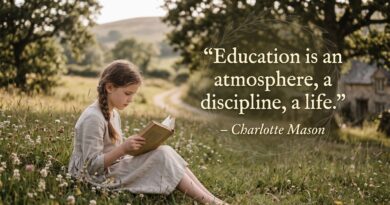
Her core idea is simple yet profound: “Education is an atmosphere, a discipline, and a life.”
This article gives you a practical, step-by-step framework you can apply to every subject—history, science, math, literature, language arts, art, and more. These 10 easy steps are designed for busy parents. They require no expensive curriculum overhaul and work whether you have one child or several, preschoolers or high schoolers. You can start small tomorrow and build from there.
Quick Answer
Charlotte Mason’s home education philosophy nurtures the whole child through living ideas rather than dry textbooks. To homeschool any subject her way:
- Cultivate a rich learning atmosphere at home.
- Choose living books as your core resources.
- Keep lessons short and varied.
- Train good habits intentionally.
- Read and use narration for deep engagement.
- Add hands-on observation and nature connections.
- Build skills with copywork and dictation.
- Weave in beauty through art, music, and poetry.
- Follow a gentle daily rhythm and schedule.
- Use notebooks and reflection to track growth and adjust.
Follow these steps consistently, and you’ll see stronger retention, better focus, growing character, and a genuine love of learning. The rest of this guide shows you exactly how.
Understanding Charlotte Mason’s Vision
Mason viewed education as forming relationships with God, people, and the natural world (what she called the “Science of Relations”). Children don’t need diluted “twaddle.” They thrive on the best books, direct observation, and ideas that feed their minds.
Her three-part formula still guides effective homeschooling:
- Atmosphere: The home environment, parental example, and ideas in the air shape learning more than we realize.
- Discipline: The training of habits—attention, diligence, courtesy, thoroughness gives children self-mastery.
- Life: Knowledge comes through living ideas in real books and experiences, not fragmented facts.
Modern research echoes what Mason observed: short lessons improve attention, active recall (narration) boosts long-term retention far better than passive reading or worksheets, and time in nature reduces stress while building observation skills. American families especially appreciate how her methods counter worksheet fatigue and screen overload while building the character and critical thinking needed for college, careers, and citizenship.
Important note on trustworthiness: These methods are flexible and have been adapted successfully across secular, Christian, and mixed households. Results depend on consistency, your child’s unique needs, and your willingness to observe and adjust. Mason herself encouraged parents to study their own children. This is not medical, therapeutic, or legal advice always comply with your state’s homeschool laws (notification, portfolios, or testing requirements vary widely) and consult specialists for learning differences or giftedness.
The 10 Easy Steps to Homeschool Each Subject the Charlotte Mason Way
Apply these steps to whatever you’re teaching. The same framework works beautifully for early reading, ancient history, fractions, or composer study.
Step 1: Cultivate a Rich Atmosphere of Learning
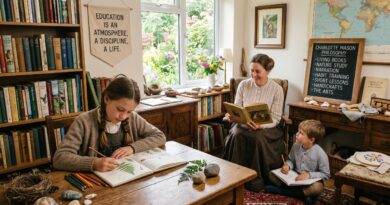
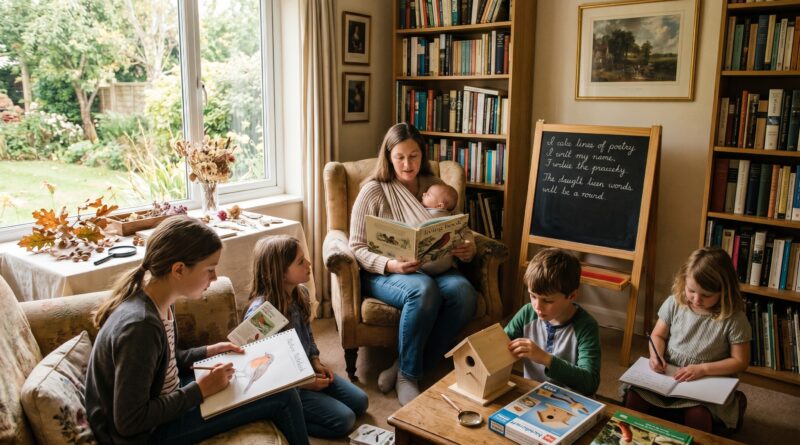
Your home itself teaches. Fill it with beautiful books, art prints, music, plants, and order. Model curiosity—let your children see you reading, wondering, and discussing ideas at the dinner table.
Why it works: Mason said the atmosphere is one-third of education. Children absorb the ideas and attitudes around them. A calm, idea-rich home reduces behavioral issues and makes learning feel natural rather than forced.
How to do it practically: Dedicate a cozy reading corner with good lighting and a basket of living books. Play classical music or hymns during quiet work. Display a rotating piece of art or a nature find on the mantel. Keep screens in check during school hours. When you read history or science, connect it to real life—“This reminds me of the story we read last week about Lewis and Clark.”
Subject example: For literature, keep poetry books and a Shakespeare play visible. For math, have measuring cups, blocks, and a beautiful abacus or number line on display.
Parents who intentionally shape atmosphere often report calmer mornings and children who initiate their own learning projects.
Step 2: Choose Living Books as Your Primary Resources
Ditch (or heavily supplement) dry textbooks. Choose “living books”—narrative works written by one passionate author who brings the subject to life with story, vivid language, and ideas.
Why it works: “Children must have books, living books; the best are not too good for them,” Mason wrote. These books feed the mind with ideas that stick because they engage emotion and imagination.
How to implement: Use booklists from Ambleside Online (free), Simply Charlotte Mason, or Beautiful Feet Books. Check your local library or Libby/OverDrive app. For history, choose biographies and original narratives over summaries. For science, pair field guides with engaging stories.
Subject examples:
- History: The Story of the World (early years) or primary-source-rich biographies instead of fact-heavy texts.
- Science/Nature: The Burgess Bird Book for Children or Handbook of Nature Study by Anna Botsford Comstock.
- Math: Living arithmetic books (such as the Charlotte Mason Elementary Arithmetic series) or story-problem resources that emphasize reasoning over rote drills.
Start with what you can find this week. One excellent living book per subject is enough to begin.
Step 3: Keep Lessons Short and Focused
Mason insisted on short lessons often 10–20 minutes for younger children, building to 30–45 minutes for older students. Use a timer. Stop while attention is still high.
Why it works: Short lessons train the habit of full attention. Children learn to focus completely because they know the lesson won’t drag on. This prevents burnout and allows you to cover more subjects lightly each day.
Practical tips: Begin with 10-minute lessons if your child is wiggly. Switch subjects frequently. Include movement between lessons. For high school, longer blocks work once the habit of attention is strong.
Many families notice improved focus within two to three weeks of shortening lessons.
Step 4: Train Good Habits Intentionally
Habits form character. Work daily on habits like attention, obedience, neatness, and thoroughness through the subject itself.
Why it works: Mason devoted significant writing to habit training because habits free the will for higher things. “The discipline of habit is at least a third part of education.”
How to do it: Before a lesson, remind gently: “Let’s give this our full attention today.” After, praise specific effort: “You worked carefully on that narration.” Address lapses kindly and immediately. Use the same expectations across subjects so habits transfer.
Example: In nature study, the habit of patient observation. In math, the habit of checking your work thoughtfully.
Step 5: Read Aloud (or Assign) and Use Narration
After a short reading or lesson, have your child tell back what they learned or the story in their own words. Start orally; move to written narration around age 10–11.
Why it works: Narration is “an act of knowing.” It requires the child to process, organize, and express ideas—far superior to multiple-choice questions for retention and thinking skills.
Practical how-to: Read a chapter or section once. Ask, “Tell me what you heard.” Listen without interrupting. Later, gently help refine language or add details. For written narration, start with one paragraph and grow.
Subject applications: Works for history, Bible, science living books, and even math reasoning (“Explain how you solved it”). For art or music study, narrate what you notice in a painting or piece.
Narration takes practice for both parent and child. Start simple and be patient—it becomes natural quickly.
Step 6: Incorporate Observation, Nature, and Hands-On Experiences
Get outside regularly. Use real objects, experiments, field trips, and nature notebooks.
Why it works: Direct contact with the world builds wonder, scientific thinking, and a lifelong habit of observation. Mason called nature knowledge one of the most valuable gifts for young children.
How to implement: Schedule at least one nature walk or outdoor hour weekly (more for younger children). Keep a simple nature journal. For history or geography, visit local sites or museums. For math, use real measuring, cooking, or building projects.
US example: Explore a nearby national or state park, sketch local birds or wildflowers, or study your region’s history through living books and site visits.
Step 7: Use Copywork and Dictation for Skill Building
Have children copy beautiful passages from living books for handwriting, spelling, and grammar. Use dictation (parent reads, child writes from memory after study) for older students.
Why it works: Children absorb excellent language patterns naturally. This method improves mechanics without boring drills and keeps language arts connected to great ideas.
Start with short, perfect copywork. Progress to studied dictation. Delay formal grammar study until around age 10–11.
Step 8: Weave in Beauty Through Artist, Composer, and Poetry Study
Even when teaching history or science, include picture study (one artist per term), composer study, and poetry.
Why it works: Beauty feeds the soul and trains the powers of attention and appreciation. It makes education a feast rather than drudgery.
Simple routine: Once a week, look at a painting together, read a short artist biography, and let children narrate or recreate in their style. Do the same with music—listen and discuss.
Step 9: Follow a Consistent yet Flexible Daily Rhythm
Create a gentle schedule that varies subjects and includes margin. Many families use a loop or block schedule rather than rigid hourly plans.
Why it works: Variety prevents boredom. Consistency builds security and habits. Mason recommended a wide feast of subjects presented lightly.
Sample rhythm for elementary: Morning focus subjects (Bible, reading, math, history), afternoon nature or handicrafts and read-alouds, evening family reading. Adjust for your family’s energy and commitments.
Use free schedules from Ambleside Online or Simply Charlotte Mason as starting templates.
Step 10: Keep Notebooks, Reflect, and Adjust
Use nature notebooks, history timelines or Book of Centuries, written narrations, and simple portfolios. Regularly observe: Is my child engaged? Retaining ideas? Growing in habits?
Why it works: Notebooks make learning visible and provide a record of growth. Reflection helps you personalize the approach instead of forcing a rigid system.
Review monthly. Celebrate progress. Tweak lesson length, book choices, or pace based on what you see.
Conclusion
Charlotte Mason’s methods offer American families a refreshing alternative to rushed, fragmented schooling. By focusing on living ideas, short lessons, narration, nature, and habits, you give your children both knowledge and the love of learning that lasts a lifetime.
You don’t need perfection or a complete overhaul. Start with one or two steps this week—perhaps shortening lessons and trying narration during your next history read-aloud. Watch what happens. Adjust as you go. The feast is there for the taking.
Education, in Mason’s words, should give children “a full life.” These 10 steps help you do exactly that—one subject, one day, one idea at a time.
FAQs
Is the Charlotte Mason method suitable for all ages?
Yes, with adaptations. Short lessons and oral narration suit young children. Older students handle longer readings, written narrations, and more formal subjects while keeping the same principles of living ideas and attention.
How do I teach math the Charlotte Mason way?
Focus on reasoning and number sense through mental arithmetic, story problems, manipulatives, and living math books. Daily short practice builds habits of accuracy and insight. Many families use resources like the Charlotte Mason Elementary Arithmetic series or combine with programs that emphasize understanding over worksheets. Supplement as needed for fluency.
What if my child struggles with narration?
Start very short and oral. Model it yourself first. Use pictures or simple stories. Give grace—some children need more time or different prompts. It improves with practice.
Do I need a full curriculum like Ambleside Online?
No. Many families mix and match or create their own using Mason’s principles and free booklists. Curricula provide convenience and community; you can also go à la carte.
How does this prepare children for tests or college?
Strong readers, thinkers, and writers who love learning tend to perform well. Many CM students excel on standardized tests because of deep comprehension. For high school credits, document work through narrations, notebooks, and projects. Supplement specific test prep if required by your state or target colleges.
Can I combine it with other methods or use it with special needs?
Absolutely. Many families blend CM with classical elements, Montessori materials, or therapy supports. Short lessons and multi-sensory elements (nature, art, narration) often benefit children with attention or processing differences—observe and adapt.
Is it religious?
Mason was a Christian and placed Bible knowledge first. Many Christian families love the method, but the core principles (living books, narration, habits, nature) work in secular homes too. Adapt the content to your family’s values.
Where do I find living books and resources affordably?
Public libraries, used book sales, Ambleside Online free lists, Project Gutenberg, and inter-library loan. Start small—one or two excellent books per subject.