What Is Thrive Early Learning?
Quick Answer: Thrive Early Learning is a veteran family-owned, Reggio-inspired early childhood education and care center in Richmond Hill, Georgia. It offers high-quality, play-based programs for children from 6 weeks old through Pre-K (typically up to age 5) in a nurturing, curiosity-driven environment designed to feel like an extension of home. The center emphasizes hands-on exploration, creativity, meaningful relationships, and the belief that every child is a capable learner whose interests guide the learning journey.
Parents often describe it as “a family away from family,” where children thrive through thoughtful provocations, natural materials, and attentive educators who document and build upon each child’s discoveries.
Last Updated: June 22, 2026
Why the Early Years Matter More Than Ever
The period from birth to age five represents one of the most critical windows for brain development. By age five, roughly 90% of a child’s brain architecture is formed. High-quality early learning experiences during these years can influence everything from school readiness and lifelong learning habits to social-emotional resilience and even long-term health outcomes.
When searching for the right program, many families in the Richmond Hill and greater Savannah area discover Thrive Early Learning. But what exactly sets it apart? This comprehensive guide explores its philosophy, history, daily life, and how it aligns with evidence-based best practices in early childhood education.
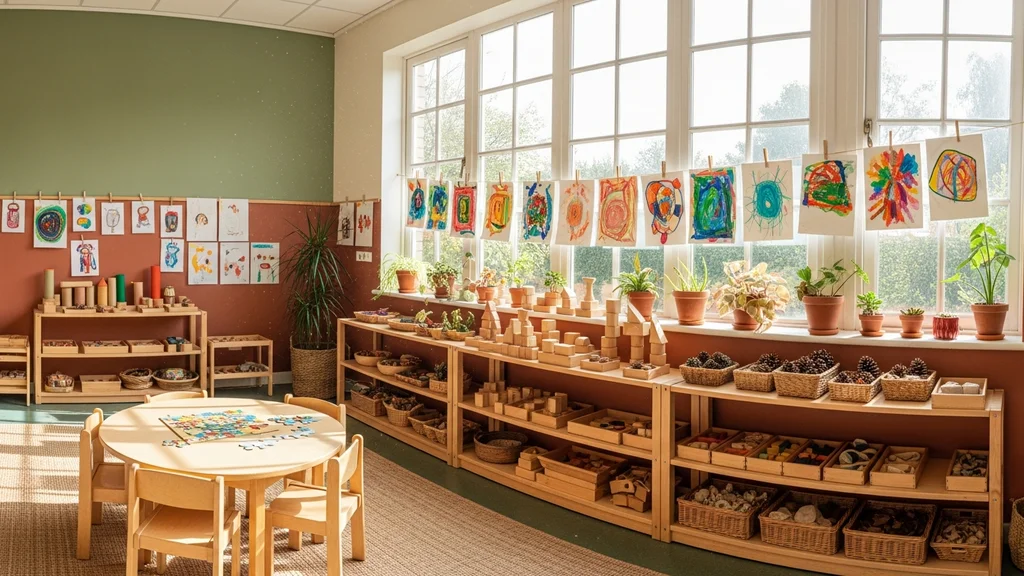
A beautifully designed Reggio-inspired classroom featuring natural light, open-ended materials, and children’s artwork on display — the kind of thoughtful environment parents can expect at centers like Thrive Early Learning.
The Story Behind Thrive Early Learning: A Veteran Family Revival
Thrive Early Learning is more than a childcare center — it carries a powerful story of community resilience and commitment to children.
In 2020, after a previous daycare in the same Richmond Hill location abruptly closed, Krystle Steinhoff and her husband stepped in as new owners. As a veteran family, they brought not only business experience but a deep understanding of the unique needs of military and first-responder families common in the area near Fort Stewart.
They reimagined the center as Thrive Early Learning, grounding it in the Reggio Emilia approach while creating a warm, family-oriented culture. The goal was simple yet profound: to build a place where children feel safe, seen, and excited to explore every day.
Today, Thrive operates as a licensed, Quality Rated-eligible program (Georgia’s quality improvement system) serving infants through Pre-K. The veteran family ownership remains a point of pride and informs the center’s emphasis on stability, respect, and strong relationships.
Understanding the Reggio-Inspired Philosophy at Thrive
One of the most distinctive features of Thrive Early Learning is its Reggio-inspired approach. Originating in the Italian town of Reggio Emilia after World War II, this philosophy views children as strong, capable, and full of potential — not empty vessels to be filled with knowledge.
Core Principles You’ll See in Action at Thrive
- The Child as Protagonist: Children’s interests, questions, and ideas drive the curriculum. Teachers act as guides and researchers rather than lecturers.
- The Environment as the “Third Teacher”: Classrooms are intentionally beautiful, organized with natural and open-ended materials (wood, fabric, clay, light, plants, loose parts). Every space invites exploration.
- The Hundred Languages of Children: Children express themselves through art, movement, building, dramatic play, music, and more. All “languages” are valued equally.
- Emergent Curriculum & Long-Term Projects: Instead of rigid weekly themes, projects grow from children’s genuine curiosity (e.g., “Why do shadows change?” or “How do birds build nests?”). These projects can last weeks or months and involve deep investigation, documentation, and collaboration.
- Documentation: Teachers carefully observe, photograph, and transcribe children’s words and processes. This makes learning visible to children, parents, and educators.
- Strong Image of the Child & Family Partnership: Parents are seen as essential partners. Teachers communicate daily and invite families into the learning process.
At Thrive, this translates into classrooms filled with light, natural elements, and provocations designed to spark wonder. You won’t typically see rows of desks or worksheets. Instead, you’ll see children deeply engaged in building, creating, experimenting, and negotiating with peers.
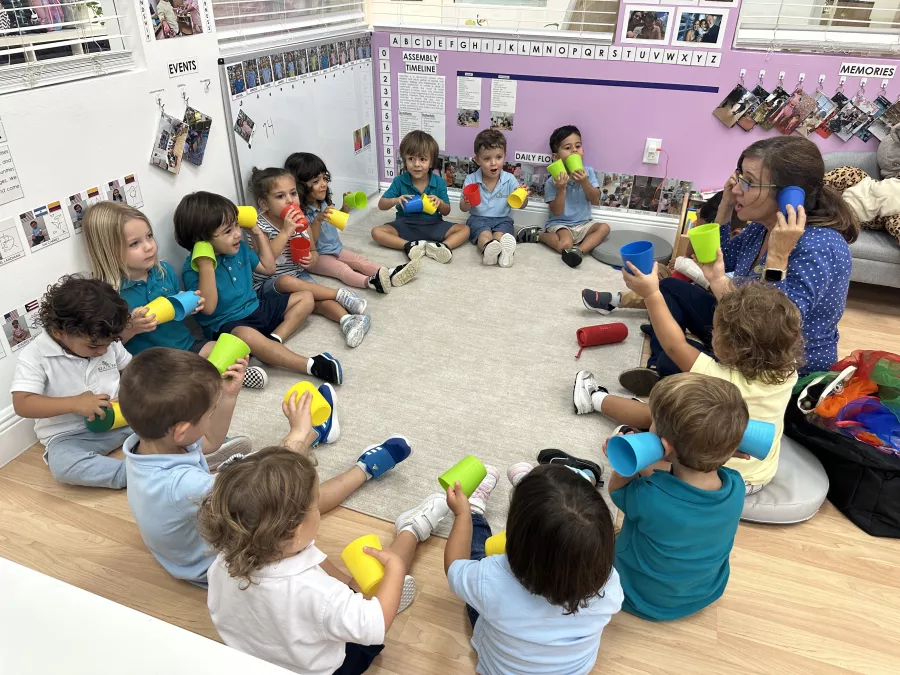
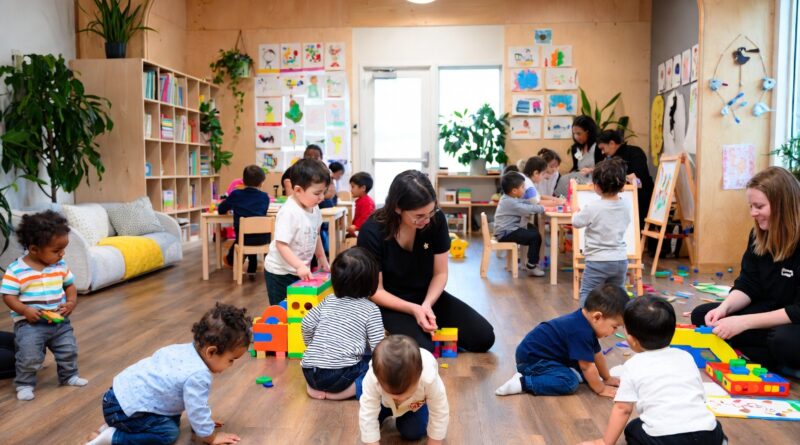
Children and teachers engaged in joyful, hands-on group exploration — a hallmark of Reggio-inspired practice where learning happens through relationships and active discovery.
Programs by Age at Thrive Early Learning
Thrive tailors experiences to developmental stages while maintaining the same core philosophy across classrooms.
Infants (6 weeks – 12/18 months)
- Focus on secure attachment, responsive caregiving, and sensory exploration.
- Low teacher-to-child ratios allow for individualized attention and following each baby’s unique rhythm.
- Emphasis on language-rich interactions, tummy time, and safe exploration of natural materials.
Toddlers (12/18 months – 3 years)
- Rapid language explosion and growing independence are supported through rich sensory experiences and simple projects.
- Teachers help toddlers develop self-help skills, emotional regulation, and peer relationships through play.
- Outdoor time and nature exploration are daily priorities.
Preschool & Pre-K (3 – 5 years)
- Longer-term emergent projects deepen critical thinking, collaboration, and early literacy/numeracy concepts in meaningful contexts.
- Preparation for kindergarten happens organically through rich play, problem-solving, and social skill development rather than drill-and-practice.
- Children gain confidence as they document and revisit their own learning.
Throughout all ages, outdoor play, healthy meals/snacks, rest times, and plenty of joyful movement are woven into the rhythm of each day.
What Makes Thrive Early Learning Unique?
While many excellent centers exist, families often highlight these qualities at Thrive:
- Genuine Family Atmosphere: Multiple reviews describe it as feeling like an extension of home. Staff know families by name, celebrate milestones together, and create continuity.
- Beautiful, Intentional Spaces: The Reggio influence shows in the thoughtful design — natural light, plants, curated materials, and displays of children’s process work (not just finished products).
- Veteran Family Ownership & Values: Stability and respect for service families are part of the DNA.
- Focus on the Whole Child: Social-emotional development, creativity, and executive function skills receive equal attention alongside cognitive growth.
- Strong Teacher-Child Relationships: Educators are encouraged to slow down, observe deeply, and respond to individual children rather than rushing through a scripted curriculum.

Warm, responsive interactions between educators and young children build the secure relationships that form the foundation of all learning at high-quality centers like Thrive.
The Science and Research Behind This Approach
High-quality early childhood programs like those inspired by Reggio principles align closely with decades of research. Studies from the Harvard Center on the Developing Child and the National Academies of Sciences, Engineering, and Medicine consistently show that responsive, relationship-based care and rich play experiences in the early years produce measurable benefits in:
- Language and cognitive development
- Social-emotional skills and self-regulation
- Executive function (planning, focus, flexibility)
- Long-term academic and life outcomes
Play is not “just play” — it is the primary vehicle through which young children build brains, practice social skills, develop creativity, and make sense of the world.
Thrive’s emphasis on documentation and emergent curriculum also supports the growing understanding that children learn best when they feel agency and when learning is connected to their real interests and questions.
Real Parent Perspectives
Parents who have chosen Thrive Early Learning frequently mention:
- The visible joy and engagement of their children
- Thoughtful daily communication and photos/videos of learning moments
- The beautiful, calm environment that feels different from more commercial or institutional settings
- The sense of community and belonging
- Teachers who truly know and celebrate each child’s individuality
One common theme in feedback: children who previously seemed anxious or reluctant about separation often settle quickly and begin talking excitedly about their “projects” and friends.
Of course, every family’s experience is unique. What feels like the perfect fit for one child may need adjustment for another.
Choosing an Early Learning Program: Practical Guidance
If you’re exploring options like Thrive Early Learning, here are key questions to ask on a tour (and what to observe):
- How do teachers respond when a child shows a strong interest or asks a question?
- What does documentation of learning look like? Can you see examples of children’s words and processes?
- How is the environment set up to encourage exploration versus passive consumption?
- What is the approach to behavior guidance and emotional development?
- How do they support transitions (to kindergarten or between classrooms)?
- What ongoing professional development do teachers receive?
- How are families involved in the life of the classroom?
Red flags in any program include overly rigid schedules, heavy use of worksheets or screen time, high staff turnover, or environments that feel cluttered or institutional rather than calm and intentional.
Green flags include warm, engaged teachers; beautiful, accessible materials; evidence of child-led projects; and genuine two-way communication with families.
Potential Considerations
No single program is perfect for every child or family. Here are balanced points to consider with Thrive or any Reggio-inspired center:
Strengths:
- Excellent for children who thrive with freedom, creativity, and deep exploration.
- Builds strong foundational skills for lifelong learning and social success.
- Beautiful environments and relationship focus reduce stress for many children.
Considerations:
- The emergent, child-led nature means less predictable “academic” worksheets or drills. Some families seeking highly structured pre-academic preparation may prefer a different model (or a hybrid).
- Quality Reggio-inspired programs require highly skilled, observant teachers — which can mean higher tuition typical of premium early childhood education.
- Waitlists are common at sought-after centers; early inquiry is recommended.
- Fit is personal — some children (and parents) prefer more teacher-directed structure.
The best way to know if Thrive is right for your family is to schedule a tour, observe the classrooms in action, and talk with current parents.
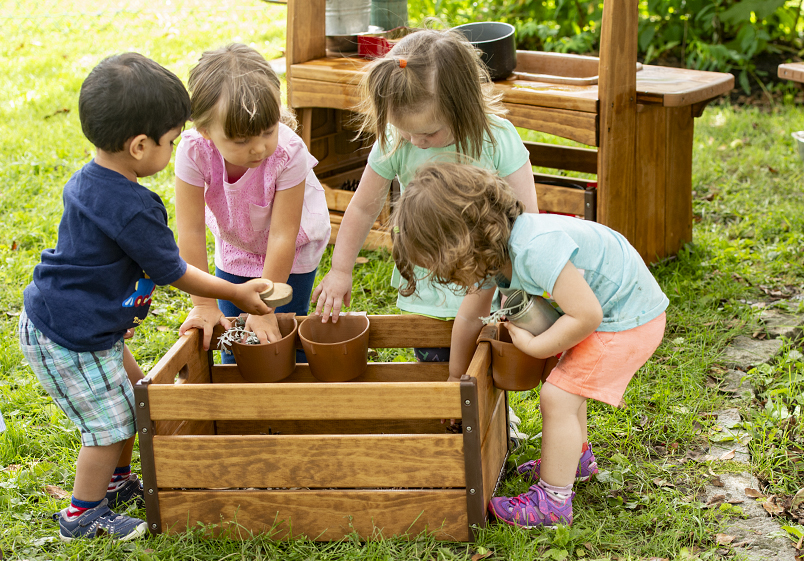
Outdoor sensory and exploratory play with natural materials supports the hands-on, nature-connected learning that is central to Reggio-inspired programs.
Conclusion: Investing in the Right Beginning
Choosing an early learning environment is one of the most significant decisions parents make in a child’s first years. Thrive Early Learning offers a distinctive combination of Reggio-inspired practices, a beautiful and intentional setting, and the personal touch of veteran family ownership in the heart of Richmond Hill, Georgia.
For families who value child-led exploration, creativity, strong relationships, and an environment that feels nurturing rather than institutional, Thrive represents a compelling option. The center’s story of revival and commitment reflects the same resilience and care it aims to nurture in every child who walks through its doors.
The most important step? Schedule a tour. See the classrooms. Meet the teachers. Watch how the children engage. Trust both the research on high-quality early care and your own instincts about what feels right for your child and family.
Every child deserves a place where they are known, celebrated, and inspired to discover the world — and where their families feel supported and connected. That is the heart of what Thrive Early Learning strives to be.
Helpful High-Authority Resources:
- Official site: thrive-el.com
- Georgia Department of Early Care and Learning (DECAL) Quality Rated information
- National Association for the Education of Young Children (NAEYC) resources on developmentally appropriate practice
- Harvard Center on the Developing Child – Science of early childhood development
Thank you for reading. If you’re considering Thrive Early Learning or exploring early childhood options in the Richmond Hill area, we hope this guide has been genuinely helpful. Wishing you and your child a thriving start!
FAQs
What ages does Thrive Early Learning serve? Infants starting at 6 weeks old through Pre-K (typically up to age 5).
Is Thrive a true Reggio Emilia school or Reggio-inspired?
It is Reggio-inspired, meaning it draws deeply from the philosophy and practices developed in Reggio Emilia, Italy, while adapting them to the local Georgia context and community needs.
How does Thrive prepare children for kindergarten?
Through rich play, project work, social-emotional development, language-rich environments, and gradually building independence and problem-solving skills. Many children transition confidently because they have practiced regulating emotions, collaborating, and thinking critically.
What is the teacher-to-child ratio?
Thrive follows or exceeds Georgia state licensing requirements, which are among the better ratios in the U.S. Exact ratios vary by age group (infants have the lowest ratios).
Are meals and snacks provided?
Most quality centers, including Thrive, provide meals and snacks. Confirm current menus and any dietary accommodations during your tour.
How do they handle children with special needs or developmental concerns?
High-quality programs work closely with families and can often provide or connect families with early intervention support. Discuss your child’s specific needs directly with the director.
What is the cost and is financial assistance available?
Tuition at premium early learning centers reflects the investment in low ratios, trained teachers, and beautiful environments. Some programs accept Georgia childcare subsidies or offer limited scholarships. Always ask about current rates and options.
How long is the waitlist?
Popular centers often have waitlists, especially for infants. Applying early and staying in communication helps.
Can I visit or observe before enrolling?
Yes touring and observing is strongly encouraged. Many centers, including Thrive, welcome prospective families to see the environment and meet teachers.
What makes Thrive different from other daycares in Richmond Hill?
Its veteran family ownership, deliberate Reggio-inspired philosophy, emphasis on beautiful environments and documentation, and the consistent feedback about its warm, relational culture set it apart for many families.