The 2 Hour Learning Model
Quick Answer The 2 Hour Learning Model is an innovative, AI-powered educational approach that condenses core academic mastery into just two focused hours per day, freeing the remaining time for life skills development, passion projects, and deeper socialization. Pioneered by educator MacKenzie Price and proven at Alpha School campuses, it uses personalized AI tutors for adaptive, mastery-based learning while trained adult “Guides” provide motivation, emotional support, and facilitate real-world workshops. Students reportedly master material up to twice as fast as traditional peers, with top performers showing dramatic growth, all while building practical skills like financial literacy, public speaking, and collaboration. It’s designed for K-12 settings—in-person schools, virtual programs, and private school licensing—and represents a shift from passive, time-based schooling to efficient, personalized, and purpose-driven learning.
Last Updated: June 22, 2026
Rethinking How Much Time Kids Really Need for Academics
For over a century, the standard school day has revolved around six or more hours of structured classroom time. But what if the core academic work reading, math, science, history could be mastered more effectively in a fraction of that time? That’s the central promise of the 2 Hour Learning Model.
This approach isn’t about cutting corners. It’s about leveraging technology, deliberate practice, and human motivation to eliminate wasted time and accelerate genuine understanding. By front-loading academics into a focused morning block powered by AI, students gain the “gift of time” in the afternoon to develop the life skills, creativity, and resilience that traditional schooling often sidelines.
Based on publicly available information, educational research, and the published approach used by Alpha School, the 2 Hour Learning Model aims to combine AI-powered instruction with mastery-based learning.
It challenges us to ask: Are we optimizing for seat time or for actual learning and growth?
This comprehensive guide breaks down exactly how the model works, the research and real-world results behind it, its advantages and limitations, and practical considerations for families and educators.
What Is the 2 Hour Learning Model?
At its core, the 2 Hour Learning Model combines three powerful elements:
- AI-Powered Personalized Academics — Students engage in 2 hours of highly focused, adaptive learning using AI tutors that adjust in real time to their pace, level, and learning style.
- Mastery-Based Progression — No moving on until concepts are truly mastered, eliminating knowledge gaps common in traditional pacing.
- Human-Centered Afternoon — The remaining school day shifts to guided life skills workshops, passion projects, collaboration, and real-world application, facilitated by adult Guides rather than traditional lecturers.
The model was developed by MacKenzie Price, who observed that motivated students with the right tools could achieve far more in less time. Her mission, as stated on the official platform, is clear: “to show parents that their kids only need to spend 2 hours per day on academics.”
It has been implemented successfully at Alpha School (with campuses in Texas and Florida) and is now expanding through 2hourlearning.com offerings, including in-person programs, virtual options like Alpha Anywhere, and tools for private schools and homeschool families.
How the Model Works in Practice: A Typical Day
A day structured around 2 Hour Learning looks dramatically different from a conventional classroom.
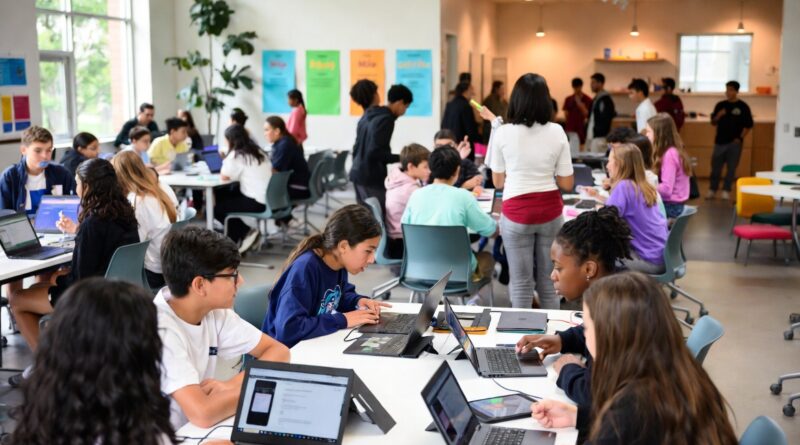
Morning Block: 2 Hours of Accelerated Academic Mastery Students log into personalized AI learning platforms. The AI acts as a tireless, adaptive 1:1 tutor—delivering content at exactly the right level, providing immediate feedback, and advancing only upon demonstrated mastery.
Sessions emphasize active engagement over passive listening. Students work through concepts, solve problems, and receive targeted remediation or enrichment instantly. Adults in the room (Guides) circulate to offer encouragement, troubleshoot motivation, and maintain high standards without delivering direct instruction.
Because the AI handles differentiation perfectly, every student works at their optimal challenge level. This focused intensity is why participants often complete what would traditionally take a full day—or more—in just two hours.
Afternoon Block: Life Skills, Passions, and Real-World Application With academics complete, the day opens up for approximately four hours of dynamic, project-based activities. These include:
- Workshops on essential life skills (financial literacy, public speaking, giving/receiving feedback, collaboration, grit, and empathy).
- Student-driven passion projects and entrepreneurship.
- Hands-on experiences like sports, arts, community service, or building real products.
- Social time and collaborative challenges that build emotional intelligence and leadership.
Adult Guides shift into coaching and facilitation roles mentoring small groups, helping students reflect on growth, and creating a supportive environment where kids practice independence and creativity.
The result? Less screen time overall than many assume (academics are focused and efficient; afternoons are often low- or no-screen), more meaningful peer interaction, and students who feel ownership over both their learning and their time.
The Science and Research Behind Focused, Mastery-Based Learning
The model rests on well-established educational principles amplified by modern technology:
- Mastery Learning — Decades of research, including foundational work by Benjamin Bloom, shows that when students are given the time and support to achieve true mastery before advancing, achievement gaps narrow dramatically and overall performance improves significantly (often by 1–2 standard deviations).
- Personalized, Adaptive Instruction — AI tutoring systems have been shown in multiple studies to match or exceed the effectiveness of human tutors for many core subjects by providing instant, individualized feedback and pacing.
- Focused Attention and Deliberate Practice — Concentrated blocks of deep work outperform fragmented, multi-hour passive sessions. The 2-hour window leverages peak attention while avoiding diminishing returns and fatigue common in longer traditional days.
- Motivation Through Autonomy and Purpose — Self-Determination Theory and real-world observations confirm that giving students time for passions and meaningful skill-building dramatically increases engagement and reduces burnout.
Data from Alpha School’s flagship implementations supports these foundations in practice: students learning at least 2x faster than traditional peers, with the top 20% showing up to 6.5x growth in certain metrics, and entire classes consistently scoring in the top 1–2% nationally on standardized assessments.
Benefits and Real-World Outcomes
For Students:
- Faster academic progress without the grind of long hours.
- More time to discover and develop passions, leading to greater motivation and well-rounded growth.
- Stronger social-emotional skills through dedicated workshops and collaborative projects.
- Reduced burnout and higher overall engagement.
For Families:
- More quality time together in the afternoons.
- Children who are genuinely excited about learning and applying skills in real life.
- A model that scales personalization in ways traditional classrooms struggle to achieve.
For Educators and Schools:
- Teachers transition from content deliverers and graders to high-impact mentors and life-skills coaches—a role many find more fulfilling.
- Schools can offer a differentiated, future-ready experience that stands out.
Reported outcomes from implementations include accelerated mastery across subjects, strong performance on national assessments, and students who demonstrate impressive independence and real-world capabilities earlier than peers in conventional settings.
Pros and Cons: A Balanced Perspective
Pros:
- Dramatic efficiency gains through personalization and mastery focus.
- Significant time reclaimed for life skills, creativity, and well-being.
- Stronger student agency and growth mindset.
- Teachers empowered to focus on relationships and high-value coaching.
- Scalable via AI while preserving human connection.
Cons and Considerations:
- Heavy reliance on technology requires reliable devices, internet, and digital literacy support.
- The model demands a certain level of self-regulation; younger students or those needing more structure may require additional scaffolding.
- Afternoon life skills programming quality depends heavily on Guide training and curriculum design.
- Long-term, large-scale independent studies are still emerging (most robust data comes from specific network implementations like Alpha School).
- Not every family or student will thrive with reduced traditional “seat time”—individual fit matters greatly.
- Transitioning existing schools or teachers to this model involves training and mindset shifts.
As with any innovative approach, results vary based on implementation quality, student needs, and family support.
How It Compares to Traditional Schooling and Other Alternatives
Traditional schools excel at scale, extracurricular breadth (especially sports and arts), and standardized socialization. However, they often struggle with personalization, leading to boredom for advanced learners and gaps for those who need more time.
The 2 Hour Learning Model inverts this: it prioritizes deep, efficient academics and intentional life-skill development while potentially offering fewer large-group traditional activities. It sits between pure homeschooling (maximum flexibility) and conventional private/public schools (maximum structure and resources), offering a structured yet highly personalized hybrid.
It shares DNA with other progressive models (project-based learning, mastery-based progression, interest-led exploration) but distinguishes itself through the disciplined 2-hour academic core powered by AI and the explicit elevation of life skills as a core part of the school day.
Practical Considerations for Families and Educators
Families exploring this model should:
- Visit implementing schools (such as Alpha campuses) to observe the morning AI sessions and afternoon workshops firsthand.
- Assess their child’s readiness for independent, tech-supported learning and passion-driven afternoons.
- Review specific outcomes data and talk with current families.
- Understand that while academics accelerate, success also depends on the quality of the life-skills programming.
Educators and school leaders considering adoption can explore licensing options through 2hourlearning.com for private schools or related virtual/hybrid programs. The model is designed to integrate without requiring a complete school overhaul.
Conclusion: A Promising Path Toward More Human-Centered Education
The 2 Hour Learning Model offers a compelling vision for the future of education—one where technology handles the scalable, personalized mechanics of academics so humans can focus on what they do best: motivating, mentoring, and helping young people develop into capable, curious, compassionate individuals.
By condensing academics into focused, effective blocks and dedicating substantial time to real-world skills and passions, it addresses many of the frustrations families and educators feel with traditional models: wasted time, one-size-fits-all pacing, and insufficient preparation for life beyond tests.
Of course, no single model is perfect for every child or community. The most successful adoptions will be those that thoughtfully adapt the core principles—mastery, personalization, focused time, and intentional life-skill development—to local needs while preserving strong human relationships.
For families seeking efficiency without sacrificing depth, or for schools looking to innovate while staying grounded in proven learning science, the 2 Hour Learning Model represents an exciting and increasingly accessible option. The gift of time it returns to students may be its most transformative feature of all.
Sources
- 2 Hour Learning (Official)
- Alpha School (Official)
- Self-Determination Theory research
FAQs
How does the 2 Hour Learning Model actually work on a daily basis?
Students spend approximately 2 focused hours in the morning on AI-powered, personalized academic content (math, reading, science, etc.) using adaptive platforms that ensure mastery before progression. The afternoon shifts to facilitated life skills workshops, passion projects, collaboration, and real-world experiences guided by adult mentors.
Is this model only for certain ages or grade levels?
It is designed for K-12 students. Implementation varies by age—younger learners often need more Guide support and structure, while older students thrive with greater independence in both academics and passion pursuits.
Does it involve a lot of screen time?
Academics are tech-enabled for personalization and efficiency, but the model emphasizes focused, high-quality screen use rather than passive consumption. Afternoons are typically low- or no-screen, focusing on hands-on activities, discussions, and real-world projects—often resulting in less overall screen time than traditional school plus homework.
What role do teachers play if AI handles academics?
Teachers (called Guides) shift from lecturing and grading to high-impact roles: motivating students, providing emotional support, facilitating life skills workshops, coaching projects, and fostering growth mindsets and independence. Many report finding this more rewarding.
What evidence supports the claimed outcomes?
Data from flagship implementations at Alpha School shows students mastering content significantly faster (often 2x or more), with strong growth on assessments and classes performing in the top percentiles nationally. Outcomes are strongest where implementation includes well-trained Guides and robust afternoon programming. As with any model, individual results vary.
Can this work for homeschool families?
Yes. Virtual and homeschool-adapted versions (such as Alpha Anywhere or related programs) bring the AI academic core and life-skills framework into home settings, often with community or online support components.
How does it compare to traditional private or public schools?
It offers greater personalization and efficiency in academics plus dedicated life-skills time, but may have fewer large-scale traditional extracurriculars or facilities. It works best for families prioritizing mastery, efficiency, and real-world preparation over conventional structures.
Is the model backed by independent research?
Core principles draw from established research on mastery learning, adaptive instruction, and motivation. Specific outcome data comes primarily from network implementations (e.g., Alpha School). Broader independent, long-term studies are developing as adoption grows.
What if my child struggles with self-motivation or technology?
The model includes adult Guides specifically to support motivation and growth mindset. Scaffolding, coaching, and gradual release of responsibility help students build independence. It may not suit every learner without appropriate support.
How can I learn more or find programs near me?
Visit the official site at https://2hourlearning.com/ for details on schools, virtual options, and private school licensing. Touring an implementing campus and speaking with current families provides the best insight.