Charlotte Mason Homeschool Books
Charlotte Mason (1842–1923) was a visionary British educator whose gentle yet rigorous approach to learning continues to inspire thousands of homeschool families today. Her philosophy centers on treating children as whole persons minds eager for living ideas rather than empty vessels to fill with facts. If you’re searching for Charlotte Mason homeschool books, you’re likely seeking resources that help create a rich, relational education filled with great literature, nature study, narration, habit training, and beauty.
This in-depth guide explores her original six-volume series, the most helpful modern companion books, how to select and use “living books,” and practical ways to bring these ideas into your daily homeschool life. Whether you’re brand new or looking to deepen your practice, these resources offer time-tested wisdom that fosters curiosity, strong character, and a genuine love of learning.
Quick Answer
The essential Charlotte Mason homeschool books include her own six-volume Home Education Series (the philosophical foundation) plus modern guides that make her methods practical for today’s families.
Top recommendations:
- Start with For the Children’s Sake by Susan Schaeffer Macaulay for inspiration and vision.
- Use A Charlotte Mason Companion by Karen Andreola as your practical handbook for daily implementation.
- Add Know and Tell by Karen Glass for mastering narration and Modern Miss Mason by Leah Boden for adapting ideas to contemporary life.
- Supplement with free or low-cost resources from Ambleside Online (detailed book lists and free curriculum) and Simply Charlotte Mason (planning tools and searchable lists).
These books emphasize living books over textbooks, short focused lessons, daily time in nature, oral/written narration, and habit formation. Families who implement them consistently often report deeper comprehension, stronger family connections through shared reading, and children who become self-motivated learners.
Understanding Charlotte Mason’s Enduring Philosophy
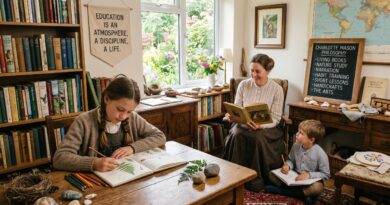
Before choosing specific books, it helps to grasp the core ideas that make this method so effective. Mason summarized education as “an atmosphere, a discipline, and a life.”
- Atmosphere — The home environment itself teaches through beauty, good books, art, music, and loving relationships.
- Discipline — Training in good habits (attention, obedience, diligence, truthfulness) forms character more reliably than constant correction.
- Life — The mind feeds on living ideas from excellent books, nature, and direct experience—not dry, pre-digested textbook material.
She championed short lessons (10–20 minutes for young children) to match developing attention spans, regular outdoor time, picture and composer study, poetry, and a wide curriculum. Narration—having the child retell what was read or heard in their own words—replaces worksheets and builds comprehension, vocabulary, attention, and expressive language naturally.
In practice, this approach respects the child as a born person capable of engaging directly with great minds. Many parents notice that power struggles decrease and joy increases when lessons feel like feasts of ideas rather than chores.
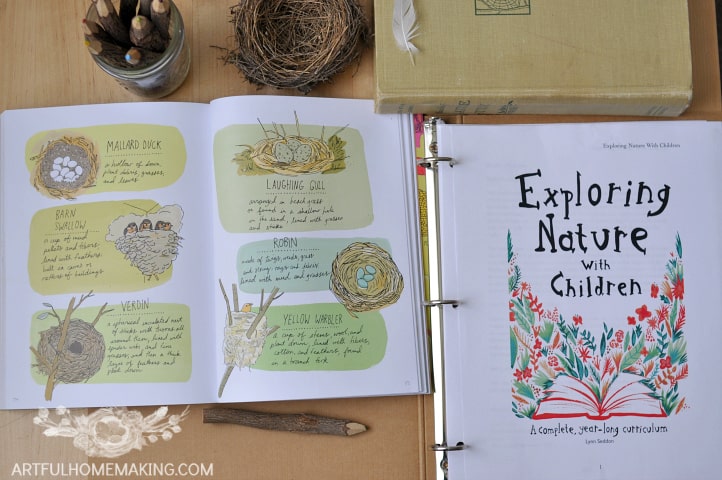
Charlotte Mason’s Original Homeschooling Series: The Foundation
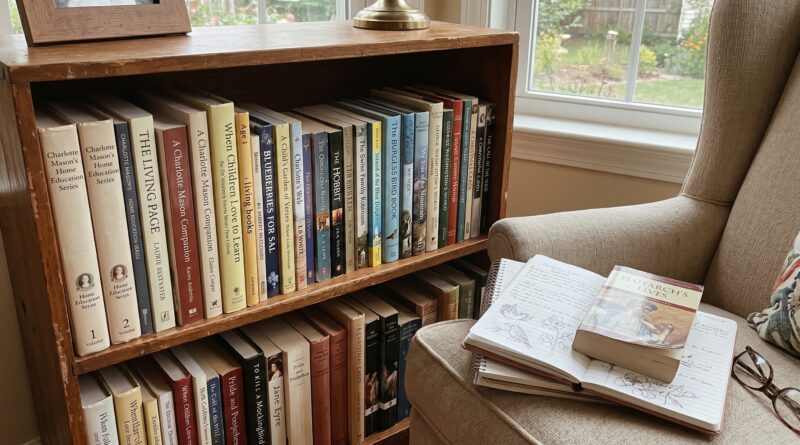
Mason’s most important works are the six volumes of the Home Education Series. Written over decades, they contain her lectures, articles, and mature reflections. Free online versions and modern editions are widely available through Ambleside Online and publishers like Living Book Press or Charlotte Mason Research Company. Many families read slowly one chapter at a time often alongside a modern guide.
Here’s what each volume offers:
Volume 1: Home Education — Focused on children up to age nine. It covers the parent’s high calling, early habit training, physical and moral development, and the power of ideas in the early years. Key insight: Start with atmosphere and habits; short, varied lessons prevent fatigue and build attention.
Volume 2: Parents and Children — A collection of articles on moral and spiritual training, understanding the child’s will and conscience, and the parent-child relationship. It provides encouragement and deep insight into character formation.
Volume 3: School Education — Geared toward ages 9–12. Discusses curriculum, book choices, the role of examinations as teaching tools (not high-stakes tests), and developing sustained attention and clear expression.
Volume 4: Ourselves — Written directly to young people. Book I (ages ~12–16) and Book II (older teens) teach self-knowledge, self-control, emotions, and moral reasoning in an engaging style. Excellent for middle and high school character education.
Volume 5: Formation of Character — Practical chapters with case studies of children overcoming habits, plus reflections on how education shapes long-term character. Valuable for understanding the lasting impact of daily choices.
Volume 6: Towards a Philosophy of Education (A Philosophy of Education) — Her final, most philosophical work. It includes the clearest statement of her 20 Principles and explains why her methods work. Many experienced CM educators recommend starting here for the big picture, especially if you have older children.
Reading the originals gives you Mason’s authentic voice and depth. They reward thoughtful, unhurried reading. In my experience mentoring families, pairing one volume with a modern practical book prevents overwhelm while building authentic understanding over time.
Essential Modern Charlotte Mason Homeschool Books
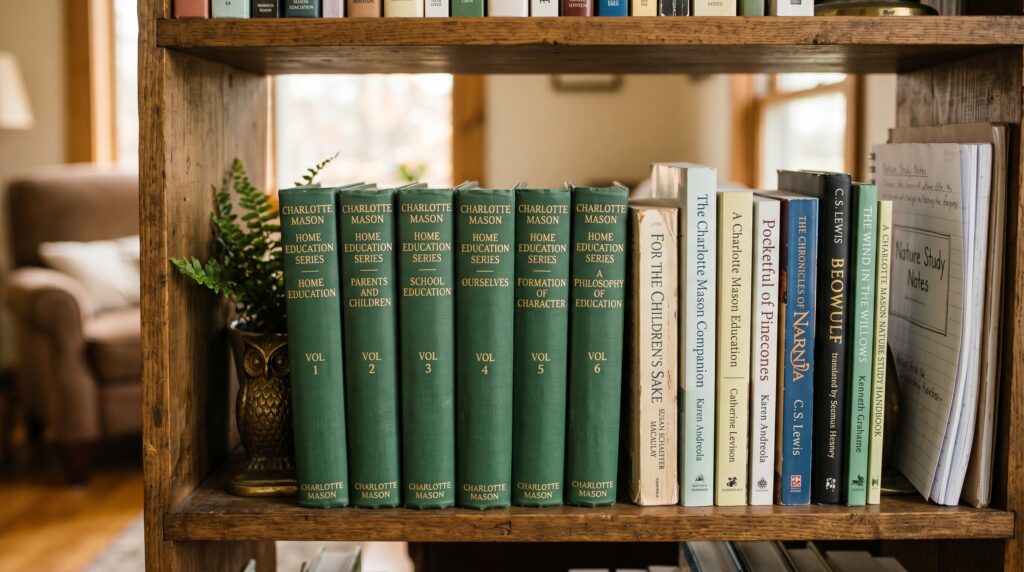
While the originals are foundational, several outstanding modern books make the method accessible, adaptable, and immediately useful. These are the titles I return to again and again and recommend most often.
For the Children’s Sake by Susan Schaeffer Macaulay A warm, inspiring introduction that sparked much of the modern CM revival. It presents the “why” behind respecting children as persons, using living books, and pursuing education as formation of the whole human being. Many parents call it life-changing or “electrifying.” Ideal first read for vision and motivation.
A Charlotte Mason Companion by Karen Andreola The ultimate practical handbook. Short, reflective chapters cover living books, narration, nature study, art and music appreciation, poetry, Shakespeare, habit training, and seasonal rhythms. Andreola homeschooled her own children this way and writes like a wise friend. You can open it, find an idea, and try it the same day. A constant companion for thousands of families.
Modern Miss Mason by Leah Boden Addresses the realities of implementing CM ideas in our fast-paced, digital culture. Offers fresh, practical adaptations while preserving the gentle, relational heart of the method. Excellent if you worry about fitting timeless principles into modern life.
Know and Tell: The Art of Narration by Karen Glass Narration is the engine of CM learning. This book explains the philosophy and gives extensive practical guidance for all ages and subjects, including variations like drawn or acted narrations. If narration feels awkward or ineffective at first, this resource transforms results.
In Vital Harmony by Karen Glass A concise, clear summary of Mason’s main ideas and how they fit together. Perfect for getting oriented quickly or refreshing your understanding.
Morning Time: A Liturgy of Love by Cindy Rollins Morning Time (or Morning Basket) gathers the family for poetry, Scripture, read-alouds, hymns, and beauty. Rollins shares her family’s sustainable, meaningful approach. Many parents credit it with stronger family bonds and consistent exposure to great ideas.
Other valuable titles include Catherine Levison’s A Charlotte Mason Education and Penny Gardner’s Charlotte Mason Study Guide. Together, these books give you both inspiration and concrete tools.

The Power of Living Books and How to Choose Them
Living books are the heartbeat of a Charlotte Mason education. Unlike textbooks (often committee-written, dry, and focused on facts to memorize), living books are written by one passionate author, use rich language, and contain ideas that “live” in the child’s mind sparking imagination, empathy, and connections.
Criteria for a living book:
- Engaging narrative or vivid description that pulls the reader in
- Written by a single author with genuine expertise or passion
- Rich but accessible language (not dumbed down)
- Contains worthwhile ideas worth pondering
- Often (but not always) older classics or high-quality modern stories
Examples across subjects (drawn from widely used CM lists):
- History & Biography: Little House on the Prairie series, Johnny Tremain, The Bronze Bow, d’Aulaire biographies
- Nature & Science: The Burgess Bird Book for Children, Holling C. Holling titles (Pagoo, Minn of the Mississippi)
- Literature: Charlotte’s Web, The Chronicles of Narnia, Heidi, Anne of Green Gables, Treasure Island
Where to find them affordably:
- Ambleside Online’s free master booklist (comprehensive Google spreadsheet organized by year and term)
- Simply Charlotte Mason literature and planning resources
- Library sales, ThriftBooks, AbeBooks, or homeschool used-curriculum groups
- Project Gutenberg and Librivox for free public-domain titles
- Build gradually—start with 20–30 core favorites and expand
When families switch from textbooks to living books plus consistent narration, engagement and long-term retention often improve noticeably. Children begin making cross-subject connections because they’ve actively processed ideas rather than passively received information.
Practical Strategies for Daily Homeschool Life
Great books only transform education when put into practice. Here are field-tested ways to integrate insights from these resources:
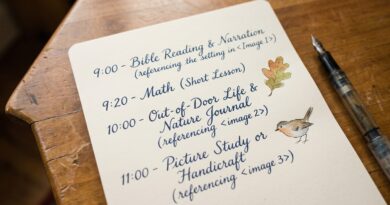
- Morning Time: Begin most days with 20–40 minutes of shared beauty and ideas (poetry, Bible or character reading, one chapter of a living book, picture or composer study). Many families report this single habit strengthens relationships and sets a peaceful tone.
- Short Lessons: Keep sessions focused (10–20 minutes for elementary). Rotate through a wide curriculum so children stay fresh and interested.
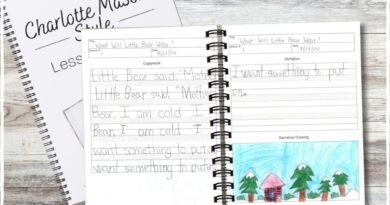
- Narration: After every reading, have your child tell back what happened or what they learned—in their own words. Start oral; move to written as they grow. This builds attention, comprehension, and composition far better than worksheets for most children.
- Nature Study: Regular outdoor time paired with simple nature journals (sketch, label, observe changes). This builds scientific habits of mind and wonder.
- Habit Training: Choose one habit at a time (attention during lessons, prompt obedience, neatness). Use stories and gentle consistency rather than constant nagging.
- Parent Self-Care (“Mother Culture”): Read living books yourself. A nourished parent creates a richer atmosphere.
When my family committed to short lessons and daily living-book read-alouds with narration, I saw attention spans lengthen, vocabulary grow, and genuine curiosity flourish. We spent less time managing behavior because the content itself was engaging.
Honest note on challenges: Sourcing quality books takes initial effort. Narration can feel awkward at first for both parent and child. The method requires more active parent involvement (especially reading aloud) than some boxed curricula. It may not suit every child’s learning style perfectly—adapt as needed. Some families blend CM with other approaches successfully. Individual results vary; observe your own children and adjust.
Conclusion
Charlotte Mason homeschool books offer far more than techniques they offer a beautiful vision of education as a feast of living ideas that nourishes the whole person for life. By grounding yourself in her original series and using insightful modern guides, you gain both the “why” and the “how” to create an atmosphere where your children can grow in wisdom, virtue, curiosity, and joy.
Start simply: Choose one book from this guide and one small practice perhaps a short daily read-aloud followed by narration, or a weekly nature walk with a journal. Watch what happens as ideas come alive in your home and hearts.
The investment in these resources and consistent practices yields rich returns: thoughtful, well-read young people who engage the world with wonder, attention, and character. Education, after all, is for life.
FAQs
What’s the single best book to start with?
For the Children’s Sake for vision and heart, followed quickly by A Charlotte Mason Companion for practical ideas you can use immediately.
Is this method only for young children? No. Volumes 3 and 4, plus high school adaptations, work beautifully through the teen years. Older students benefit from living books, self-narration, and wide reading.
How do I handle math, spelling, or phonics?
CM used short, focused lessons and some living math stories. Most modern families supplement with clear, mastery-based programs that fit the short-lesson philosophy while using CM methods for content-rich subjects.
Does it require a Christian perspective?
Many popular resources have a Christian flavor because Mason was a Christian, but the core methods (living books, narration, nature study, habits) are used successfully by families of various beliefs. Focus on the educational principles.
How much does it cost?
Very little to start. Originals are free online. Modern guides are inexpensive. Book lists and AO curriculum are free. Grow your library slowly with used books.
What if my child has ADHD, dyslexia, or other learning differences?
Short lessons, interest-driven content, movement through nature study, and building attention through habits can be supportive. Many neurodiverse families adapt successfully with visual or hands-on narration options. Work with specialists as needed and watch what works for your child.
How do I know if a book is truly “living”?
Read a sample chapter. Does the language draw you in? Does it make you think or feel? Does it avoid sounding like a list of facts or condescending simplicity? Cross-reference with established CM book lists when unsure.