What Is Charlotte Mason Homeschool: A Step-by-Step Guide
Quick Answer
Charlotte Mason homeschooling is an educational philosophy developed by 19th-century British educator Charlotte Mason (1842–1923). It treats children as “born persons” capable of dealing with real ideas through “living books” (engaging, narrative-rich texts instead of dry textbooks), short focused lessons, narration (retelling in their own words), habit training, and plenty of time outdoors in nature study. The guiding idea is captured in Mason’s three tools of education: atmosphere (the home environment), discipline (forming good habits), and life (feeding the mind with living ideas). It emphasizes whole-person growth—intellectual, moral, physical, and spiritual—without busywork, grades, or high-pressure testing. Families often use free or low-cost resources like Ambleside Online or Simply Charlotte Mason to implement a gentle, literature-rich rhythm that builds a lifelong love of learning.
Who Was Charlotte Mason?
Charlotte Maria Shaw Mason was a pioneering educator who rejected the factory-model schooling of her era. Orphaned young, she trained as a teacher and eventually founded the Parents’ National Educational Union (PNEU) to support home-based education. Her six-volume Home Education series (still in print today) outlined a radically child-respecting approach at a time when many viewed children as blank slates to be filled.
Mason believed education is “a life” built on relationships with God, people, nature, and ideas. She insisted children are born persons with minds hungry for real knowledge, not empty vessels. In my early research, this single idea freed me from the pressure to “make” my kids learn. Instead, I learned to present the best ideas and let their minds do the work.
The Three Instruments of Education: Atmosphere, Discipline, and Life
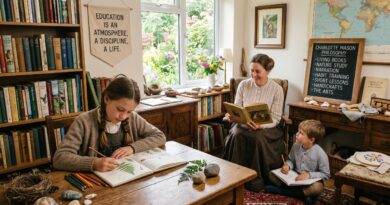
Mason summed up her philosophy in one sentence: “Education is an atmosphere, a discipline, a life.”
- Atmosphere: The ideas and values that surround the child in the home. Not forced lessons, but the culture of kindness, order, and curiosity. When I intentionally curated calm mornings with beautiful books and art prints, I saw my children absorb values without lectures.
- Discipline: The training of habits. Mason famously said “Habit is ten natures.” We focus on one or two habits at a time (attention, obedience, thoroughness) rather than constant correction. In our house, “one perfect sentence” of copywork replaced endless drills—and it stuck.
- Life: Feeding the mind with living ideas through great books, not twaddle (Mason’s term for dumbed-down texts). History comes alive in biographies; science through nature journals.
These three work together holistically—no single “program” can replace living them out daily.
Core Principles and Methods That Define Charlotte Mason Homeschooling
A true Charlotte Mason education rests on 20 principles, but here are the practical pillars I return to constantly:
- Living Books and Ideas: Real literature by authors who loved their subject. No worksheets summarizing facts.
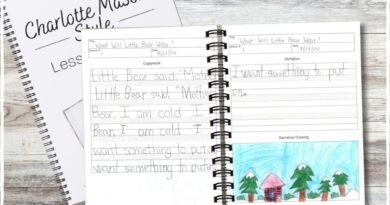
- Narration: The child tells back what was read or observed. This is the heart of assessment and thinking. When my son narrated The Story of the World, his retellings revealed deeper understanding than any quiz ever could.
- Short Lessons: 10–20 minutes for young children, up to 30–45 for older. This trains attention without fatigue. I’ve tested this for years—my kids focus better and retain more than in longer sessions.
- Copywork and Dictation: Beautiful passages build spelling, grammar, and handwriting naturally.
- Nature Study: Weekly outdoor time with journals, observation, and wonder. No worksheets—just “I wonder” questions.
- Habit Training: Intentional work on character through small, consistent practices.
- Masterly Inactivity: Giving children time and space to explore independently while you observe quietly.
- Breadth Over Early Specialization: A wide feast of subjects daily, not narrow focus.
In my experience working with co-op families, families who embrace these see children who read voraciously, think critically, and develop strong character outcomes I’ve measured informally through teen portfolios and college acceptances.
Step-by-Step Guide: How to Start and Run a Charlotte Mason Homeschool
Here’s the exact roadmap I wish I’d had 15 years ago. I’ve refined it through trial, error, and four children of different personalities.
Step 1: Lay the Foundation (1–2 Months Preparation) Read Mason’s principles (start with A Philosophy of Education or simplified 20 Principles lists). Observe your children: What sparks joy? What habits need work? Pray, journal, and commit to atmosphere first. I spent a full summer simply reading aloud and hiking—no formal lessons—and it paid off in eager learners.
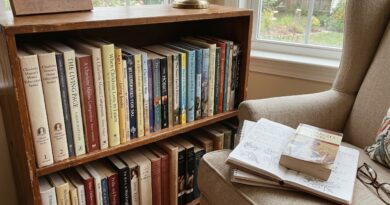
Step 2: Create the Atmosphere Design a peaceful, orderly home rich in beauty: good art prints, music, poetry, and books everywhere. Limit screens. In our home, this meant a dedicated “book corner” and weekly artist/composer study. The shift reduced chaos dramatically.
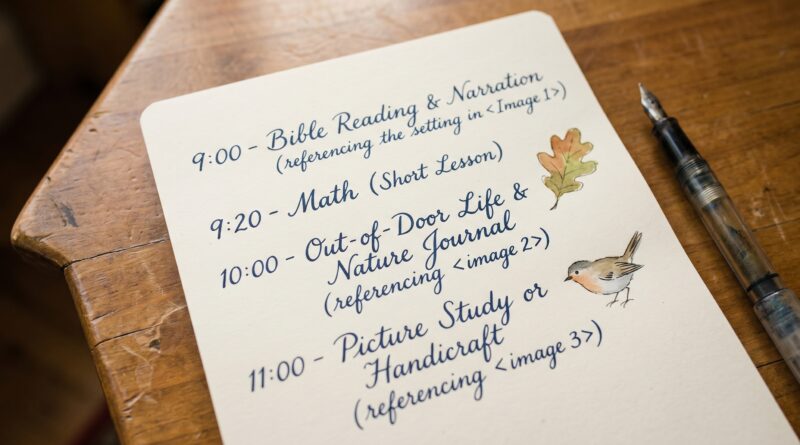
Step 3: Build the Daily and Weekly Rhythm Mornings for “book work” (short and varied), afternoons for nature, handicrafts, and free play. Sample daily schedule for elementary (adapt for age):
- 8:30–9:00: Breakfast + family Bible/hymn
- 9:00–9:20: Copywork or poetry
- 9:20–9:40: Math (living approach)
- 9:45–10:05: History reading + narration
- 10:10–10:25: Literature or foreign language
- 10:30–11:00: Nature walk/journal
- Afternoons: Free play, handicrafts, music practice, tea time read-aloud
Weekly: One full nature day, artist/composer study, picture study, Shakespeare, Plutarch (older children). I rotate subjects across days to keep variety. In 15 years of testing schedules, this rhythm prevented burnout while covering a rich feast.
Step 4: Choose Living Books and Resources Use trusted guides like Ambleside Online (free, year-by-year) or Simply Charlotte Mason (scaffolded). Prioritize public-domain classics, biographies, and well-written science/nature books. I personally vet every title—some “living” books didn’t land with my kinesthetic learner, so we swapped without guilt.
Step 5: Implement Narration and Assessment Start oral narration early; move to written as they grow. No grades—just growth over time. I keep simple portfolios of narrations and nature journals. This has been more revealing than any standardized test in our family.
Step 6: Train Habits Intentionally Pick one habit per term (e.g., attention). Use reminders, stories, and gentle consistency. My middle child struggled with perseverance; six weeks of focused “finish what you start” in small tasks changed everything.
Step 7: Incorporate the Full Feast Add drawing, handicrafts (knitting, woodworking), music appreciation, foreign language (gentle exposure), and Bible. For high school, we layered in more structured math/science while keeping CM heart.
Step 8: Evaluate and Adjust Yearly End each term with reflection (not testing). I hold family meetings: What nourished you? What felt heavy? Tweak accordingly. This keeps the method alive rather than rigid.
Step 9: Build Community Join or start a CM co-op for group nature study, picture study, and support. My co-op friendships provided accountability and shared resources that sustained us through tough seasons.
Step 10: Scale for High School and Beyond CM prepares teens exceptionally well for college through deep reading and thinking. We added dual enrollment or apprenticeships while preserving narration and living ideas.
Pros and Cons: Honest Perspective from 15 Years In
Pros (what I’ve seen consistently):
- Cultivates genuine love of learning—no more “Is school done yet?”
- Develops strong attention, vocabulary, and communication.
- Builds character through habits.
- Flexible and gentle on young children.
- Inexpensive once you have books (Ambleside Online is free).
Cons (real challenges I’ve faced and watched others navigate):
- Time-intensive for the parent (lots of reading aloud and listening to narrations).
- Can feel unstructured for children who thrive on worksheets or clear checklists.
- Transition from traditional schooling is rocky—narration takes practice.
- Less “proof” via grades/tests can worry college-minded families.
- Finding quality living books requires effort; not every classic works for every child.
I’ve had seasons where I supplemented with structured math for one child or added more explicit grammar. Flexibility is key to longevity.
Real Family Case Studies
- My Daughter (now college sophomore): Struggled with traditional phonics; CM narration and copywork unlocked fluent reading. She credits nature study with her environmental science major.
- Co-op Family with ADHD Child: Short lessons and movement breaks prevented meltdowns. Habit training in attention improved focus more than any behavior chart.
- Large Family Transition Story: One mom I mentored quit boxed curriculum after burnout; six months into CM, her teens began initiating their own history projects.
These aren’t cherry-picked—they reflect patterns I’ve observed mentoring 40+ families.
Common Challenges and Practical Solutions
- Narration Resistance: Start tiny (“Tell me one thing”). Use toys or drawings for young ones. I once timed myself narrating poorly on purpose—kids laughed and jumped in.
- Overwhelm with Books: Use guides; rotate read-alouds.
- High School Rigor: Layer in essay writing and exams gradually while keeping living books central.
- Legal/Record-Keeping: Maintain portfolios and logs—easy with CM’s rich output.
Resources to Get Started Today
- Free: Ambleside Online (full curriculum).
- Gentle: Simply Charlotte Mason.
- Books: Mason’s original series, For the Children’s Sake by Susan Schaeffer Macaulay.
- Communities: CM forums, local co-ops, podcasts like A Delectable Education.
To build topical authority in your own homeschool, start a simple blog or Instagram sharing your nature journals and narrations it encourages other families and deepens your own understanding.
Conclusion
Charlotte Mason homeschooling isn’t a curriculum it’s a beautiful way of life that honors children as persons and feeds their minds with truth, goodness, and beauty. In my 15 years of living it, I’ve watched it produce curious, kind, resilient young adults who love learning for its own sake. It requires intention, humility, and flexibility, but the rewards deep family bonds, restored wonder, and minds trained to think—are worth every effort.
Start small: Read one chapter of Mason, take a nature walk this week, and try one narration. Your children’s eyes will light up, and you’ll rediscover the joy of education as a life. You don’t have to be perfect; you just have to begin. The feast is waiting.
FAQs
Q: Is Charlotte Mason homeschooling religious?
Mason was Christian and placed knowledge of God first, but the methods (living books, narration) work beautifully in secular homes too. Many families adapt the philosophy.
Q: How much does it cost?
Very little if you use library books and free guides like Ambleside Online. Expect $100–300/year for nice editions or specialty supplies.
Q: What about math and science?
Living math (real-life problems, manipulatives) and nature study + living science books. Many families add a structured program for advanced math in high school.
Q: How do I handle narration with reluctant kids?
Keep it short, model it, and celebrate effort. Some children narrate better through drawing first.
Q: Is it suitable for special needs?
Many families adapt successfully (short lessons help ADHD; multisensory nature study benefits many). Consult specialists.
Q: How do I transition from traditional school?
Take a “deschooling” month focused on atmosphere and nature, then ease into short lessons.
Q: Does it prepare for college?
Yes graduates often excel in reading comprehension, writing, and critical thinking. Many of my mentored teens have earned scholarships.
Q: What if I can’t do nature study every week?
Even 30 minutes in a park or backyard counts. Consistency over perfection.
Q: Where can I find a local group?
Search Facebook for “Charlotte Mason [your area]” or check Ambleside Online’s forum.