Free Accredited Homeschool Programs Vermont
Quick Answer Vermont does not currently offer a statewide, tuition-free public virtual K-12 school open to every homeschooling family. However, families have strong pathways that are either completely free or low-cost while meeting or exceeding state standards.
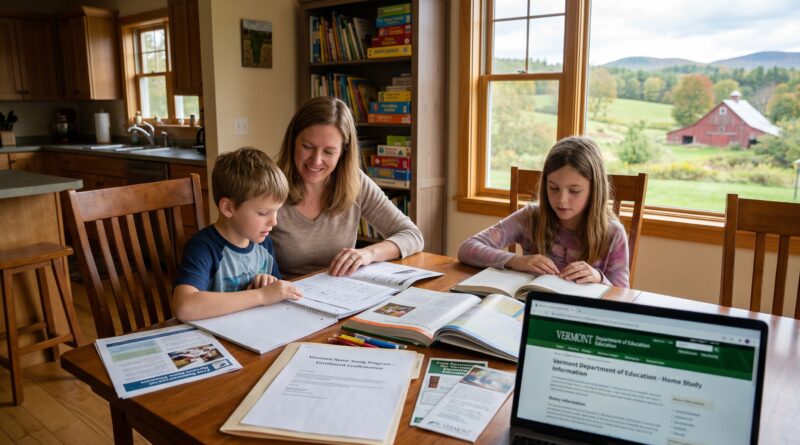
Independent Home Study (Vermont’s term for homeschooling) is entirely free—no state funding or tuition is involved and fully legal when you file the required annual notice and provide 175 days of instruction in core subjects. You can build a high-quality program using excellent free curricula and resources.
For a free accredited diploma, the standout option is the Vermont Virtual Learning Cooperative’s Collaborative Diploma Program (CDP). This publicly funded pathway serves students in towns without an operating high school. Eligible families enroll at a partner public school, complete coursework fully online through VTVLC with support from licensed Vermont teachers, and earn a local high school diploma at no cost.
Other families can supplement independent Home Study with paid VTVLC courses ($250–$350 per half-credit) or choose accredited private distance-learning programs (tuition-based). Hybrid options part public school, part home also exist.
This guide explains the laws, compares every realistic pathway, provides step-by-step instructions, and shares practical strategies so you can make the best decision for your family. Information is current as of June 2026 and drawn from official Vermont Agency of Education sources.
Introduction: Why Vermont Families Choose Homeschooling
Vermont’s natural beauty, tight-knit communities, and emphasis on independence make it a natural fit for families seeking personalized education. Whether you want to accelerate a gifted learner, provide extra support for a child who struggles in traditional settings, align education with family values, or simply spend more time together, homeschooling (Home Study) offers remarkable flexibility.
Many Vermont parents report that the ability to tailor pacing, incorporate real-world experiences like maple sugaring, hiking, or local history projects, and respond immediately to their child’s interests creates deeper engagement than a one-size-fits-all classroom. At the same time, Home Study requires significant parental time, organization, and commitment. There is no state funding or automatic access to special education services, so families must plan carefully.
The good news: Vermont’s 2023 law changes simplified requirements, making compliant Home Study more parent-friendly while still ensuring children receive a solid education. This guide will help you navigate the options confidently and compliantly.
Vermont Home Study Laws: What You Need to Know in 2026
All Vermont children ages 6–16 must be enrolled in an approved public or independent school or a Home Study program. Home Study is a distinct legal pathway, not public school enrollment.
Key Requirements (Simplified After 2023 Changes)
- Annual Notice of Intent: Submit a written enrollment notice to the Vermont Agency of Education (AOE) Home Study Team at least 10 business days before starting (or re-enrolling). First-time filers may need “Independent Professional Evidence” (previous school records, professional assessment, or documentation of disability/IEP/504).
- 175 Days of Instruction: Provide the equivalent of 175 days per year in a Minimum Course of Study.
- Core Subjects: Reading, writing, mathematics, natural sciences, history/government/citizenship (and literature for older students). Younger children also need fine arts, health (including substance effects), and physical education.
- Record Keeping & Assessment: Maintain documentation of progress. Acceptable methods include portfolios with work samples, a report by a Vermont-certified teacher, standardized testing, grades from an online program, or evidence of passing the GED. You no longer submit the detailed Minimum Course of Study or end-of-year assessment to the state unless requested.
What Changed in 2023 (H-0461): The process became significantly less burdensome. Families now attest on the forms rather than submitting extensive paperwork upfront. This respects parental autonomy while maintaining accountability.
Important Funding Reality: When you choose Home Study, you opt out of publicly funded education. No state or local money pays for curriculum, materials, or services. This is why truly “free accredited” full-time options are limited to specific public pathways like the CDP for eligible families.
Graduation & Credentials: The state does not issue diplomas to Home Study students. Parents may issue their own transcripts and diplomas. Many families also pursue the GED or work with local schools. Colleges (including Vermont institutions) routinely accept well-documented homeschool transcripts, portfolios, test scores, and letters of recommendation.
Access to Public Resources: Home Study students can apply to regional Career & Technical Education (CTE) centers at no cost if accepted. They may also take up to two core courses or participate in extracurriculars/athletics at their local public school when space allows. Dual enrollment/early college options for juniors and seniors often provide free or low-cost college credits.
Recommendation: Download the latest forms and guidance directly from the Vermont Agency of Education Home Study page. Contact aoe.homestudy@vermont.gov or (802) 828-6225 with questions. This is not legal advice—consider consulting HSLDA or an education attorney for complex situations.
Free vs. Accredited: Understanding the Vermont Landscape
“Free” in Vermont Home Study almost always means no tuition paid to the state or a provider for the core program—you cover materials yourself. “Accredited” usually refers to a school or program recognized by a legitimate accrediting body, which issues transferable credits and an official diploma.
Independent Home Study is free and legal but parent-directed; the “accreditation” comes from the quality of your documentation and any third-party courses you add. The CDP offers the rare combination of free + publicly accredited diploma for qualifying families. Private accredited distance programs (Oak Meadow, etc.) provide structure and credentials but cost money.
Being transparent about these trade-offs helps families set realistic expectations and choose the path that matches their goals, budget, and capacity.
Strong Free and Low-Cost Pathways in Vermont
1. Independent Home Study with Free or Low-Cost Curricula This remains the most accessible and flexible option for the majority of families. You control everything and can keep costs near zero beyond internet, a computer, and basic supplies.
Popular free or very low-cost resources used successfully by Vermont families:
- Discovery K12: Completely free student accounts for PreK–12 with lessons in all core subjects plus extras. Parent/teacher account (~$99/year optional) adds transcripts, diplomas, and reporting tools. Secular and straightforward; works well as a base or supplement. Some parents note it can feel screen-heavy for middle/high school and benefits from added hands-on projects.
- Khan Academy: World-class, free, mastery-based math, science, grammar, history, and test prep. Excellent for filling gaps or accelerating.
- CK-12 Foundation: Free customizable textbooks, videos, and interactive practice across subjects.
- Ambleside Online or Public domain literature via Project Gutenberg or local libraries.
- Vermont-specific enrichment: State parks, historical societies, museums, 4-H, and library programs (many free or low-cost).
Practical Tip: Many families create a “core + interest-led” model—use structured free online lessons for math and language arts (non-negotiables), then build science, history, and electives around Vermont’s rich outdoor and cultural resources. This approach often exceeds minimum requirements while keeping children engaged.
2. Vermont Virtual Learning Cooperative (VTVLC) Options VTVLC provides high-quality, asynchronous online courses taught by Vermont-licensed educators. It is especially valuable for families wanting structured, credited courses without a full private program.
- Course Leasing or Supplemental Enrollment: $250–$350 per half-credit. Ideal for Home Study families who want professional instruction in specific subjects (advanced math, languages, AP courses) while remaining in independent Home Study. Rolling enrollment offers flexibility.
- Collaborative Diploma Program (CDP): The standout free accredited option. Designed for students living in Vermont towns that do not operate a high school. Families enroll full-time at a partner public school (examples include Hazen Union, White River Valley, Richford, Stockbridge, Rochester). Students complete all coursework online through VTVLC with advisor and teacher support, then graduate with a local public high school diploma. No cost to qualifying families. Fully publicly funded and accredited.
Check the AOE list of non-operating/tuition towns to see if you qualify. This pathway delivers accredited credentials + homeschool-like flexibility at zero tuition.
3. Accredited Private Distance-Learning Programs (Tuition-Based) For families wanting maximum structure, teacher grading, and an official accredited diploma/transcript:
- Oak Meadow: Well-regarded accredited distance-learning school with book-based, creative curriculum and teacher support. Can sometimes be treated as independent school enrollment rather than Home Study.
- Other national accredited online schools (Forest Trail Academy, etc.).
These are excellent but involve real costs (often several thousand dollars per year). They reduce record-keeping burden and provide strong college-prep documentation.
Comparison Table of Main Pathways
| Pathway | Approx. Cost | Diploma/Accreditation | Flexibility | Best For | |
|---|---|---|---|---|---|
| Independent Home Study + Free Resources | $0–few hundred (materials) | Parent-issued; strong portfolio | Highest | Most families wanting full control | |
| VTVLC Supplemental Courses | $250–$350 per half-credit | Credits transferable; enhances transcript | High | Supplementing specific subjects | |
| Collaborative Diploma Program (CDP) | $0 (if eligible) | Local public high school diploma | High (fully online) | Families in non-operating towns | |
| Accredited Private Distance Program | Several thousand/year | Official accredited diploma | Medium-High | Families wanting maximum support & credentials |
Step-by-Step: How to Start Homeschooling in Vermont
- Reflect and Research (Now): Clarify your goals (academic rigor, flexibility, socialization, college prep). Review official AOE resources and this guide. Talk to other Vermont homeschool families through local networks.
- Choose Your Primary Pathway: Independent + free resources? CDP if eligible? Hybrid? Accredited private?
- Select or Build Curriculum: Start with free platforms like Discovery K12 or Khan Academy, then layer in Vermont-specific projects and library resources. Plan for 175 days (roughly 4–5 days/week for ~36–40 weeks).
- File Your Notice of Intent: Use the online Cognito form or paper version. Submit early (ideally by early August for a September start). Keep confirmation emails.
- Set Up Record-Keeping: Create simple systems—digital folders or binders for work samples, reading logs, photos of projects, and assessment notes. Many families use a weekly or monthly summary plus a portfolio.
- Plan Socialization & Enrichment: Schedule co-op classes, sports (via public school access or community leagues), park days, museum visits, and online communities. Vermont’s homeschool community is active and welcoming.
- Re-enroll Annually: Submit the Annual Notice form and attest to the prior year’s completion.
- Monitor and Adjust: Review progress mid-year. Add support where needed (tutoring, co-op classes, or VTVLC courses).
Pro Tip from Experienced Families: Treat the first year as a learning year for the whole family. Build routines gradually, involve children in planning where age-appropriate, and celebrate small wins. Many parents find that after the initial adjustment, the freedom and connection make the effort deeply rewarding.
Benefits and Realistic Challenges
Benefits
- Individualized pacing and deep dives into passions.
- Strong family bonds and character development.
- Avoidance of negative peer pressure or one-size-fits-all pacing.
- Ability to leverage Vermont’s incredible natural classroom.
- Preparation for self-directed lifelong learning.
Challenges
- Significant time investment from parents (especially with multiple children or when working).
- No automatic special education services or funding.
- Potential gaps if structure is lacking—mitigated by good curriculum and regular assessment.
- Socialization requires intentional planning.
- Record-keeping and transcript-building for high school/college.
Balanced view: Homeschooling is not “easier” than traditional school—it is different. Families who thrive treat it as a serious educational commitment while embracing the joy and flexibility it provides.
Special Considerations
Special Needs: You are responsible for adaptations. Many families successfully homeschool children with ADHD, autism, dyslexia, or anxiety by customizing environment, pacing, and modalities. Connect with Vermont homeschool groups experienced in special needs and consult specialists. The AOE has guidance on adaptations.
High School & College Prep: Focus on strong transcripts with course descriptions, consistent documentation, standardized testing (SAT/ACT), and extracurricular depth. Dual enrollment is a powerful, often low- or no-cost way to earn college credits early. Many selective colleges value the maturity and self-direction homeschoolers demonstrate.
Extracurriculars & Sports: Leverage public school access rights, community leagues, 4-H, scouting, arts organizations, and Governor’s Institutes of Vermont for enrichment.
Conclusion
Vermont offers families meaningful freedom to educate their children at home while maintaining reasonable standards. Whether you build a completely free, interest-driven program using Discovery K12, Khan Academy, and Vermont’s natural resources, or pursue the Collaborative Diploma Program for a no-cost accredited public diploma (if eligible), you have viable paths that can deliver an excellent education.
Success comes from clarity about your goals, consistent but flexible routines, strong documentation, and connection with supportive communities. The 2023 simplifications to Home Study rules reflect trust in Vermont parents—and that trust is best honored by providing your children with a rich, rigorous, and joyful education.
Start with the official AOE Home Study resources, reach out with questions, and take the first step that feels right for your family. Many Vermont parents before you have created beautiful, effective learning experiences at home. You can too.
FAQs
Is homeschooling legal in Vermont?
Yes. It is called Home Study and is explicitly protected under Vermont statute.
Do I need to be a certified teacher?
No. There are no parent qualification requirements.
How much does it really cost? Independent Home Study can cost very little if you use free resources. Expect to spend on internet, a device, printing, field trips, and possibly some curriculum or co-op fees. The CDP is free for eligible families.
Can my child play sports or take classes at the local public school?
Yes, up to two core courses plus extracurriculars/athletics when space permits.
Will colleges accept a homeschool diploma?
Yes. Well-documented homeschool applicants are regularly admitted to Vermont and out-of-state colleges. Strong transcripts, portfolios, test scores, and recommendations matter most.
What if my child has an IEP or 504 plan?
Home Study students do not automatically receive special education services through the public system. You are responsible for meeting your child’s needs. Many families combine homeschooling with private therapies or targeted support.
Can I use an online public school from another state?
It may create compliance complications with Vermont’s Home Study requirements. Always verify with the AOE first.
How do I find other homeschool families in Vermont?
Search for local co-ops, park days, or groups through Facebook, VHEN (Vermont Home Education Network), or word-of-mouth at libraries and parks. The community is generally supportive and resourceful.
When should I submit my notice for the 2026–2027 school year?
Watch the AOE site for updated timelines, but early summer submissions are typical for a fall start.
Is Discovery K12 good enough by itself?
It provides a solid free framework, especially for elementary and early middle school. Many families supplement with projects, discussion, and additional resources for depth, particularly in high school.
Can I switch back to public school mid-year?
Yes. Notify the Home Study office in writing at least 10 business days in advance and contact your local school.