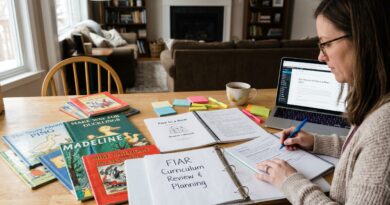
What Is Free Christian Homeschool Curriculum? Review
Quick Answer Free Christian homeschool curriculum refers to no-cost or donation-based educational programs, schedules, workbooks, booklists, and online resources explicitly grounded in Biblical principles and designed to support faith-based home education. These options enable families to provide a complete or near-complete K-12 education without purchasing expensive boxed curricula that often cost $400–$1,500+ per child annually.
Popular and highly regarded examples include Easy Peasy All-in-One Homeschool (a complete online Christian program using free web resources) and Ambleside Online (a rich, literature-based Charlotte Mason curriculum with strong Christian philosophical roots). While these programs offer tremendous financial relief and flexibility, they require active parental involvement, careful previewing for theological alignment, and sometimes light supplementation. Parent feedback across forums, Trustpilot, and review sites is largely positive regarding affordability and usability, with some noting the need for discernment on content sourcing.
This review examines what these curricula are, how they work in real homes, their strengths and limitations, and practical guidance for families considering them in 2026.
Last Updated: June 21, 2026
Understanding Free Christian Homeschool Curriculum
At its core, free Christian homeschool curriculum integrates Scripture, Biblical worldview, and character formation into academic learning—often without charging families for the core materials. Unlike secular free platforms (such as basic Khan Academy lessons), these resources prioritize a Christ-centered approach, whether through explicit Bible study, living books with moral and spiritual depth, or schedules that weave faith throughout subjects.
Many are built on established educational philosophies:
- Some follow a more structured, workbook or online-assignment model with daily lessons.
- Others embrace Charlotte Mason’s methods: living books, narration, nature study, and habit training, with a strong emphasis on forming relationships with God, people, and creation.
The “free” aspect typically means core content is available at no charge (or via optional donations), using public domain books, volunteer-created schedules, or openly licensed materials. Families may still incur minor costs for printing, basic supplies, or optional paid add-ons (such as workbooks or high school courses).
This model has grown in popularity as more families seek to homeschool on a budget while maintaining strong faith integration—especially amid rising costs of traditional Christian curricula.
Why Families Choose Free Christian Homeschool Options
In my experience guiding and researching homeschool families over the years, budget is frequently the top driver. One family of four I consulted shared that switching to a primarily free Christian program saved them more than $4,200 in their first year alone—money they redirected toward co-op classes, field trips, and quality literature.
Beyond cost savings, families often cite:
- Greater control over content and pacing.
- Reduced “curriculum overwhelm” from endless paid options.
- The ability to customize for multiple ages or special needs.
- A desire to model stewardship and simplicity while still providing excellent academics.
Free programs also tend to emphasize parent-child relationship and discipleship, aligning with the conviction that education is more than academics—it is the formation of the whole child in light of Scripture.
However, “free” does not mean effortless. Most require parents to act as guides, record-keepers, and occasional curators. Success stories almost always involve consistent routines and prayerful adaptation rather than plug-and-play perfection.
Spotlight Review: Easy Peasy All-in-One Homeschool
One of the most comprehensive and widely used free Christian options is Easy Peasy All-in-One Homeschool (allinonehomeschool.com). Created by a homeschooling parent, it provides a complete, donation-supported online curriculum for preschool through 8th grade, with a separate high school site (allinonehighschool.com).
What it offers
- Full coverage of reading, writing, grammar, spelling, vocabulary, math, history/social studies/geography, science, Bible, Spanish, computer, music, art, PE/health, and logic.
- 180 days of lessons per year, organized thematically so multiple children can study similar historical periods or topics together.
- Primarily online delivery through the free “My EP” assignment system (optional donation suggested for the tracking platform).
- Uses only free materials available on the internet—no expensive textbooks required.
Christian worldview Easy Peasy explicitly frames itself as a Christian curriculum. Bible study is integrated, and the site’s accompanying blog and philosophy encourage parents to surrender perfectionism, trust God’s plan for their family, and view education through a lens of faith and humility. Many lessons and the overall tone aim to point children toward Christ.
Real-world parent feedback and my observations Parents consistently praise its affordability, self-paced structure, and how it removes the financial barrier to homeschooling. Many appreciate the theme-based approach for family unity and the fact that children can work somewhat independently once routines are established.
Some families note that because lessons pull from various online sources, parents should preview history and science content for alignment with their specific convictions (e.g., creation perspectives or denominational nuances). A minority of reviews mention it can feel “screen-heavy” or require extra parent guidance for younger students or those who struggle with self-direction. Overall ratings on platforms like Trustpilot remain strong for value and usability.
Best for Budget-conscious families wanting an all-in-one, mostly online solution with clear Christian emphasis and multi-age flexibility. It works especially well for parents who are comfortable with technology and value simplicity.
Official site: Easy Peasy All-in-One Homeschool
Spotlight Review: Ambleside Online (Charlotte Mason Approach)
Ambleside Online (amblesideonline.org) offers a completely free, rich literature-based curriculum rooted in the educational philosophy of Charlotte Mason, a British educator whose methods have been embraced by many Christian homeschoolers for over a century.
What it offers
- Years 0 (Kindergarten) through 12, with flexible scheduling options.
- Subjects include Bible, history, geography, literature, poetry, Shakespeare, Plutarch, nature study, science, art (picture study), music (composer study), folk songs, hymns, foreign language, math, and language arts through narration and copywork.
- Detailed 36-week schedules and booklists—many books are public domain or available free online or via libraries/e-readers.
- Strong emphasis on “living books,” narration (retelling), habit formation, and developing a personal relationship with God, others, and the natural world.
Christian foundation While not a “workbook” curriculum with explicit doctrinal statements in every lesson, Ambleside Online is deeply Christian in its underlying philosophy. Charlotte Mason’s methods were grounded in her faith, and the advisory team and resources prioritize Scripture, hymns, and character development. Many long-term users describe it as spiritually formative.
Real-world parent feedback and my observations Families who thrive with Ambleside Online often speak of transformed reading habits, deeper thinking, and a genuine love of learning in their children. The community forum and advisory resources provide excellent support. Parents appreciate the intellectual and spiritual richness without constant worksheets.
Challenges include the need for more parent preparation (sourcing books, reading aloud especially in early years, and facilitating narration). It can feel rigorous or less “open-and-go” compared to structured online programs. Some families adapt it by adding light workbooks or combining with other resources for math or specific subjects. Long-term users frequently report strong outcomes in writing, comprehension, and worldview formation.
Best for Families who value literature-rich, relationship-focused education and are willing to invest time in reading aloud and discussion. It suits parents seeking depth over worksheets and those comfortable sourcing some materials.
Official site: Ambleside Online
Other Notable Free or Mostly Free Christian Resources
- Lamp & Light Living (“That It May Go Well”): 100% Bible-based, free digital workbooks for Preschool–8th grade focusing on Language Arts, Science, History, and Geography. Family-style and updated annually.
- The Good and the Beautiful: Significant free downloads (especially ELA and math) with a gentle, beautiful, Christian approach. Full curriculum has affordable paid options.
- Ministry and church resources: Free lessons and units from Answers in Genesis, various Bible curriculum sites, and public domain Christian classics paired with parent-created schedules.
These can be used standalone or as supplements to the main programs above.
Pros and Cons of Free Christian Homeschool Curriculum
Pros
- Dramatic cost savings, making homeschooling accessible to more families.
- Flexibility to adapt pacing, methods, and emphasis to your children’s needs and your family’s convictions.
- Often strong emphasis on discipleship, character, and Biblical worldview.
- Large, supportive online communities for encouragement and troubleshooting.
- Many options develop excellent reading, thinking, and independent learning skills.
Cons
- Requires significant parent time for planning, previewing, record-keeping, and facilitation (especially with literature-based programs).
- Content quality and theological consistency vary—parents must actively review materials, particularly when programs link to external sites.
- Less “polished” or hand-holding than some paid curricula; fewer built-in assessments or teacher support.
- Socialization and extracurriculars usually require separate effort (co-ops, church, sports).
- High school options may need more supplementation or transition planning for transcripts and college applications.
How to Successfully Implement Free Christian Curricula
From observing successful families, here are practical steps that make a real difference:
- Pray and clarify your priorities — What matters most: strong academics, deep Biblical integration, ease of use, or literature richness?
- Preview thoroughly — Spend time on the websites, sample lessons, and booklists before committing.
- Establish simple rhythms — Consistent daily/weekly schedules prevent overwhelm.
- Track progress yourself — Use portfolios, simple logs, or free printable planners. Many states require some form of record-keeping.
- Join community — The Ambleside Online forum, Easy Peasy Facebook groups, and local homeschool co-ops provide invaluable support.
- Supplement wisely — Add creation-focused science, specific doctrinal studies, or hands-on activities as needed.
- Plan for high school early — Ensure strong records, reading lists, and possible dual enrollment or community college paths.
Important legal note: Homeschooling is legal throughout the United States, but requirements (notification, testing, portfolio review, etc.) vary significantly by state. For up-to-date, state-specific guidance and legal protection, consult the Home School Legal Defense Association (HSLDA)—a highly authoritative and trusted resource for homeschool families: hslda.org.
Is Free Christian Homeschool Curriculum Right for Your Family?
It can be an outstanding choice if you are comfortable with a more hands-on role, value stewardship and flexibility, and are willing to invest time in previewing and adapting materials. It may be less ideal if you prefer highly structured, all-inclusive boxed programs with extensive teacher support or have very limited time for facilitation.
Many families successfully blend approaches—using Easy Peasy or Ambleside Online as a foundation and layering in other free or low-cost Christian resources.
Conclusion
Free Christian homeschool curricula such as Easy Peasy All-in-One and Ambleside Online represent meaningful, accessible pathways for families who want to disciple their children academically and spiritually without significant financial burden. These programs are not shortcuts—they are tools that reward prayerful, consistent, and discerning use.
When families approach them with realistic expectations, a willingness to preview and adapt, and reliance on God’s wisdom, the results can be deeply rewarding: children who love learning, grow in faith and character, and receive a solid educational foundation. The choice ultimately comes down to your family’s unique calling, capacity, and convictions.
If you are considering free Christian homeschool curriculum, start by exploring the official sites linked above, pray through your priorities, and perhaps connect with a few families already using these resources. Education is a marathon of discipleship—choose tools that help you run it faithfully.
FAQs
Are free Christian curricula academically rigorous enough?
Yes, when used consistently. Many families report their children performing at or above grade level, especially in reading and critical thinking. Rigor depends more on consistent implementation and parent guidance than on whether the program costs money.
How do I know the content is truly Biblical?
Always preview. Look for explicit Scripture integration, a clear statement of faith on the site, and alignment with your family’s convictions. Programs like Easy Peasy and Ambleside Online have strong Christian foundations, but external links or older books may need parental discernment.
Can these programs work for high school?
Easy Peasy has a dedicated high school site. Ambleside Online goes through Year 12. Many families combine them with community college dual enrollment, online Christian courses, or apprenticeships for transcripts and college preparation.
How much parent time is typically required?
Expect 1–3 hours per day initially for setup and facilitation, decreasing as children become more independent. Literature-based programs often involve more read-aloud time; online programs may require more monitoring of assignments.
Do I need a computer and internet?
Helpful but not always essential. Easy Peasy is primarily online. Ambleside Online works well with library books and printables. Many families use a mix.
What about record-keeping and transcripts?
Parents are responsible. Simple portfolios, reading logs, and grade summaries work for most states. HSLDA offers excellent templates and guidance.
Can these be used with special needs or struggling learners?
Yes, with adaptations. The self-paced nature of many free programs is an advantage. Some families add therapy, tutors, or modified schedules.
Are there completely free options with no printing costs?
Mostly online programs like Easy Peasy minimize printing. Ambleside Online can use e-readers and library books to reduce costs further.
How do free programs compare to paid Christian curricula like Sonlight or Abeka?
Paid programs often offer more hand-holding, beautiful materials, and dedicated support. Free programs excel in cost and flexibility but require more parent curation and adaptation.
Where can I find communities of other families using these?
Search Facebook for “Easy Peasy Homeschool” or “Ambleside Online” groups. The official Ambleside forum is also excellent. Local homeschool co-ops and church groups are valuable in-person resources.
Is it legal to use these programs?
Yes. Using any curriculum (free or paid) is legal as long as you meet your state’s homeschool requirements. Always verify current laws.