Non Christian Homeschool Science Curriculum
Quick Answer
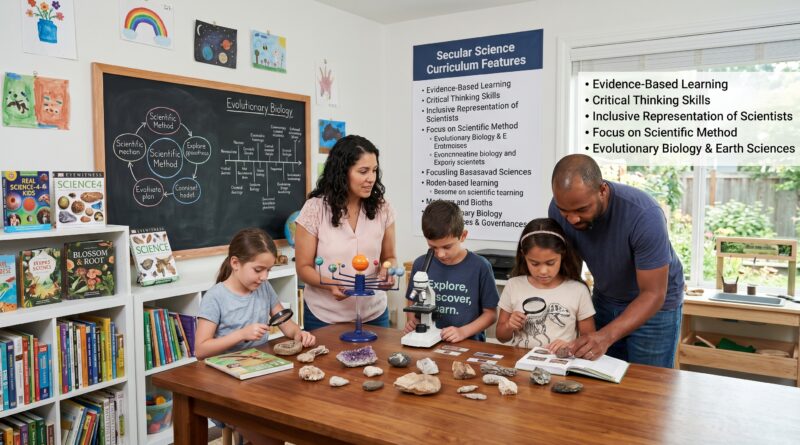
Non-Christian (secular) homeschool science curricula are programs designed to teach science from a religiously neutral perspective. They present mainstream scientific consensus—including evolution, natural selection, the age of the Earth and universe, and evidence-based explanations—without religious framing, scripture, or creationist viewpoints.
These curricula emphasize the scientific method, critical thinking, inquiry, and hands-on exploration. They are popular among secular families, atheists, agnostics, and interfaith or progressive religious families who want their children to receive a complete, standards-aligned science education (often aligned with NGSS Next Generation Science Standards) while avoiding faith-based content.
Top recommended options for most U.S. homeschool families include:
- Real Science Odyssey (RSO) by Pandia Press — Best overall for hands-on labs (elementary through middle school).
- Building Foundations of Scientific Understanding (BFSU) — Best for deep conceptual understanding and discussion-based learning (K–8).
- Blossom & Root Science — Excellent gentle, nature-focused, flexible choice for elementary years.
- Science Unlocked by Home Science Tools Strong lab-kit approach for K–12.
Most families combine a core curriculum with nature study, supplemental videos (Mystery Science, Generation Genius), or subscription labs (Mel Science). None of these is a “complete” high school solution on its own — high school science often shifts to online courses, textbooks, or dual enrollment.
This guide will help you understand your options, compare them honestly, and choose what fits your child’s learning style, your available time, and your educational goals.
Why Secular Science Curricula Matter for Many Families
Science education shapes how children understand the natural world, evaluate evidence, and engage with issues like climate change, public health, and technology. For some families, a secular approach ensures their children learn the full scientific consensus without conflicting worldviews at home or creating confusion.
In my work supporting homeschool families over the years including many who transitioned from faith-based programs I’ve seen how the right secular curriculum can spark genuine curiosity and scientific thinking. One family I consulted with had used a creation-based program through elementary years. When they switched to a secular option in middle school, their daughter (who had always loved animals) finally connected the dots on evolution and natural selection. She told me, “It finally makes sense why the fossils and the DNA match up.” That kind of “aha” moment is common when the curriculum presents evidence clearly and allows open questioning.
Secular does not mean anti-religion. Many Christian, Jewish, Muslim, and other faith-based families use these programs successfully and simply add their own discussions about faith and science at home. The key distinction is that the curriculum itself stays neutral and evidence-focused.
What Defines a Truly Secular Science Curriculum?
When evaluating programs, look for:
- No religious language, scripture references, or “God’s design” framing.
- Full, age-appropriate coverage of evolution and deep time (or at minimum, no young-earth perspectives).
- Emphasis on evidence, experimentation, and the scientific process rather than rote memorization.
- Alignment with or compatibility with NGSS or strong state science standards.
- Neutral treatment of origins topics where they appear.
Some programs market themselves as “neutral” by avoiding controversial topics entirely. Others (like RSO and BFSU) engage with mainstream science directly. Both approaches can work — it depends on your family’s comfort level and goals.
Top Secular Homeschool Science Curricula Compared
Here are the programs that consistently rise to the top for secular families based on depth, usability, and feedback from real homeschoolers.
1. Real Science Odyssey (RSO) by Pandia Press — Best Hands-On Overall
Grades: PreK–8 (multiple levels: Life Science, Earth & Space, Chemistry, Physics, Astronomy, etc.) Style: Read-aloud lessons + extensive hands-on labs and activities. “R.E.A.L.” stands for Read, Explore, Absorb, Learn. Price range: $75–$95 per level (print or digital). Secular level: Strongly secular — presents evolution and mainstream science clearly.
Strengths:
- Outstanding laboratory component that builds real scientific skills.
- Well-organized teacher guides with clear instructions.
- Progressive building of knowledge across units.
- Engaging without being fluffy.
Challenges:
- Significant parent prep time for gathering lab materials each week.
- You’ll need to source or buy experiment supplies separately (Home Science Tools kits help).
- Ends around 8th grade, so you’ll need a high school plan.
Best for: Families who want serious science with lots of experiments and don’t mind some weekly preparation. Many secular homeschoolers call this their top choice for elementary and middle school.
Real-world note: Families I’ve worked with often batch-prep materials or use lab subscription services alongside RSO to reduce weekly stress.
2. Building Foundations of Scientific Understanding (BFSU) — Best for Conceptual Depth
Grades: K–8 (three volumes) Style: Discussion-based, inquiry-driven. The parent facilitates Socratic-style conversations and simple demonstrations. No heavy worksheets. Price range: Very affordable — $32–$38 per volume (PDF or print). Secular level: Excellent — presents science conceptually and accurately.
Strengths:
- Builds genuine scientific thinking and connections across disciplines (physics, chemistry, biology, and earth science are interwoven).
- Extremely flexible for multi-age teaching.
- No busywork — focuses on understanding rather than output.
- Inexpensive and long-lasting.
Challenges:
- Requires a confident parent facilitator who is comfortable with open discussion (some parents read the teacher notes ahead of time to feel prepared).
- Less “open-and-go” than scripted programs.
- Assessment is observational rather than test-based.
Best for: Families who want their children to truly understand why science works the way it does and who enjoy (or are willing to learn) guiding thoughtful conversations. Ideal if your child asks lots of “why” questions.
Experience insight: When I’ve introduced BFSU to families coming from more traditional curricula, the biggest shift is moving from “covering material” to “building understanding.” One parent reported that after six months, her child started noticing scientific principles in everyday life — something that hadn’t happened with previous programs.
3. Blossom & Root Science — Best Gentle & Nature-Focused Option
Grades: Primarily elementary (levels for K–4/5, with flexible use) Style: Charlotte Mason-inspired, literature-rich, hands-on, and nature-study heavy. Weekly themes with beautiful book lists, outdoor exploration, and creative projects. Price range: Mid-range for full curriculum packages. Secular level: Strongly secular and inclusive.
Strengths:
- Gentle pace that protects childhood while still teaching solid science.
- Excellent integration of nature study, art, and literature.
- Highly flexible — lots of choices each week.
- Beautiful, modern book recommendations.
Challenges:
- More parent involvement in reading and facilitating than fully independent programs.
- Heavier on life/earth science and nature study than physical science in early levels.
- Some families supplement for more structured labs.
Best for: Families who love nature study, want a gentle Charlotte Mason flavor, and prefer flexibility over rigid daily lessons. Wonderful for wiggly or nature-loving children.
4. Science Unlocked by Home Science Tools — Best Lab-Kit Convenience
Grades: K–12 Style: Hands-on lab kits delivered with accompanying curriculum and video support. Price range: Subscription or per-unit pricing (varies). Secular level: Neutral to secular — focuses on experiments and concepts without religious content.
Strengths:
- Minimal prep — materials arrive at your door.
- Strong visual and hands-on component.
- Good progression through grade levels.
- Useful bridge into high school lab work.
Challenges:
- Cost can add up with subscriptions.
- Less emphasis on reading/discussion than some programs.
- You’re somewhat tied to their kit sequence.
Best for: Busy families or those who want high-quality labs without hunting for supplies. Excellent supplement or core for kinesthetic learners.
Other Strong Contenders
- NOEO Science: Literature-based (living books) with kits. Good Charlotte Mason option.
- BookShark Science: Literature-rich packages that integrate well with their history programs.
- Mystery Science + Generation Genius: Affordable video + activity supplements (great add-ons or light cores for elementary).
- Mel Science: Fun subscription boxes with VR/AR elements.
How to Choose the Right Secular Science Curriculum for Your Family
Ask yourself these practical questions:
- How much parent time do I realistically have? BFSU and Blossom & Root require more facilitation. RSO and Science Unlocked require more material prep or cost.
- What is my child’s learning style? Hands-on/experiment lover → RSO or Science Unlocked. Loves discussion and big ideas → BFSU. Nature enthusiast or sensitive to pressure → Blossom & Root.
- Do we want lots of labs or more reading/nature study? Labs → RSO or Science Unlocked. Nature + living books → Blossom & Root or NOEO.
- Budget considerations BFSU is the most affordable long-term. RSO and kits cost more upfront but deliver strong value.
- Multi-age teaching? BFSU and some levels of RSO or Blossom & Root adapt well across ages.
- High school path Plan ahead. Many families move to online courses (Outschool, Derek Owens), rigorous textbooks, or community college dual enrollment for high school lab sciences.
Building a Complete Secular Science Education
No single curriculum covers everything perfectly forever. Smart families often combine:
- Core program (RSO, BFSU, or Blossom & Root)
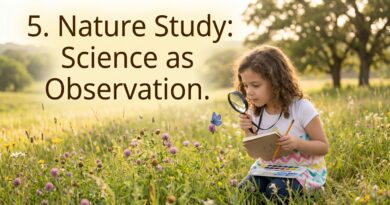
- Nature study and outdoor exploration (free or low-cost)
- Video resources (Mystery Science, Generation Genius, or YouTube channels like Crash Course Kids — vet for quality)
- Lab kits or subscriptions when needed
- Library books and citizen science projects (iNaturalist, etc.)
- For high school: Structured courses with labs
Important tip on evolution and origins: If full coverage of evolution is important to you, preview samples or ask in secular homeschool communities. Some programs handle it directly; others touch on it lightly or leave it for parents to supplement.
Common Challenges and Honest Solutions
- “I’m not a science person.” → Choose more scripted or video-supported options (Science Unlocked, Mystery Science) or use BFSU’s excellent teacher notes to build your own confidence.
- Prep time feels overwhelming. → Batch shopping, use lab kits, or choose a gentler program like Blossom & Root.
- Child resists “schooly” science. → Lean into nature study and hands-on experiments first. Interest often grows from there.
- Worried about gaps for high school/college. → Focus on scientific thinking and lab skills in earlier years. Content can be filled in later with strong high school courses.
Conclusion
Choosing a non-Christian (secular) homeschool science curriculum is ultimately about finding the best fit for your child’s curiosity, your family’s values around evidence and critical thinking, and your practical realities as a homeschool parent.
The strongest options Real Science Odyssey for hands-on labs, BFSU for deep conceptual growth, Blossom & Root for gentle nature-rich learning, and Science Unlocked for convenience — each bring something valuable to the table. None is perfect for every family, and that’s okay.
The goal of science education isn’t just to cover facts. It’s to help children develop the habits of mind that allow them to ask good questions, evaluate evidence, and keep learning throughout their lives. A well-chosen secular curriculum, used thoughtfully and supplemented with real-world exploration, can do exactly that.
Start by downloading samples from the publishers of RSO, BFSU, and Blossom & Root. Spend time with your child on a few activities from each. Notice what lights them up and what feels manageable for you. That lived experience will tell you more than any review.
Science is one of the great joys of homeschooling when it’s approached with wonder rather than pressure. You’ve got this.
FAQs
What does “non-Christian” or “secular” actually mean in science curricula?
It means the materials contain no religious content, scripture, or faith-based explanations. Science is presented through evidence and the scientific method. Many families of faith still use these programs successfully.
Do secular curricula teach evolution?
Most do, at developmentally appropriate levels. Some (like certain neutral programs) avoid deep origins discussions. If this topic is important to your family’s goals, preview samples or check reviews from secular communities.
Can I use these with a Christian worldview at home?
Yes. Many families do exactly that using the secular curriculum for the science content and discussing their faith perspectives separately.
How much science should we do each week?
Most programs are designed for 2–4 hours per week at the elementary level, increasing with age and lab work. Quality and consistency matter more than quantity.
Are these programs aligned with NGSS or state standards?
Many are compatible or explicitly aligned (especially newer editions). Check the publisher’s website or samples for specifics if your state has requirements.
What about high school science?
Dedicated secular homeschool curricula thin out after 8th grade. Popular paths include online courses, rigorous textbooks (Conceptual Physics, etc.), or dual enrollment at community colleges for lab credit.
Is it okay to mix and match programs?
Absolutely. Many successful secular homeschoolers use one core program and supplement with nature study, videos, or kits based on the child’s interests.
How do I know if a curriculum is truly secular?
Preview samples, read the table of contents, and check recent reviews from secular homeschool groups on Facebook or Reddit. Look for mentions of evolution, age of the Earth, and absence of religious language.